
 Written by Kamal Sharma
Top 10 AI Medical Receptionist Companies Of 2026
The medical front desk reception has long been the nerve center of patient experience, handling appointments, check-ins, billing queries, and patient communication. Traditionally, this has been managed by human receptionists who rely on personal memory, manual scheduling systems, and direct interactions. While invaluable in terms of empathy and human connection, this approach often struggles under the weight of increasing patient loads, complex administrative workflows, and the expectation of real-time responsiveness.
Virtual medical receptionists, on the other hand, are designed to manage these demands with precision and scalability. They operate 24/7, handle large volumes of patient interactions simultaneously, and integrate directly with electronic health records (EHR), billing platforms, and telehealth systems.
|
Parameter |
Human Receptionist |
Virtual Medical Assistants |
|
Availability |
Limited to office hours; subject to breaks/leave |
24/7, no downtime |
|
Scalability |
One-to-one interactions |
Handles hundreds of queries simultaneously |
|
Accuracy |
Dependent on memory, prone to errors |
Near-zero error with automated data handling |
|
Integration |
Manual updates to EHR, billing, or scheduling |
Smooth, real-time system integration |
|
Cost Efficiency |
Fixed salaries and benefits |
Subscription or usage-based, lower overhead |
|
Patient Experience |
Warm, personal interaction |
Fast, consistent, and accessible anytime |
|
Data Insights |
Limited reporting |
Advanced analytics and actionable insights |
This is to say, where a human receptionist may get overwhelmed or miss details during peak hours, an AI-driven front desk maintains consistency, accuracy, and instant availability. But choosing the one that perfectly aligns with your clinics and hospitals’ workflows is the real challenge here.
Each platform is built with different priorities, features, and integrations in mind. What works wonders for a small primary care clinic may not fit the needs of a large multi-specialty hospital. This is why understanding the landscape of available options becomes critical before making an investment.
With this distinction in mind, we’ve explored the top 5 medical AI front desk platforms currently shaping the healthcare landscape. Below, you’ll find an in-depth comparison that examines their strengths, limitations, and suitability for different practice types.
A Quick Comparison
| Decision Area | OmniMD AI Front Desk | Sully.ai | ARIA (DoctorConnect) | ALICE AI Front Desk | Klinic AI Front Desk | Mend | TriageLogic | Weave | Notable Health | Orbita (Modivcare) |
| Core Positioning | Comprehensive AI receptionist embedded in a full EHR/RCM ecosystem. | Modular AI workforce spanning reception, scribing, interpretation, and coding. | Always-available call-handling and triage assistant. | Avatar-driven visitor management system. | Virtual receptionist with strong emphasis on lead conversion and appointment coverage. | Digital intake and engagement platform supporting administrative workflows. | Clinical triage and call management with AI-supported routing. | Unified communication platform for reminders, intake, and messaging. | Enterprise administrative automation across registration, prior auth, and outreach. | Healthcare-specific conversational AI for triage and digital front door workflows. |
| Integration Depth | Native integration with OmniMD and structured external interoperability. | Broad EHR connectivity across major platforms. | Primarily telephony-oriented with limited published integration depth. | Designed for visitor management rather than clinical integration. | Integrates effectively when connected to existing practice systems. | Syncs intake and scheduling workflows with participating EHRs. | Integrates triage data with clinical systems depending on client configuration. | Integrates communication history and forms with practice management systems. | Deep enterprise integration through AI and RPA workflows inside EHR environments. | Integrates conversational data into digital front door and navigation systems. |
| Operational Strengths | Automation across calls, scheduling, intake, insurance tasks, payments, and reporting. | Workforce augmentation across multiple administrative and documentation roles. | Eliminates missed calls and manages routine triage twenty-four hours a day. | Enhances professionalism and security at facility entrances. | Strengthens patient conversion, reduces missed calls, and supports continuous appointment coverage. | Reduces check-in delays and manual intake work through structured automation. | Diverts clinical symptom calls away from the front desk and reduces staff interruptions. | Decreases phone burden by shifting communication to text and digital forms. | Handles large-scale administrative tasks that traditionally require manual labor. | Reduces call volume through automated symptom clarification and guided intake. |
| Ideal Clinic Fit | Practices seeking a deeply integrated AI receptionist within a full clinical ecosystem. | Clinics wanting a modular approach to expanding AI capabilities. | Small and mid-size clinics needing dependable call triage. | Facilities requiring consistent visitor management and lobby control. | Clinics wanting stronger lead conversion and round-the-clock appointment responses. | Practices prioritizing digital-first intake and telehealth-driven workflows. | Clinics handling high call volume or frequently fielding symptom-related inquiries. | Practices relying heavily on reminders, texting, and hybrid communication workflows. | Large health systems looking to automate administrative workflows at scale. | Organizations with established digital front door programs and triage needs. |
| Scalability | Strong scalability for single-site clinics and enterprise systems. | Modular design supports expansion as staffing gaps evolve. | Best suited for moderate scaling needs around call handling. | Effective for organizations with large visitor volumes. | Scales with clinics needing continuous communication coverage. | Suitable for outpatient groups and telehealth-heavy environments. | Designed for mid-to-large organizations with significant clinical call traffic. | Ideal for small-to-mid practices. | Built for enterprise-level scale with complex automation matrices. | Designed to support system-wide conversational workflows. |
| Cost and ROI Considerations | Transparent pricing with measurable reductions in administrative labor and missed appointments. | ROI depends on which AI roles are adopted and how they reshape workflows. | Cost-effective method of eliminating missed calls and improving responsiveness. | ROI influenced by the cost of kiosk hardware and customization. | Demonstrated revenue lift through higher appointment conversion. | Generates savings by reducing manual intake and administrative duplication. | Reduces unnecessary clinical interruptions and after-hours staffing pressures. | Improves operational efficiency through reduced call volume and faster patient responses. | Delivers high ROI in environments with heavy administrative workloads. | Strong ROI for organizations seeking to reduce triage calls and guide patients digitally. |
| Vendor Maturity | Two decades of healthcare IT expertise and longstanding product stability. | Young YC-backed company with a rapid innovation strategy. | Established patient communication vendor with consistent market presence. | Mature platform used across non-medical and medical industries. | Growing adoption among outpatient clinics and specialty practices. | Well-established engagement and telehealth vendor. | Long-standing leader in clinical triage services. | Broad adoption across multiple healthcare verticals. | Well-known enterprise automation provider with expanding adoption. | Mature conversational AI vendor now backed by Modivcare’s infrastructure. |
1. OmniMD AI Front Desk
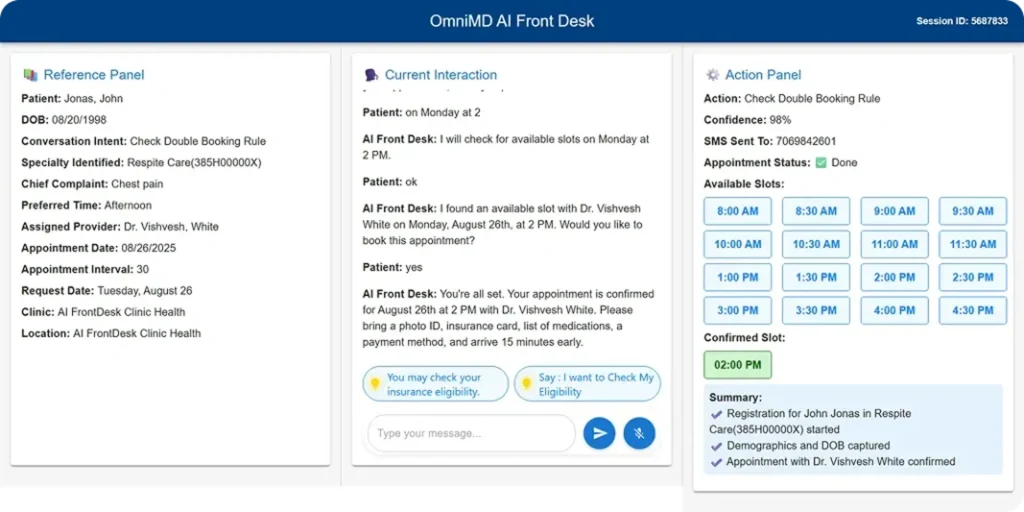
Introduced in mid-2025 as part of OmniMD’s next generation of AI healthcare solutions, the AI Front Desk was born out of a simple but pressing need to transform the way patients and clinics connect at the very first touchpoint. Building on its two-decade foundation in EHR, RCM, and practice management, the platform redefines front-office operations with intelligent, adaptive automation.
The idea emerged from observing how overworked front-desk staff juggle endless phone calls, no-shows, scheduling conflicts, and insurance verifications, all while patients wait for answers. We envisioned a solution that not only handles these tasks with near-perfect accuracy but also adapts to the unique rhythm of each clinic.
By combining agentic AI development with deep workflow awareness, it automates calls, simplifies check-ins, processes payments, and anticipates patient needs, all while keeping compliance at its core.
As part of our broader AI ecosystem, the AI Front Desk is engineered to become a cornerstone of the ‘intelligent clinic’, where providers, staff, and patients experience a flawless, connected environment.
Core Features
- End-to-End Automation: Manages inbound/outbound calls, emails, prescription refills, and insurance updates with 99.7% accuracy, reducing bottlenecks and manual errors.
- Adaptive Agentic AI: Learns clinic rhythms (e.g., peak hours, recurring no-show patterns) and dynamically adjusts its responses and prioritizations.
- Touchless Patient Check-In: Enables QR and facial recognition check-ins, digital form signing, copay processing, and automatic routing of patients to relevant forms.
- Operational Intelligence: Provides real-time dashboards via Power BI/Looker, tracking KPIs such as answer rates, no-shows, and billing efficiency.
- Resilient Offline Mode: Securely queues tasks during outages and syncs automatically when reconnected, with optional call redirection.
- Flexible Pricing Model: Transparent monthly or usage-based plans, with no hidden costs or lock-ins.
- Enterprise-Grade Compliance: HIPAA-compliant by design with encryption, audit trails, and strict access controls.
Pros
- Comprehensive automation that spans front desk, billing, and patient communication.
- Deep integration into your existing ecosystem ensures smooth workflow adoption.
- Advanced analytics empower decision-makers with actionable insights.
- Fault-tolerant architecture ensures continuity even in offline environments.
- Highly scalable, equally suited for small practices and multi-location health systems.
Cons
- Advanced AI customization may require structured onboarding and staff training.
2. Sully.ai
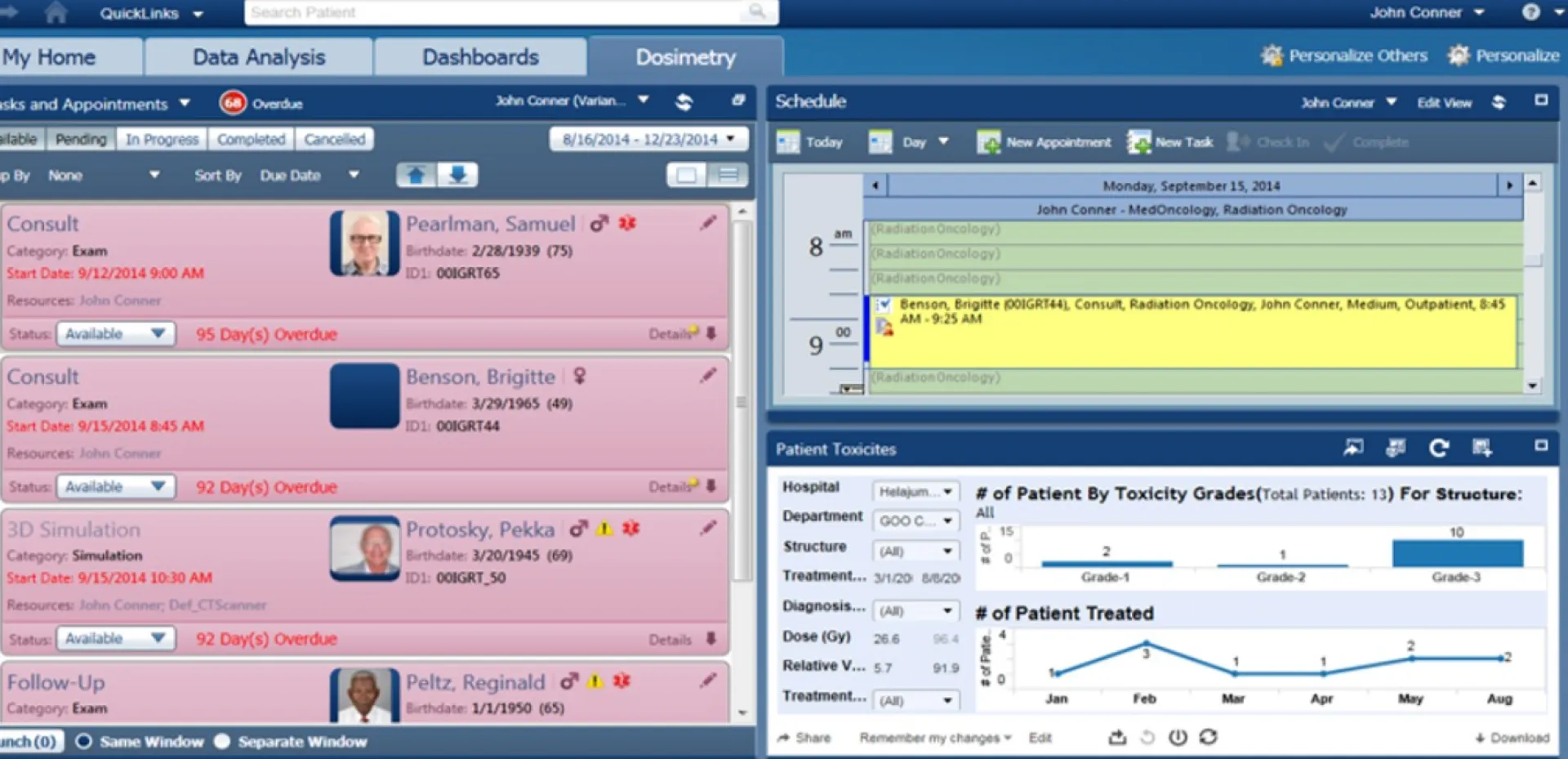
Founded in 2023 through Y Combinator, Sully.ai was created with a bold vision to build modular ‘AI medical employees‘ that could flawlessly integrate into healthcare teams. From the outset, the founders recognized that healthcare’s front line suffers from a chronic shortage of staff, leading to burnout, inefficiency, and gaps in patient care. Their mission was to create an AI workforce that could scale as easily as adding a new team member, without the hiring overhead.
Debuted with a focus on four critical roles: receptionist, medical scribe, interpreter, and coder, Sully.ai’s each module is designed to work independently or together, offering clinics the flexibility to start small and expand as needs grow.
At its core, the company’s vision is to democratize access to AI in healthcare by making it plug-and-play, interoperable with leading EHRs like OmniMD, Epic, and AthenaOne, and fast to deploy. By reimagining AI as a set of modular staff members rather than a one-size-fits-all product, the entity aims to reshape how clinics view workforce augmentation, bringing agility, efficiency, and resilience to care delivery.
Core Features
- Modular AI Workforce: Offers interchangeable AI roles, receptionist, scribe, interpreter, and coder, customized to clinic needs.
- Flawless Interoperability: Integrates with major EHRs such as Epic and AthenaOne for real-time updates.
- AI Receptionist: Automates patient intake, triage, and scheduling across multiple communication channels.
- Multimodal Support: Combines voice, text, and medical context awareness to improve accuracy across tasks.
- Rapid Deployment: Enables clinics to move from pilot to production in just weeks, minimizing disruption.
Pros
- Flexible, modular design lets clinics scale AI adoption step-by-step.
- Strong EHR integration supports interoperability across diverse systems.
- Quick implementation cycles provide faster ROI.
- Forward-thinking vision positions Sully.ai as an ‘AI workforce platform’ rather than a single-function tool.
Cons
- As a younger startup, it may lack the depth of field-tested use cases seen in more established platforms.
- Public details on compliance frameworks, enterprise pricing, and long-term scalability remain limited.
3. ARIA (by DoctorConnect)
ARIA, founded in 2025 by DoctorConnect, is an advanced, HIPAA-compliant AI medical receptionist designed to transform how clinics handle patient communications. It is advertised as a ‘first-of-its-kind’ solution that ensures every patient call is answered instantly and intelligently, any time of day.
Crafted in response to common pain points, long hold times, missed after-hours calls, and missed vital updates, the platform offers clinics uninterrupted availability. It not only picks up every call but swiftly triages the patient’s issue and escalates urgent matters to human staff when needed.
More than a basic call-routing system, the company’s virtual medical assistant leverages natural language processing and voice recognition alongside healthcare-specific integrations to create a responsive front desk that functions 24/7.
In essence, ARIA serves as an ‘always-on first responder,’ efficiently managing daily patient interactions so that clinics can deliver consistent, compassionate communication at scale.
Core Features
- 24/7 Intelligent Receptionist: Always available to answer calls and handle routine inquiries without interruption.
- Smart Escalation: Routes complex or urgent calls to human staff effortlessly, ensuring patients always get timely attention.
- Patient-Centric Availability: Focused on reliability, no missed calls or voicemail backlogs.
Pros
- Ensures continuous availability, which improves patient trust and reduces missed opportunities.
- Intelligent triage prevents overwhelming human staff with routine tasks.
- Strong potential for clinics seeking a low-maintenance, always-on call-handling solution.
Cons
- Currently limited feature scope, focuses heavily on call handling rather than end-to-end reception automation.
- Unclear depth of EHR integrations and compliance measures.
- May be best suited as a supplemental tool rather than a standalone front-desk replacement.
4. ALICE AI Front Desk (Avatar-based)
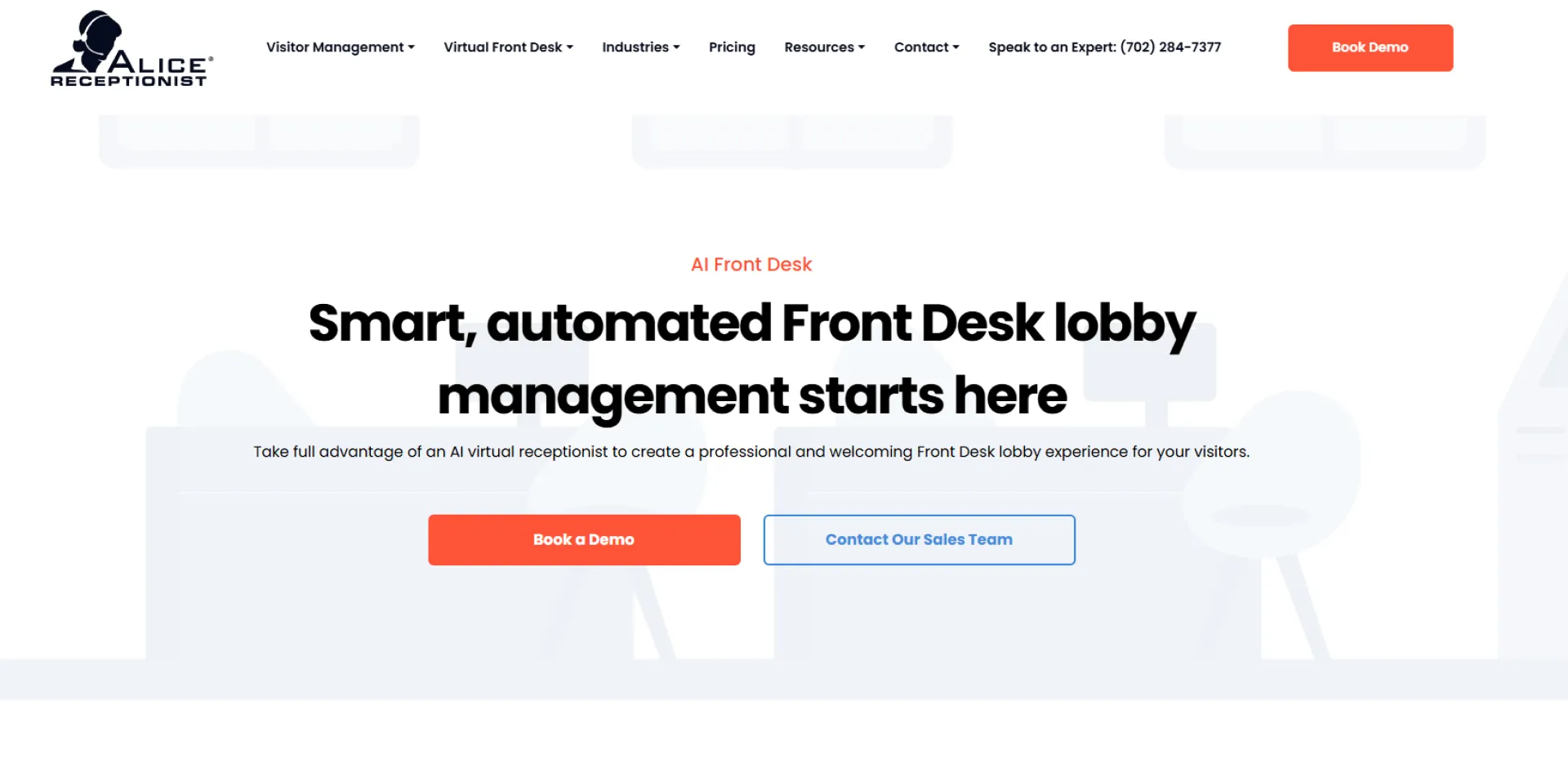
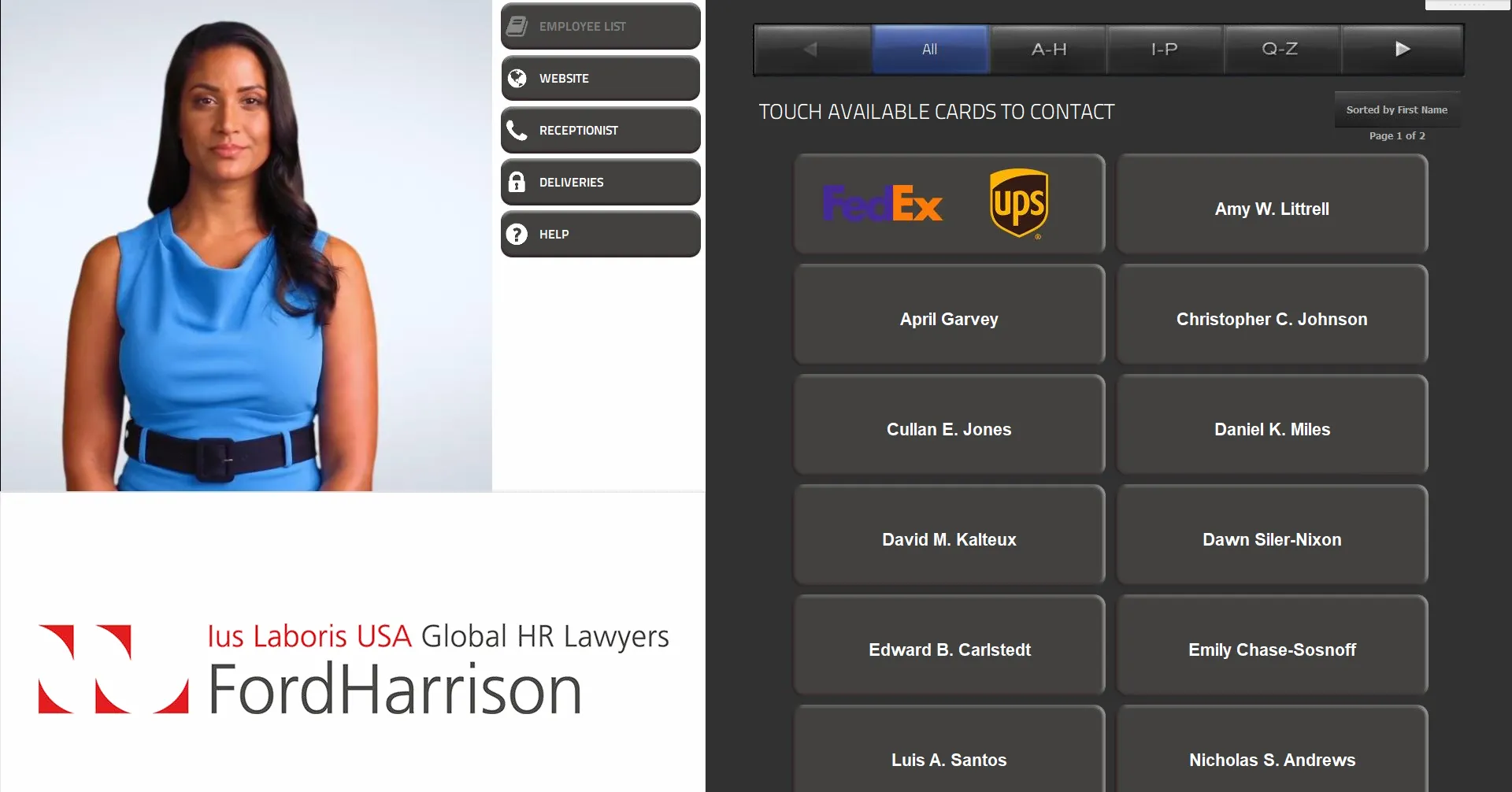
ALICE AI Front Desk was created to modernize how organizations manage visitor interactions while reinforcing security and professionalism. By leveraging an avatar-based AI receptionist, ALICE transforms the lobby into a dynamic, always-on point of engagement.
Launched in the early 2010s under the broader ALICE Receptionist platform, the avatar-based solution has evolved from a novel digital greeter into a full-fledged front-desk automation tool. Its mission is to enhance visitor experiences, reinforce facility safety, and ensure every encounter reflects the professionalism of the host organization.
Today, ALICE is trusted across industries, including healthcare, government, enterprise, and real estate, where visitor management must balance warmth with strict security.
Core Features
- Always-On AI Avatar Greeting: Motion‑activated virtual avatars greet visitors as they enter, providing proactive, friendly reception without breaks, vacations, or sick leave.
- Customizable to Your Brand: Avatars can be tailored in appearance, tone, greetings, and messaging to align with an organization’s culture and values.
- Multilingual Capabilities: Avatars support dozens of languages, over 30, through AI-driven translation of script videos, enabling consistent communication across language preferences.
- Directory & Communication Tools: They offer interactive features like employee/department directories that can initiate calls or connect with staff, enhancing visitor direction and communication.
- Inclusive & Secure Design: ADA accessibility, including wheelchair compatibility and 911 TTY support, is built into the platform to ensure safe, inclusive access.
- Photoreal & Scripted Options: Recent enhancements include photorealistic digital-human avatars, crafted using Hour One AI technology, for more lifelike guest interactions.
Pros
- Significant staffing cost savings, operates 24/7 without labor overhead.
- Consistent, brand-aligned visitor experience that elevates professional image.
- Broad language support enhances accessibility and inclusion.
- Integrated security/accessibility features support safe, compliant front-desk operations.
- Advanced avatar realism (customizable and photorealistic) improves engagement and feels grounded.
Cons
- Limited to reception-style use, doesn’t replace full front-office systems like scheduling, billing, or patient intake. Best deployed alongside other reception workflows.
- Requires investment in hardware (kiosk systems) and customization effort, initial setup could be more involved than a traditional receptionist.
- While apps like direct call-out features are powerful, they’re not a full CRM or operational suite, additional systems may still be needed for complete visitor management.
5. Klinic – 24/7 AI Front Desk
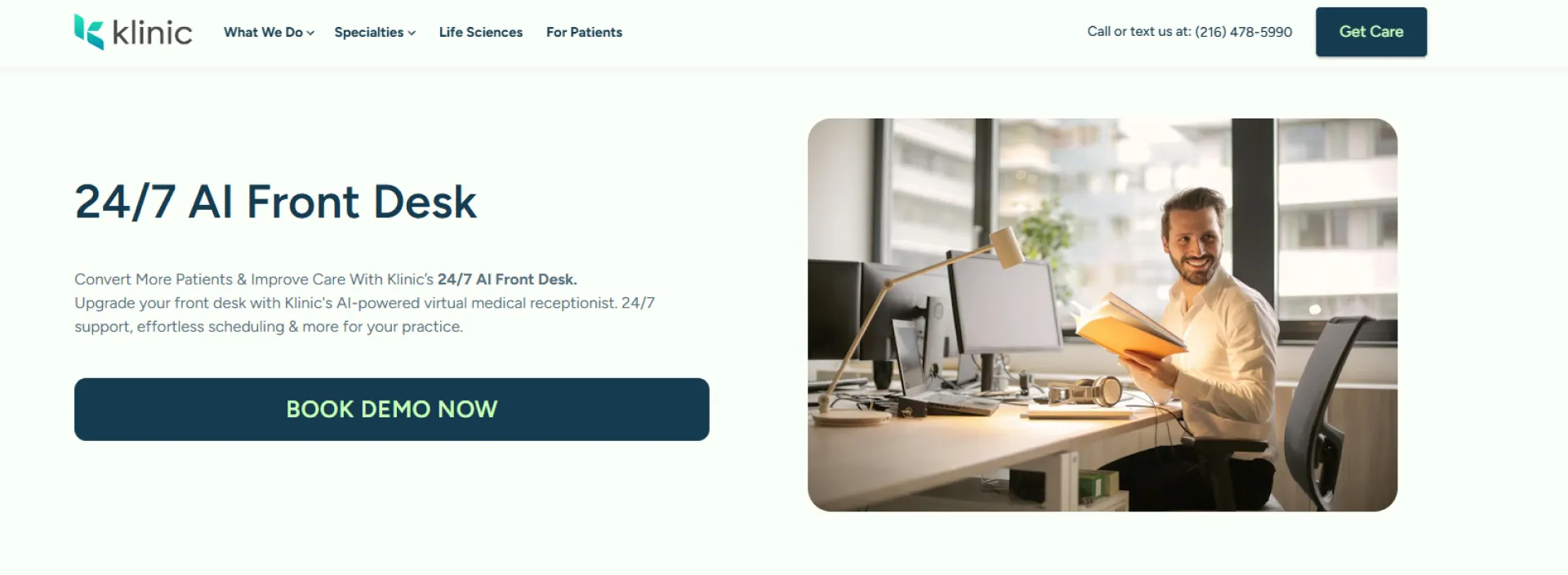
Klinic is a comprehensive AI-enabled virtual medical receptionist and patient conversion platform. While the specific founding year isn’t listed, its offering includes full 24/7 front-desk support, covering calls, texts, emails, scheduling, benefit verification, intake, and onboarding into the EHR, all aimed at ensuring simplified clinical workflows.
The company is marketed to help clinics cut operational costs, reportedly saving over $25,000 annually, drive more patient conversions, reduce no-shows, and elevate patient satisfaction through prompt, always-on responsiveness and automation with a human touch.
Beyond receptionist tasks, its AI-powered patient conversion platform combines automation and human care coordination to nurture leads into booked appointments, handle insurance verifications, manage scheduling, and grow clinic revenue, sometimes achieving seven-figure monthly revenue within months, according to client testimonials.
Core Features
- 24/7 AI Receptionist: Never miss a patient call, appointment request, or intake form, even after office hours.
- Automated Scheduling & Intake: Manages calendars, appointment confirmations, and new patient onboarding.
- Benefit Verification: Checks insurance coverage details to simplify visits before patients arrive.
- Continuous Coverage: Reduces missed opportunities by handling overflow during peak hours and covering nights/weekends.
Pros
- Always available: Guarantees round-the-clock patient communication, improving satisfaction and trust.
- Boosts revenue: By reducing missed calls and delays, practices can convert more inquiries into actual appointments.
- Operational savings: Some clinics report annual savings of $25,000+ by lowering dependency on additional staff.
- Patient-focused: Ensures patients feel heard and supported without long waits or unanswered messages.
Cons
- Limited to front-desk tasks: While powerful for scheduling and intake, Klinic does not manage documentation, billing, or clinical notes.
- Integration needs: Effectiveness depends on smooth connection with existing practice management or EHR systems.
- Not human replacement in complex cases: Certain patient concerns or nuanced issues may still require escalation to live staff.
6. Mend: Virtual Intake and Administrative Automation for Clinics
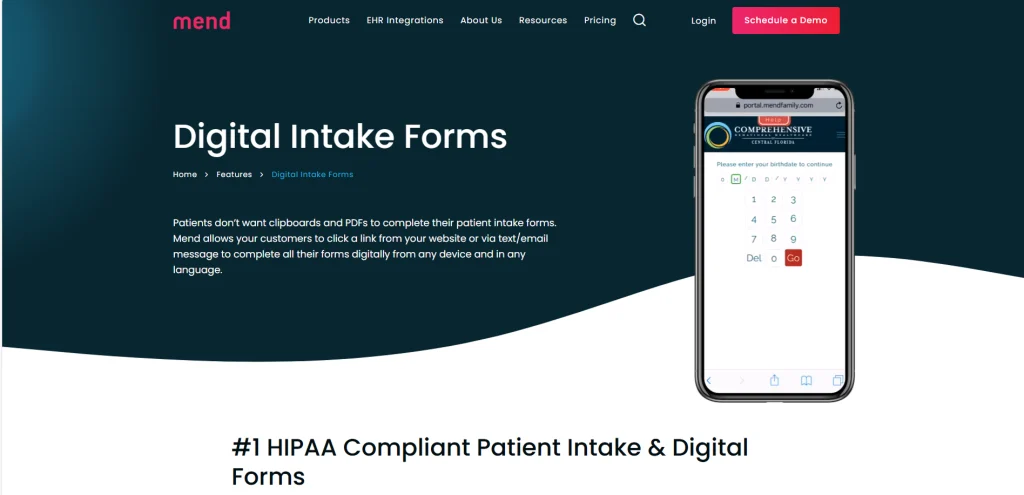
Mend, established in 2014 and known widely for its telehealth and patient-engagement ecosystem, has evolved into a platform that also supports front desk automation and administrative offloading. Its reception-focused tools grew naturally from its strong foundation in digital forms, patient communications, and appointment workflows. Although Mend does not market itself as a full AI receptionist in the traditional sense, its automation engine handles several core duties typically performed at the front desk.
The platform is designed to reduce the burden on staff by streamlining the beginning of the patient journey. This is done through structured intake processes, real-time communication, and predictive scheduling workflows that help clinics maintain continuity and operational efficiency. Clinics that rely heavily on virtual care and digital engagement often find Mend positioned to support an experience where patients transition smoothly from outreach, to intake, to telehealth, and finally to follow-up.
Core Features
- Digital Intake Orchestration: Structured, guided form completion that captures demographics, insurance information, identification, and consent documents before a visit. Submissions are organized for staff review through Mend’s intake dashboard.
- Predictive Scheduling Intelligence: Patterns of cancellations, openings, and patient behavior guide automated outreach and re-engagement messages.
- Unified Engagement Hub: Patients receive automated reminders, confirmations, and follow-up communications through a consolidated messaging layer.
- Telehealth + Front Desk Experience: Appointment preparation, technology checks, and form completion occur within the same environment used for video consultations, promoting continuity across touchpoints.
Pros
- Mature foundation in patient engagement and telehealth enables smoother digital front desk operations.
- Reduces manual data collection and back-and-forth communication with patients.
- Supports clinics that prefer a hybrid or fully virtual intake and scheduling model.
Cons
- Not a fully autonomous AI receptionist; tasks rely on structured automation rather than conversational intelligence.
- Depth of EHR integration depends on the clinic’s existing systems and configuration.
7. TriageLogic: AI-Supported Nurse Triage and Patient Call Management
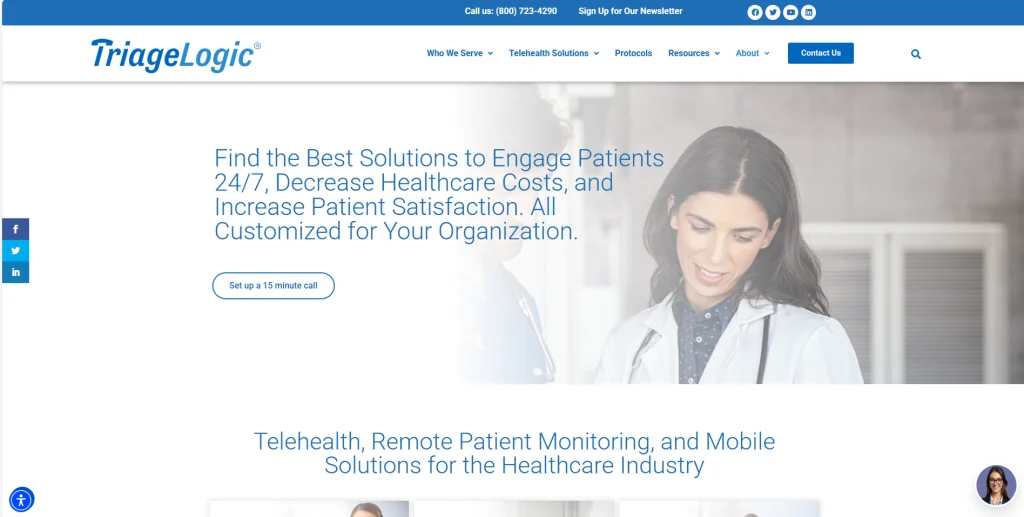
TriageLogic, founded in 2007, is recognized for its clinical triage services and decision-support technologies. While it does not brand itself as an AI receptionist, its modern product line incorporates AI-supported call routing, symptom assessment, and escalation workflows that significantly reduce the operational burden on clinical reception staff.
The company’s long history in nurse triage gives it a clinically rigorous approach to answering patient calls, categorizing concerns, and directing patients to appropriate care pathways. Its automation tools are designed to ensure that calls are handled with clinical sensitivity, especially when symptoms may require medical attention rather than administrative handling.
Core Features
- AI-Supported Call Triage: Automated systems route patient calls based on symptom description, urgency, and established clinical protocols.
- Continuous Availability: Clinics can rely on uninterrupted coverage for after-hours inquiries or peak daytime demand.
- Clinical Protocol Alignment: Evidence-based triage flows guide assessments before escalation to nurses or staff.
- Structured Callback and Follow-Up Routing: Ensures patients requiring follow-up are not lost in administrative queues.
Pros
- Strong fit for clinics with heavy call volume or complex triage needs.
- Clinically safe call routing reduces unnecessary interruptions at the front desk.
- Backed by a long-established vendor with deep expertise in medical communication.
Cons
- Focused more on clinical triage than general receptionist tasks such as scheduling or intake.
- Requires integration and workflow alignment with clinical staff to reach full efficiency.
8. Weave: Unified Communication Platform With Front Desk Automations
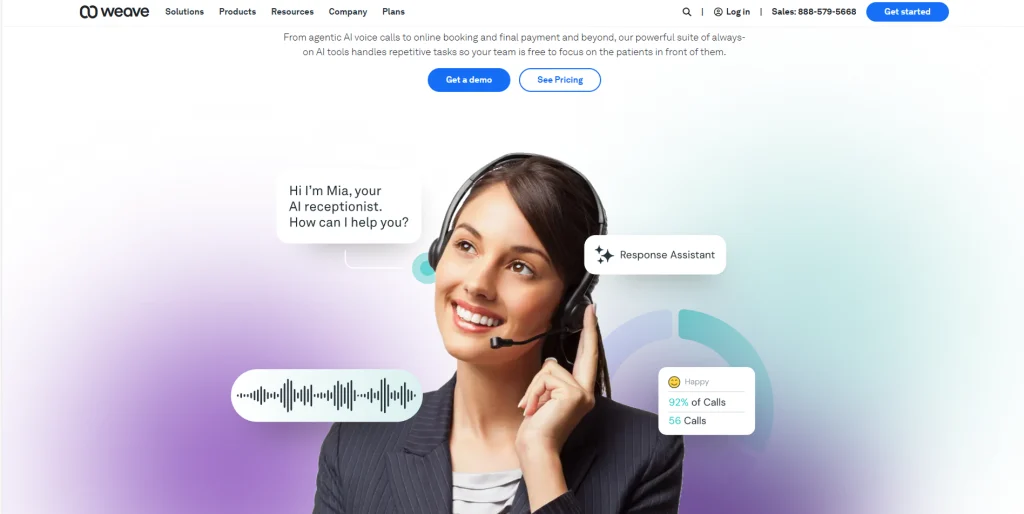
Weave, launched in 2008, is a widely adopted communication and engagement platform in dental, medical, optometry, and therapy practices. While the company does not refer to its automation as an ‘AI receptionist,’ many practices use Weave to handle a high percentage of routine front-desk duties.
Its strength lies in centralizing communication channels, phones, texts, reminders, intake forms, into one system that surfaces relevant patient context instantly. This reduces manual workload and improves responsiveness, especially when clinics experience high call volumes or rely on asynchronous communication.
Core Features
- Automated Appointment Workflows: The system handles confirmations, cancellations, reminders, and follow-up messages based on each clinic’s schedule.
- Two-Way Texting With Patient Context: Staff can reschedule appointments, answer questions, and manage incoming patient messages while viewing relevant account details.
- Digital Forms and Intake Packets: Patients submit demographic and clinical forms prior to arrival, reducing bottlenecks at check-in.
- Integrated Phone and Messaging System: Caller identification and patient details appear instantly when calls come in, enabling quicker, more informed interactions.
Pros
- Strong system for clinics that rely on messaging or hybrid communication workflows.
- Reduces workload by routing a significant portion of patient communication through automated or asynchronous channels.
- Well-supported and widely used in small to mid-sized practices.
Cons
- Relies primarily on automation rather than advanced AI decision-making.
- Not a full receptionist replacement for tasks that require clinical or administrative judgment.
9. Notable Health: Intelligent Automation for Intake, Registration, and Administrative Workflows
Notable Health, founded in 2017, focuses on large-scale administrative automation for health systems through a combination of AI, machine learning, and robotic process automation (RPA). The platform is not designed to mimic a human receptionist conversationally, but it supports many front-desk responsibilities through structured workflow automation.
Its strength lies in orchestrating complex administrative processes, patient registration, documentation handling, prior authorization initiation, and outreach engagement, especially in environments where human staff struggle to keep up with operational volume.
Core Features
- Automated Intake and Registration: Insurance capture, identity verification, consent collection, and demographic updates occur through guided digital workflows.
- Proactive Patient Outreach: The system identifies care gaps, preventive opportunities, or overdue visits and contacts patients automatically.
- RPA-Powered Administrative Tasks: Repetitive operational steps inside EHRs, such as data entry, claim preparation, or referral processing—are executed through automation.
- Enterprise-Grade Workflow Scalability: Designed for hospitals and large medical groups with high daily patient throughput.
Pros
- Significant administrative relief for health systems struggling with scale.
- Designed for workflows far more complex than intake or scheduling alone.
- Strong fit for organizations aiming to modernize operations at a system-wide level.
Cons
- Configuration and deployment require coordination with enterprise IT teams.
- More expansive and technical than what small practices typically need.
10. Orbita (Modivcare): Conversational AI for Digital Front Door and Triage Workflows
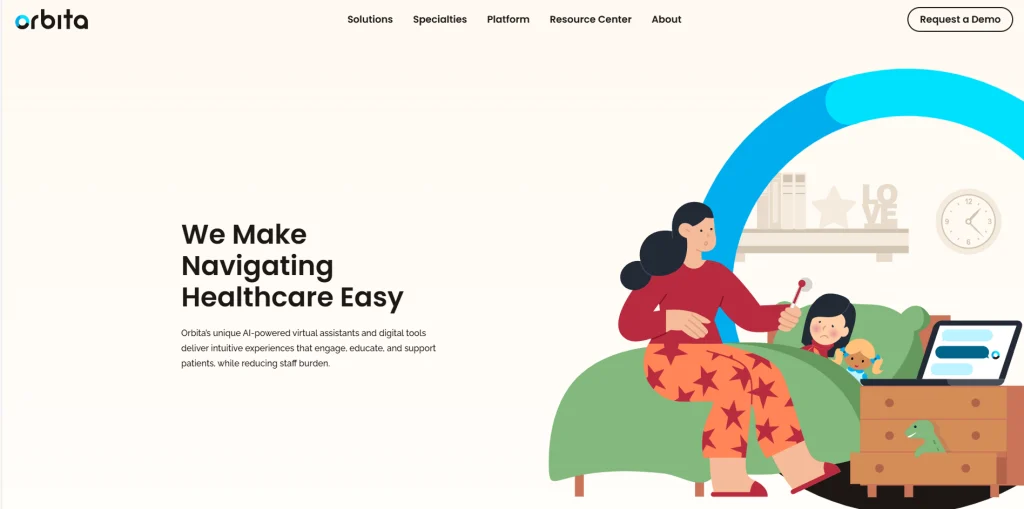
Orbita, founded in 2015 and acquired by Modivcare in 2022, develops healthcare-focused conversational AI that supports symptom assessment, intake, and guided navigation. While it is not a direct substitute for a human receptionist, it performs many upstream tasks that reduce front desk pressure.
The platform helps health systems manage demand by handling initial inquiries, clarifying symptoms, collecting structured information, and directing patients toward appropriate services. Its conversational capabilities are designed specifically for healthcare contexts, which helps maintain accuracy in clinical dialogs and intake flows.
Core Features
- Conversational Symptom Assessment: Patients describe symptoms and receive guided, structured assessments based on clinical models.
- Digital Intake and Routing: Identification, demographic information, and initial medical context are collected before staff involvement.
- Call Deflection and Inquiry Management: Common questions, directions, and non-urgent inquiries are resolved through automated dialogs, reducing staff interruptions.
- Enterprise Conversational Platform: Health systems can configure workflows that link the digital front door to scheduling, billing, or triage teams.
Pros
- Strong in natural language understanding designed specifically for healthcare.
- Reduces repetitive calls and inquiries at the earliest stage of patient contact.
- Flexible enough to support both clinical navigation and administrative intake.
Cons
- Best suited for larger organizations that already have digital front door programs.
- Not positioned to replace all duties of a human receptionist; focuses on upstream triage and intake.
Disclaimer
The content provided in this article is for informational purposes only and does not constitute medical, legal, or financial advice. While every effort has been made to ensure the accuracy and reliability of the information presented, readers are advised to independently verify any claims, pricing, or features with the respective AI Front Desk vendors. The views expressed by the authors and reviewers are their own and do not imply endorsement of any specific product or company. All trademarks and brand names mentioned are the property of their respective owners.

Choose the Best AI Receptionist Company
Discover the leading AI front desk solutions boosting patient care and clinic efficiency.