
EHR for OB-GYN Clinic
Track gestational milestones, automate OB visit intervals, and simplify complex maternity claims within one secure OB-GYN EMR platform.




Proven in Real OB‑GYN Practices

EHR Software Uptime

Reduction in Claim Denials

Day Specialty Go-Live

ACOG-Aligned Clinical Templates

Way Lab & Imaging Integrations

HIPAA-Compliant Security Controls
OB/GYN EHR Key Capabilities

Complete Pregnancy Tracking
Manage each pregnancy as one connected journey from first visit to delivery.
- Trimester-based visit templates
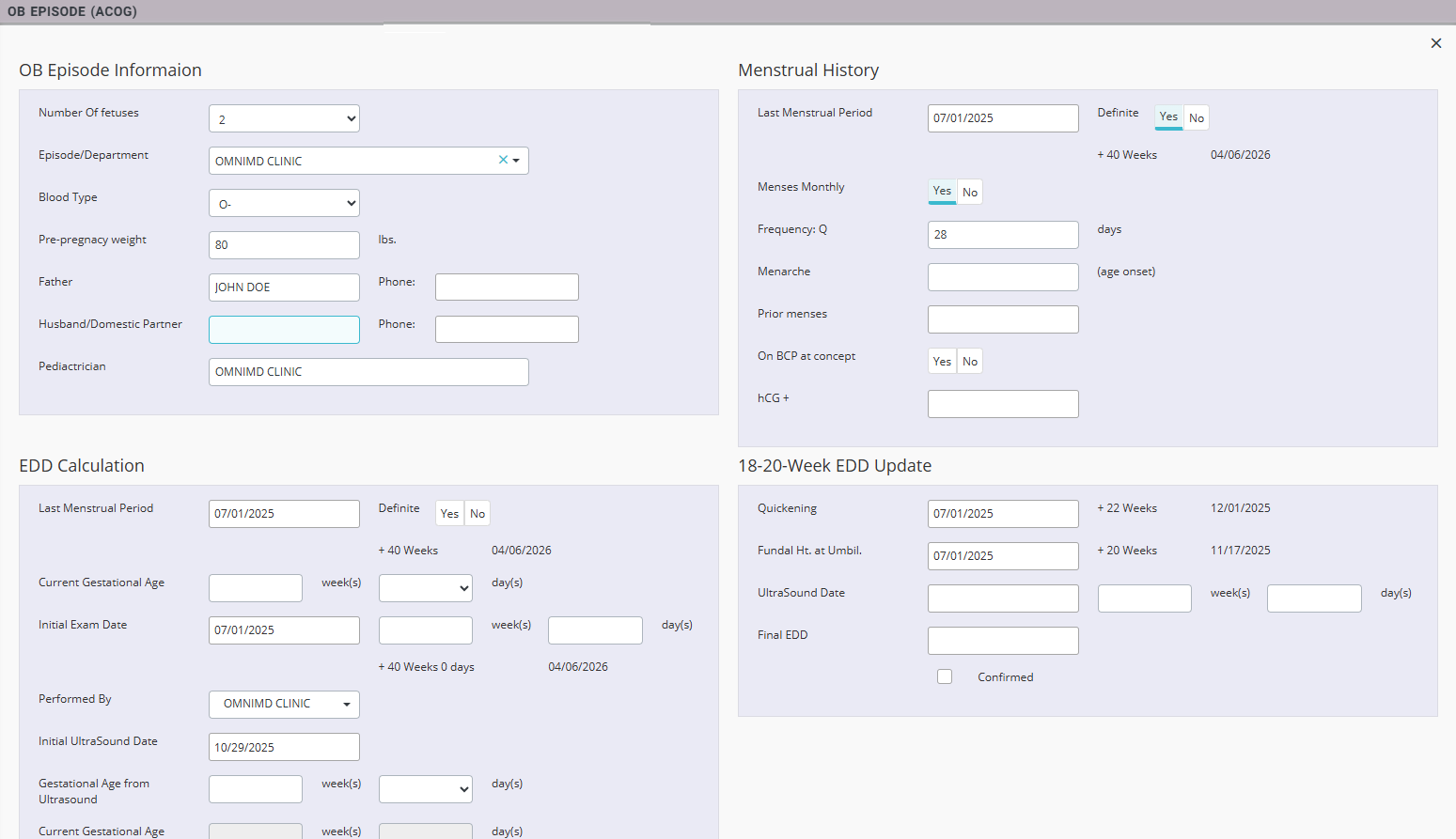
- Automatic due date calculation (LMP or ultrasound)
- Built-in OB flowsheet (BP, weight, fundal height, FHR)
- High-risk pregnancy alerts
- Auto-scheduled prenatal visit intervals

Built-In Fetal & Ultrasound Records
Keep all fetal data organized inside the patient chart.
- Structured fetal heart rate entries
- Growth percentile tracking
- Biophysical profile documentation
- Ultrasound image upload within encounter
- Alerts for abnormal findings by gestational age
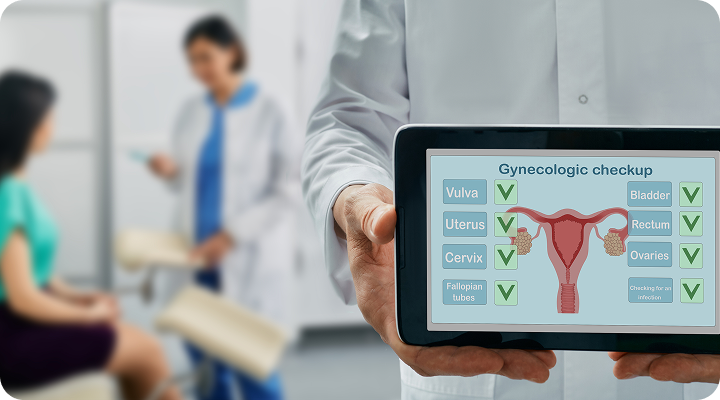
GYN Procedure Templates
Document common gynecology procedures quickly and accurately.
- Colposcopy diagram and findings template
- IUD insertion and removal notes
- LEEP and hysteroscopy templates
- Pap smear result tracking
- Linked procedure codes for faster billing
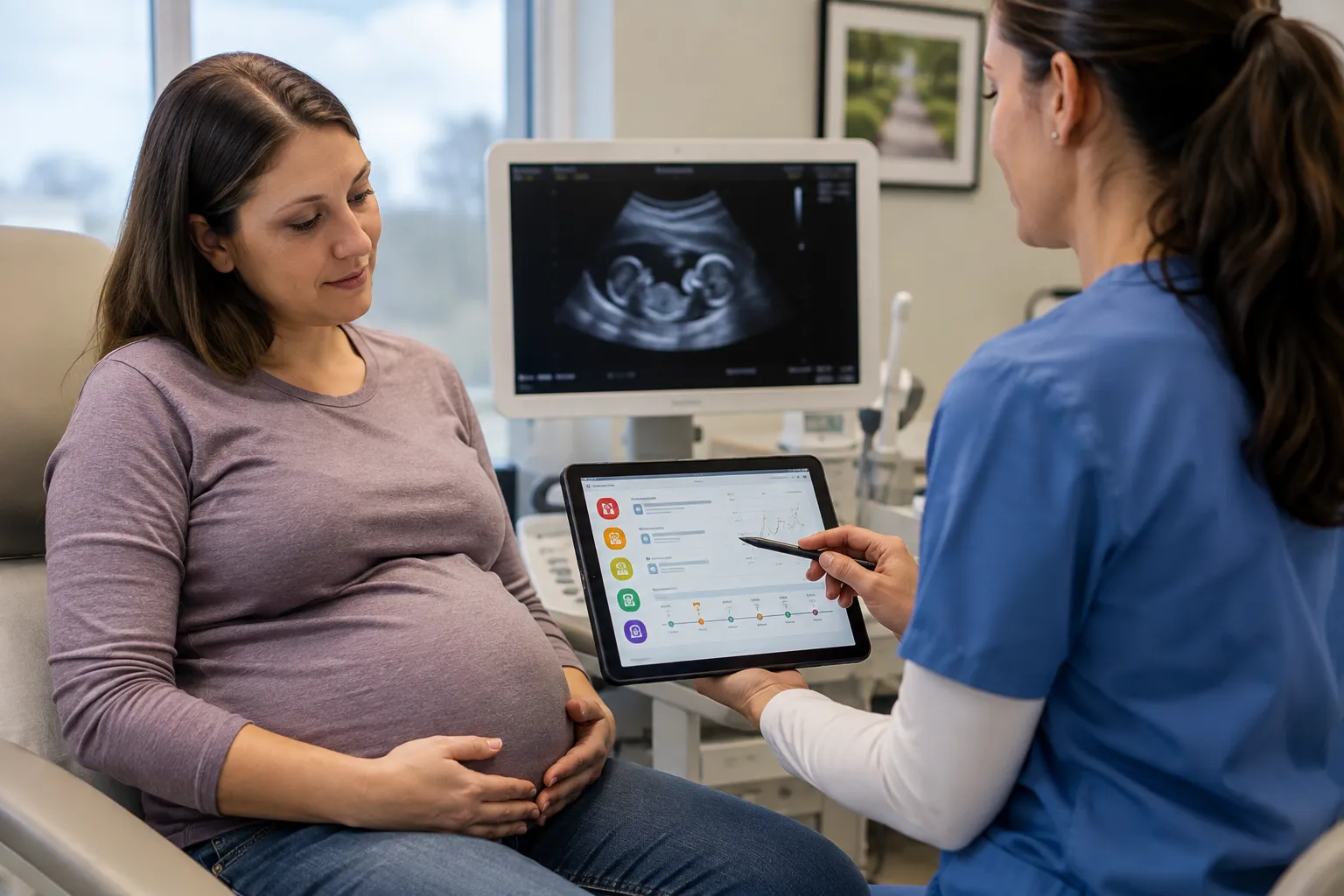
Pregnancy Risk & Safety Alerts
Reduce complications with timely reminders and clear flags.
- High-risk pregnancy indicators
- RhoGAM tracking reminders
- GBS screening alerts (35–37 weeks)
- Tdap and flu vaccine prompts
- Postpartum depression screening integration

Women’s Preventive Care Reminders
Stay on top of age-based and condition-based screenings.
- Pap and mammogram recall alerts
- HPV vaccination tracking
- Contraceptive management follow-up
- Menopause care documentation
- Bone density screening reminders

Delivery & Postpartum Support
Continue care smoothly after childbirth.
- Structured vaginal and C-section delivery notes
- Hospital-to-clinic data continuity
- Postpartum visit scheduling
- Breastfeeding status documentation
- Linked mother and newborn records
OB/GYN EHR Clinical Documentation Workflows
Start with a specialty-specific prenatal and gynecology EHR, or activate a complete OB-GYN practice management suite with RCM, AI documentation, front desk automation, and digital health tools.
OB-GYN Specialty EHR Platform
A cloud-based OB-GYN EHR system built around prenatal care, gynecology workflows, ACOG-aligned templates, and the complete 40-week pregnancy timeline, ideal for practices seeking a powerful standalone women’s health EHR.
OB-GYN Revenue Cycle Optimization
Specialty-driven OB global billing, CPT-linked procedure coding, and denial reduction strategies designed to improve reimbursements for prenatal, delivery, and gynecology services.

AI Clinical Documentation for OB-GYN
AI-powered OB-GYN charting that simplifies prenatal notes, procedure documentation, and SOAP creation, reducing provider workload while improving clinical accuracy.

Women’s Health Digital Engagement Suite
Integrated patient portal, OB-GYN telehealth, lab & ultrasound connectivity, and postpartum follow-up tools that enhance continuity of care and patient engagement.

Intelligent Front Desk Automation
AI-enabled scheduling, eligibility verification, prenatal visit interval management, and patient communication tools built specifically for OB-GYN practice operations.

Thank You For Placing Your Trust In Us. We’re Humbled.
OB/GYN EHR Clinical Documentation Features
OB/GYN documentation spans two distinct care categories: obstetrics (pregnancy through postpartum) and gynecology (preventive care, gynecologic conditions, and procedures). OmniMD includes native support for both:
- Prenatal visit documentation – trimester-based visit templates for first, second, and third trimester encounters with gestational age calculation, fundal height, fetal heart tones, and GBS status documentation
- Fetal monitoring records – non-stress test (NST) and biophysical profile (BPP) documentation with fetal movement, amniotic fluid index (AFI), and Doppler findings in structured fields
- Labor and delivery notes – admission assessment, labor progress documentation, delivery summary (vaginal and cesarean), Apgar scores, and newborn weight with maternal discharge instructions
- Postpartum visit templates – 2-week and 6-week postpartum visits with Edinburgh Postnatal Depression Scale (EPDS) screening, contraceptive counseling documentation, and wound assessment
- Gynecology procedure documentation – structured notes for colposcopy, LEEP, hysteroscopy, endometrial biopsy, IUD insertion and removal, and office hysteroscopy with CPT code linkage
- Preventive care and well-woman exams – annual exam templates with Pap smear, pelvic exam, breast exam, STI screening, and HPV co-testing documentation
- High-risk pregnancy tracking – gestational diabetes management with glucose tolerance test results, hypertensive disorders of pregnancy (preeclampsia, gestational hypertension), and referral tracking for maternal-fetal medicine
- AI medical scribe integration – voice-driven documentation during OB/GYN encounters for faster chart closure and reduced after-hours documentation burden. Connects to OmniMD AI medical scribe.
- Remote patient monitoring – blood pressure and glucose monitoring for gestational hypertension and gestational diabetes management. Connects to OmniMD RPM platform.
- Patient scheduling – automated prenatal visit scheduling at standard gestational age intervals with online patient check-in. See medical appointment software.
OB/GYN CPT Codes and Billing
OB/GYN billing uses a mix of global obstetric care packages, trimester-based antepartum codes, delivery codes, and individual gynecology procedure codes. OmniMD links CPT codes to encounter documentation at the point of care, reducing unbundling errors and claim denials tied to global OB package billing rules.
| Category | CPT Codes | Description |
|---|---|---|
| Global obstetric care | 59400, 59510, 59610, 59618 | Routine vaginal delivery, C-section, VBAC, failed VBAC (with antepartum + postpartum) |
| Antepartum only (4-6 visits) | 59425 | Antepartum care 4-6 visits; billed when global package is divided |
| Antepartum only (7+ visits) | 59426 | Antepartum care 7 or more visits; billed when global package is divided |
| Vaginal delivery only | 59409, 59410 | Vaginal delivery with and without postpartum care |
| C-section delivery only | 59514, 59515 | Cesarean delivery with and without postpartum care |
| Non-stress test (NST) | 59025 | Fetal non-stress test, with interpretation and report |
| Biophysical profile (BPP) | 76818, 76819 | Fetal BPP with and without NST; ultrasound component |
| OB ultrasound (standard) | 76801, 76802, 76805, 76811 | First trimester (with and without nuchal), second/third trimester standard and detailed |
| Colposcopy | 57452, 57454, 57460, 57461 | Colposcopy with and without biopsy; with LEEP excision |
| LEEP / conization | 57461, 57522 | LEEP with colposcopy; conization by cold knife |
| Endometrial biopsy | 58100 | Endometrial sampling without D&C |
| IUD insertion / removal | 58300, 58301 | IUD insertion; IUD removal |
| Hysteroscopy (diagnostic) | 58555 | Hysteroscopy with or without biopsy |
| Pap smear | 88141-88143, 88175 | Cervical cytology interpretation; liquid-based (ThinPrep) with/without HPV co-testing |
| Postpartum visit | 59430 | Postpartum care only (billed separately when global package is split) |
OB global package rules require careful coordination between the delivering provider and any co-managing providers. OmniMD’s AI-powered RCM tracks global OB package components across the antepartum period to prevent unbundling errors at the time of delivery billing, with real-time claim scrubbing through integrated medical billing.
Common OB/GYN Diagnoses and ICD-10 Codes
OB/GYN providers document a broad range of obstetric and gynecologic conditions that each require specific ICD-10-CM codes at the encounter level. OmniMD pre-loads the most common OB/GYN diagnosis codes into the encounter workflow to reduce manual lookup time and coding errors.
| Condition | ICD-10-CM | Clinical Context |
|---|---|---|
| Normal pregnancy, first trimester | Z34.01 | Supervision of normal first pregnancy, first trimester |
| Gestational hypertension | O13.3 | Gestational hypertension, third trimester; no proteinuria |
| Preeclampsia (mild to moderate) | O14.03 | Mild-to-moderate preeclampsia, third trimester |
| Gestational diabetes mellitus | O24.419 | GDM in pregnancy, diet-controlled, unspecified trimester |
| Threatened preterm labor | O60.03 | Preterm labor without delivery, third trimester |
| Cervical insufficiency | O34.30 | Maternal care for cervical incompetence, unspecified trimester |
| Abnormal Pap smear (ASCUS) | R87.610 | Atypical squamous cells of undetermined significance on cervical cytology |
| Uterine leiomyoma (fibroids) | D25.9 | Leiomyoma of uterus, unspecified; symptomatic fibroids |
| Endometriosis | N80.9 | Endometriosis, unspecified; pelvic pain, dysmenorrhea |
| Polycystic ovarian syndrome (PCOS) | E28.2 | Polycystic ovarian syndrome; irregular menses, hyperandrogenism |
| Heavy menstrual bleeding (HMB) | N92.0 | Excessive and frequent menstruation with regular cycle |
| Postpartum depression | F53.0 | Puerperal depression; screened with Edinburgh Postnatal Depression Scale |
| Ovarian cyst | N83.20 | Unspecified ovarian cyst; requires ultrasound follow-up |
Which OB/GYN Practices Use OmniMD?
OmniMD serves OB/GYN practices across practice models and care scope:
- Private OB/GYN practices — independent practices managing full obstetric and gynecologic care, from prenatal visits through delivery and postpartum care, on a single EHR platform
- High-volume OB practices with hospital delivery — practices that document antepartum care in the office and coordinate delivery records with the hospital, requiring HL7 FHIR exchange between the practice EHR and inpatient system
- Gynecology-only practices — practices focused on preventive gynecology, minimally invasive procedures, and gynecologic oncology without obstetric delivery services
- Maternal-fetal medicine (MFM) practices — subspecialty practices managing high-risk pregnancies with detailed documentation for preeclampsia, gestational diabetes, cervical insufficiency, and fetal anomalies
- Multi-specialty groups with an OB/GYN department — practices where OB/GYN shares an EHR with other specialties, requiring specialty-specific templates within a shared patient record
- Telehealth-enabled OB/GYN practices — practices offering virtual prenatal visits for stable patients with remote blood pressure and glucose monitoring through integrated RPM