
Finish Every Note Before Your Next Patient.
OmniMD AI Scribe listens during the visit, creates a specialty-ready clinical note, and sends it directly to your EHR, typically ready for review in under 90 seconds.
Trusted by 12,000+ Providers in 600+ Clinics

Built for Clinical Conversations. Ready for Clinical Workflows.

98% Accuracy
Capture medical terminology & encounter details with high transcription accuracy.

Structured Notes
Turn conversations into organized, review-ready clinical documentation.

Specialty-Aware
Adapt documentation to different specialties and encounter types.

Clinician Controlled
Nothing becomes final until the clinician reviews and approves it.

4.15 Minutes Saved
Per note, compared to manual documentation.
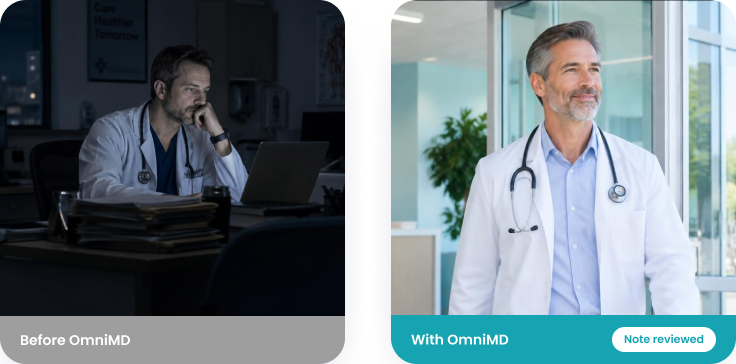
Your Last Patient Shouldn’t Start Another Hour of Charting.
The appointment ends, but the documentation often doesn’t. Notes remain unfinished, details have to be reconstructed from memory, and charting follows clinicians into lunch breaks, evenings and weekends.

Notes accumulate between appointments

Important details are recalled hours later.

Typing competes with the patient conversation.

Unfinished charts extend the workday.

Watch a Visit Turn Into a Clinical Note.
See how OmniMD captures the conversation, organizes the clinical details, and prepares the note for review.
See How OmniMD AI Medical Scribe Works
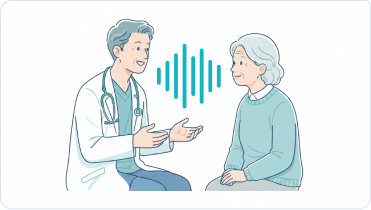
LISTEN
Talk naturally
The visit is captured in real time.
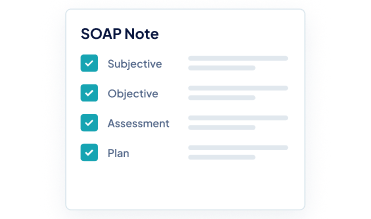
STRUCTURE
Review the note
Clinical details become a structured draft.
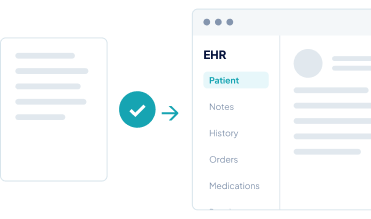
SYNC
Send to EHR
Approve the note and update the chart.
Beyond the Transcript. Into Your Workflow.
Bring patient context, clinical documentation, and EHR connectivity together—so each conversation becomes a note you can review, refine, and put to work.
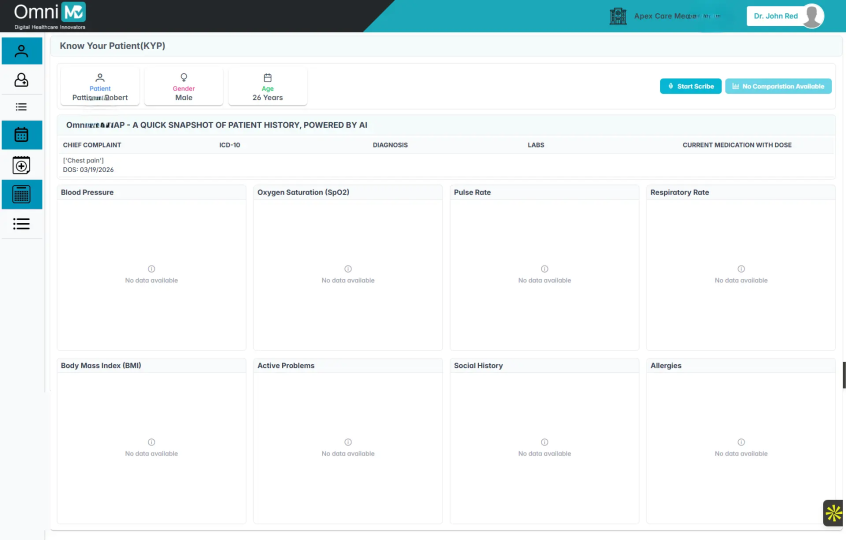
Know Your Patient (KYP)
Built for real-time clinical awareness, KYP aggregates patient history, medications, allergies, prior encounters, and risk indicators into a unified, intelligent view. By delivering complete patient context within the scribe workflow, it enables faster decision-making, improves documentation accuracy, and ensures every clinical interaction is informed, precise, and complete.
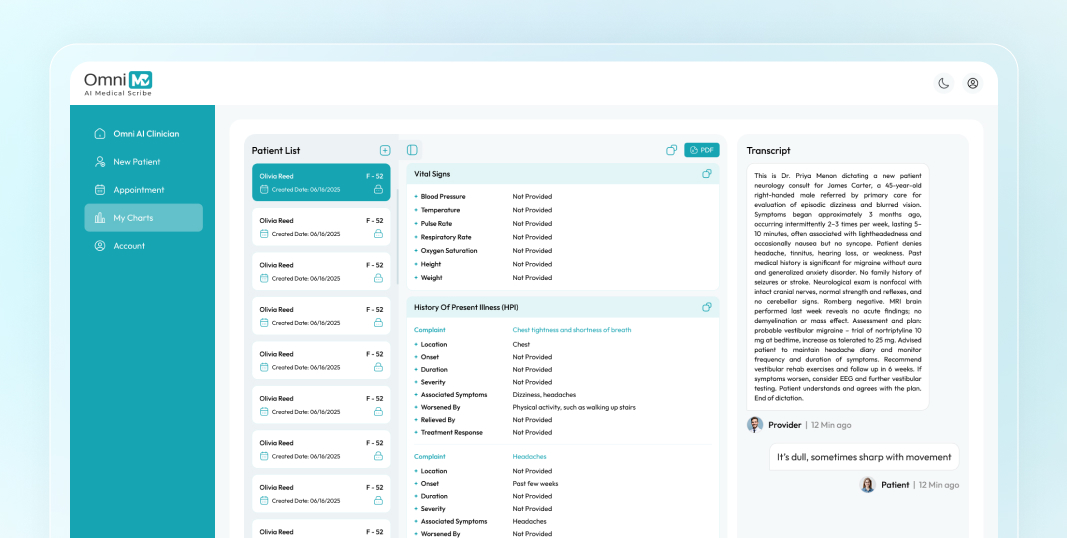
Speech-to-Text Charting
What once consumed hours now happens in moments. Conversations naturally convert into structured medical speech-to-text notes optimized for your workflow, specialty templates, and EHR charting requirements. Documentation becomes smoother, faster, and more intuitive, a hands-free medical dictation experience designed for real clinical use.
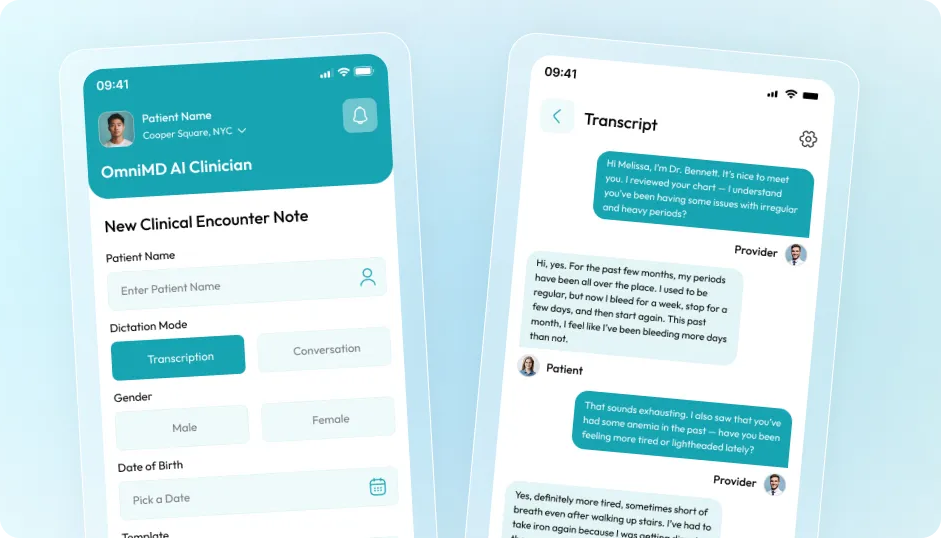
Speaker Diarization
Purpose-built for real medical encounters, our multi-speaker diarization engine doesn’t just separate voices, it preserves attribution, sentiment, and clinical context across patients, providers, nurses, and care teams. Designed for ambient clinical listening environments where clarity and accountability matter.
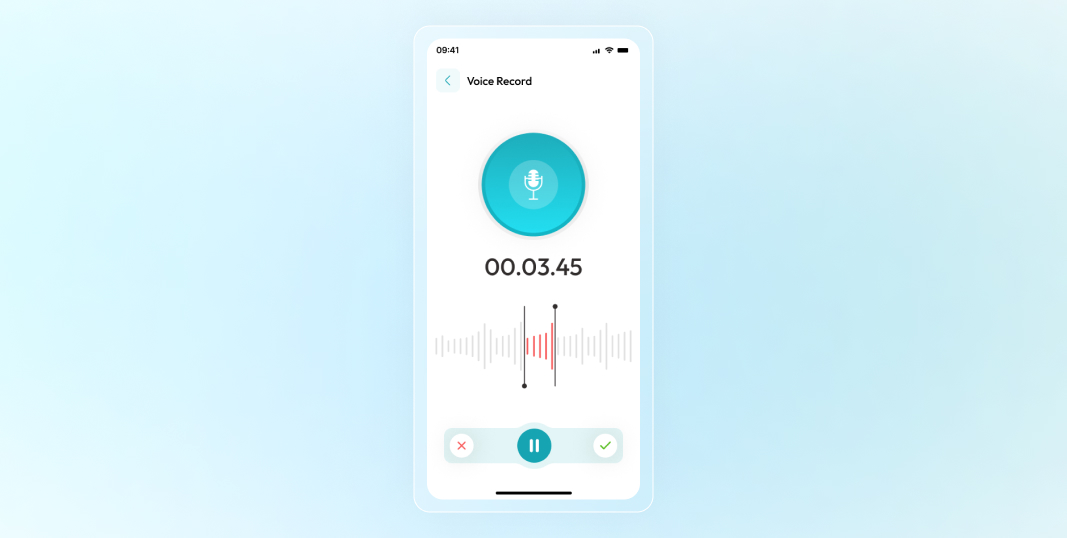
Clinical Documentation Automation
Engineered for clinical nuance, our AI medical scribe captures the spoken word with surgical accuracy, recognizing complex medical terminology and context in real time. Ambient clinical documentation automation ensures clinical intent, differential cues, and critical insights are never lost, powering compliant, structured EHR notes without typing.
EHR Integrations
This isn’t plug-and-pray. Native SMART-on-FHIR interoperability, HL7, and secure API bridges power live EHR data exchange across leading EMRs. Real-time sync removes silos, accelerates decision-making, and embeds clinical intelligence into every workflow, elevating traditional EHR integration into true clinical interoperability.
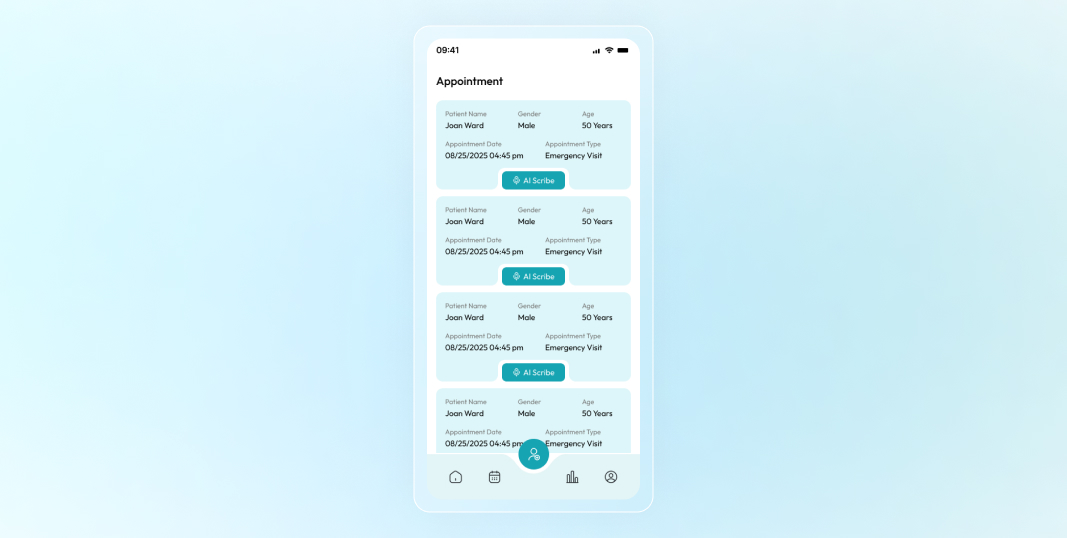
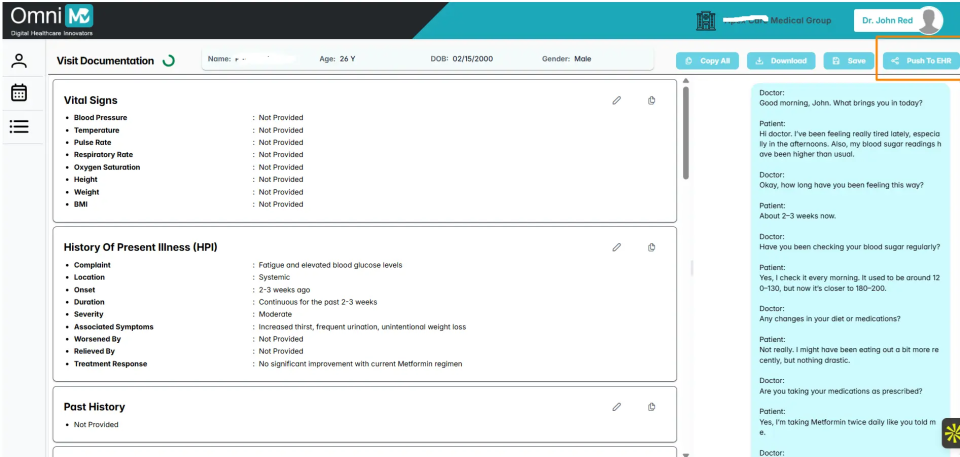
Push to EHR
With one-click automation, Push to EHR securely syncs completed clinical notes into your EHR in real time. By removing manual entry and reducing workflow friction, it accelerates documentation, improves data consistency, and allows providers to stay focused on patient care instead of administrative tasks.


More Present with Patients. Less Buried in Notes.

In psychiatry, being fully present matters. OmniMD AI Scribe helps turn my patient conversations into structured draft notes, so I can focus on listening instead of typing. After each visit, I review and refine the documentation before finalizing it.

Dr. Kanwaldeep Mann, MD (Psychiatry)
Amrit Mind & Body Wellness

“OmniMD AI Scribe helps me stay focused on my patients while turning our conversations into structured draft notes. I review the details, make any necessary changes, and approve the final documentation. It makes charting feel more manageable while keeping me in control.”

Dr. Mayank Patel
East Tremont Vascular Healthcare