Primary Care EHR

Primary care demands efficiency, coordination, and continuity. The OmniMD Primary Care EMR system brings documentation, patient engagement, and practice management together, helping providers deliver better care with simpler workflows.


Request a Demo Get Pricing
  • Trusted by 12,000+ Providers in 600+ Clinics
Garden state family care
Shiloh family medicne
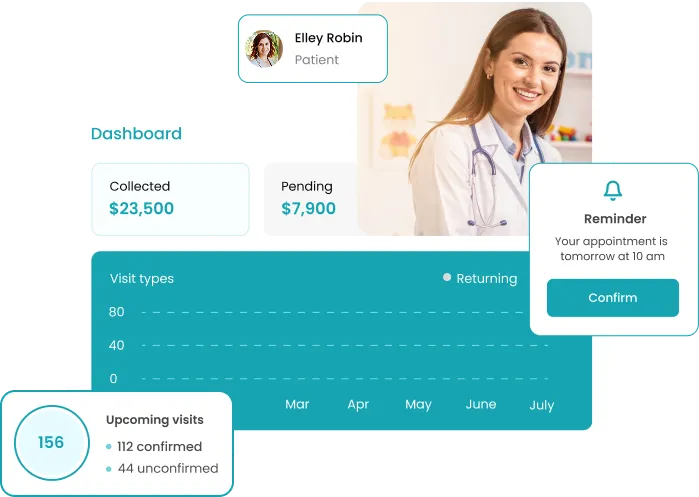
Primary Care EHR Dashboard - OmniMD

Trusted by Healthcare Providers Nationwide

Healthcare organizations across the country rely on the OmniMD platform to support clinical care, simplify operations, and strengthen revenue performance. With decades of experience in healthcare technology, OmniMD continues to equip practices with solutions designed specifically for modern medical environments.

12,000+ Healthcare Professionals


Using OmniMD solutions across the United States to manage clinical and operational workflows.

600+ Healthcare Facilities


Including independent primary care practices, specialty clinics, and multi-provider organizations.

Millions of Patient Records Managed


Securely stored and accessible through OmniMD’s integrated digital platform.

25+ Years of Healthcare Technology Innovation


Delivering trusted solutions built to support evolving healthcare needs.

Build for the way section left image

Built for the Way Primary Care Works

Primary care practices operate at the center of the healthcare ecosystem. Providers must balance patient care with documentation, coordination, and administrative responsibilities. OmniMD’s EHR is designed to support these realities, helping physicians simplify workflows, maintain accurate records, and improve care delivery across every patient interaction.

  • Document visits efficiently with structured clinical tools
  • Track preventive care and screenings with greater visibility
  • Manage chronic conditions with organized patient data
  • Coordinate care directly with labs, pharmacies, and specialists
  • Reduce administrative burden through automation and smart workflows

Key Features of OmniMD Primary Care EHR

Intuitive templates tailored for common primary care encounters, allowing providers to document visits quickly while maintaining detailed and structured records.

Annual wellness visits

Annual wellness
visits

Chronic care management

Chronic care
managementvisits

Preventive screenings

Preventive
screenings

Acute and same day visits

Acute and same day
visits

AI Clinical Scribe automatically generates structured visit notes

AI Clinical Scribe automatically generates structured visit notes

Ambient Listening Technology captures patient conversations and converts them into documentation

Ambient Listening Technology captures patient conversations and converts them into documentation

Intelligent Coding Suggestions support accurate billing and reduce manual effort

Intelligent Coding Suggestions support accurate billing and reduce manual effort

Laboratories and diagnostic services

Laboratories and
diagnostic services

e-Prescribing networks and pharmacies

e-Prescribing networks and pharmacies

Health information
exchanges

Health information
exchanges

HL7 and FHIR interoperability
standards

HL7 and FHIR interoperability
standards

Connected Solutions for Primary Care Practices

Primary care practices operate at the center of the healthcare ecosystem. Providers must balance patient care with documentation, coordination, and administrative responsibilities. OmniMD’s EHR is designed to support these realities, helping physicians simplify workflows, maintain accurate records, and improve care delivery across every patient interaction.

Medical Billing for Primary Care

Simplify clinical documentation with templates designed for preventive care, chronic disease management, and routine patient visits.

Revenue Cycle Management (RCM) Software for Primary Care

Optimize revenue cycle performance for primary care with automated coding, real-time eligibility verification, and simplified claims management.

Appointment Management Software 

Manage appointments, digital intake, patient communication, and engagement through a connected patient management system.

Telehealth for Primary Care 

Offer virtual visits and remote consultations through secure telehealth tools integrated directly into the EHR.

Remote Patient Monitoring (RPM) 

Track patient health data outside the clinic and support chronic disease management with remote monitoring tools.

Measurable Impact for Primary Care Practices

Practices using OmniMD often experience meaningful improvements in efficiency, productivity, and revenue performance.

70%

Improvement in Front Desk Efficiency

Up to 4

More Patients Seen Per Day

98%

Accuracy in Insurance Eligibility Verification

30%

Faster Revenue Collection

Everyday Workflows Supported by the EHR

Preventive Care Management

Preventive Care Management

Track immunizations, screenings, wellness visits

Chronic Disease Management

Chronic Disease Management

Organize patient data for conditions like diabetes, hypertension, cardiovascular disease

Acute Care Visits

Acute Care Visits

Quick documentation for same day appointments
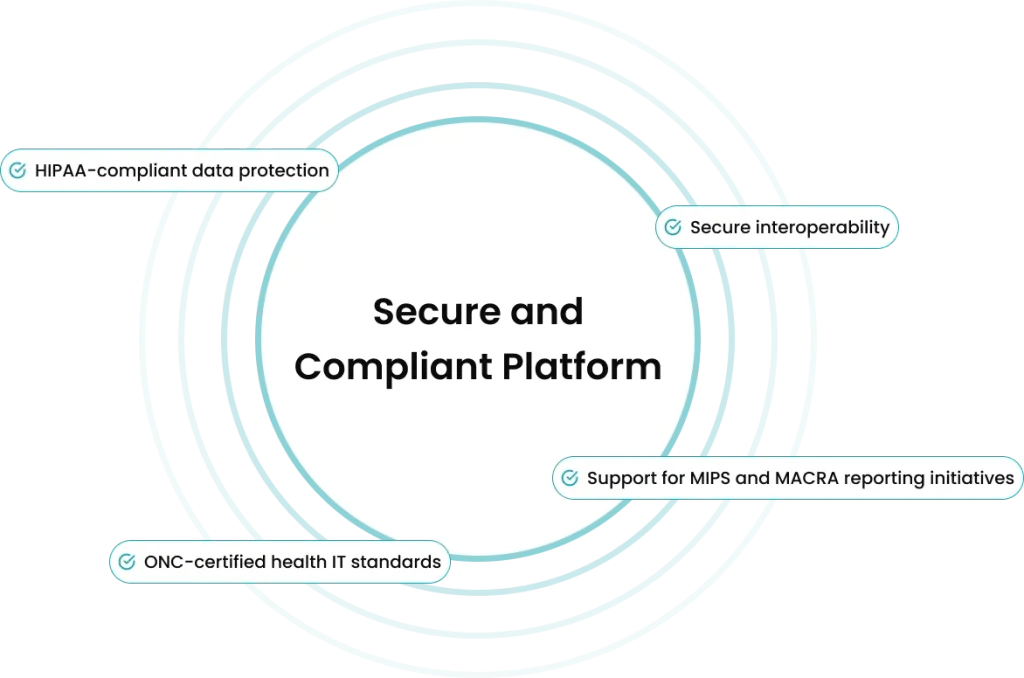
Secure and Compliant Primary Care EHR Platform

Why Primary Care Practices Choose OmniMD

  • AI-assisted documentation reduces administrative workload
  • Integrated billing and revenue cycle management tools
  • Telehealth and remote patient monitoring capabilities
  • Specialty-specific workflows designed for primary care
  • Scalable technology that grows with the practice

Trusted by 12,000+ Providers in 600+ Clinics

Frequently Asked Questions

Yes. OmniMD’s EHR is designed to support the clinical and operational workflows commonly found in primary care settings. The platform includes templates and documentation tools tailored for preventive care visits, chronic disease management, acute visits, and long-term patient tracking. These features help providers manage diverse patient needs efficiently while maintaining accurate clinical records.

Implementation timelines depend on the size of the practice and the complexity of the existing systems. However, many organizations are able to complete onboarding and begin using OmniMD within a few weeks. The implementation process includes system configuration, workflow customization, data migration, and staff training to ensure a smooth transition.

Yes. OmniMD supports secure migration of patient records, clinical documentation, and historical data from legacy systems. Dedicated implementation specialists guide practices through the process to help ensure that important patient information is transferred accurately and remains accessible after the transition.

Yes. OmniMD supports interoperability with laboratories, diagnostic services, pharmacies, and health information exchanges. The system also supports widely used healthcare data standards such as HL7 and FHIR, allowing providers to exchange patient information securely and maintain continuity of care across different healthcare organizations.

OmniMD provides structured onboarding, training resources, and ongoing technical support to help physicians and staff become comfortable with the system. Practices receive guidance during implementation, and support teams remain available to assist with technical questions, workflow optimization, and system updates as the practice continues to grow.

  • At minimum, a primary care EHR needs to support the full E&M code range (99202-99215 for office visits), age-stratified preventive codes (99385-99397 for commercial and Medicaid; G0438/G0439 for Medicare Annual Wellness Visits), and care management codes (99490, 99487 for CCM; 99495, 99496 for TCM). These code sets cover the majority of primary care volume and are where most billing errors and revenue leakage occur.
  • The EHR also needs to flag modifier 25 eligibility when a sick visit is documented on the same day as a preventive exam, and support tobacco cessation add-on codes (99406, 99407) on the same encounter as an AWV or office visit. Many EHR platforms support the base E&M codes but miss the add-on and same-day billing rules that represent 15-20% of primary care coding opportunity.
  • OmniMD’s billing rules engine applies these rules at the point of documentation. When the provider closes the visit, the system presents a suggested code with the documented MDM components that support it, and flags any same-day add-on code opportunities before the claim is submitted. This reduces both undercoding (leaving revenue uncaptured) and overcoding (audit exposure).
  • OmniMD tracks CCM time per patient per month inside the EHR without requiring a separate time-tracking tool. Clinical staff log each CCM touchpoint (phone call, portal message, care plan update, care coordination task) directly in the patient record, and OmniMD accumulates the time toward the 20-minute threshold required for CPT 99490. When the threshold is crossed, the system flags the patient as billable for that calendar month.
  • The CCM module also tracks complexity. When a patient has two or more chronic conditions and accumulated time reaches 60 minutes, OmniMD flags the encounter for CPT 99487 (complex CCM) rather than 99490, which reimburses at a significantly higher rate. Practices that use a manual time-tracking spreadsheet commonly miss this upcoding opportunity because complexity is not tracked alongside time.
  • At month end, OmniMD generates a CCM billing summary showing all patients who crossed billing thresholds that month, the time documented per patient, the supporting activities, and the recommended CPT code. The billing team can review and submit in one step rather than chasing documentation across multiple systems. This reduces the administrative cost of running a CCM program, which is often the reason small primary care practices do not bill CCM despite having an eligible patient panel.
  • An Annual Wellness Visit (AWV) is a Medicare-specific benefit billed under HCPCS G codes (G0438 for the first AWV, G0439 for subsequent). It focuses on health risk assessment, cognitive screening, functional ability screening, and creating a Personalized Prevention Plan of Service (PPPS). It does not include a physical examination. Medicare covers it at 100% with no patient cost-sharing. A regular wellness visit (99395-99397) is billed for commercial and Medicaid patients, includes a comprehensive physical examination, and is subject to the patient’s deductible and copay.
  • The billing implication matters in the EHR: using a preventive visit code (99395-99397) for a Medicare patient who is AWV-eligible is a common coding error. The patient will be billed cost-sharing they should not have, and the practice may receive a lower reimbursement than the G0438/G0439 rate. OmniMD detects the patient’s insurance type at visit creation and routes Medicare patients of the correct age and enrollment history to the AWV workflow automatically.
  • An AWV can be billed on the same day as a sick visit using modifier 25, provided the sick visit involves a separately identifiable, medically necessary problem. The AWV can also trigger same-day billing for tobacco cessation (99406/99407), advance care planning (99497), and depression screening (G0444). OmniMD flags each of these same-day add-on opportunities inside the visit note so providers do not need to remember the rules manually.
  • Yes. OmniMD supports DPC practices that run a hybrid model: a membership-based panel for direct-pay patients alongside a smaller FFS panel for Medicare or Medicaid patients. The EHR handles both patient types inside the same platform. DPC membership patients are tracked without insurance billing workflows, while the FFS patients use OmniMD’s standard claims processing, CCM, and AWV billing tools.
  • DPC practices often have higher visit volumes per provider and rely on same-day or next-day access as a core value proposition. OmniMD’s scheduling module supports open-access scheduling, same-day appointment slots, and patient self-scheduling through the portal. The AI scribe is particularly high-value for DPC providers, who see more patients per hour than traditional FFS practices and cannot absorb post-visit documentation time without running behind.
  • Practices that are considering moving from pure FFS to a hybrid DPC model can use OmniMD without switching EHR platforms. The DPC membership workflow can be activated on top of the existing FFS configuration, so the transition does not require data migration, retraining, or a new system implementation. This reduces the operational friction of testing the DPC model before fully committing.
  • OmniMD captures MIPS quality measure data automatically from clinical documentation throughout the year. When a provider completes a PHQ-9 for depression screening, documents a blood pressure reading for a hypertensive patient, or orders an HbA1c for a diabetes patient, OmniMD records the performance event against the corresponding MIPS quality measure. There is no manual data entry or separate registry upload required during the performance year.
  • The dashboard shows each provider’s measure performance in real time, with a gap flag when performance falls below the threshold that triggers a negative payment adjustment. This gives the practice lead time to act: schedule outstanding preventive screenings, complete pending care plan documentation, or increase patient outreach for chronic disease patients who have not had a qualifying visit in the measurement period.
  • OmniMD is an ONC-certified EHR, which satisfies a portion of the Promoting Interoperability (PI) performance category automatically. The e-prescribing rate, patient portal engagement, and health information exchange activity generated by normal clinical use of OmniMD count toward PI without requiring the practice to generate supplemental documentation. This reduces the total reporting burden for the three categories that practices can control directly: Quality, Improvement Activities, and Promoting Interoperability.
  • Yes. When a patient presents for a scheduled preventive exam and the provider also addresses a separate acute problem during the same visit, both services can be billed on the same date using modifier 25 on the E&M code. Modifier 25 signals that the E&M service was a significant, separately identifiable service from the preventive visit. This is one of the most commonly missed billing opportunities in primary care, as many practices bundle both services under the preventive code and collect only the preventive reimbursement.
  • OmniMD flags modifier 25 eligibility at the point of documentation. When a sick visit diagnosis is documented alongside a preventive visit code, the system alerts the provider to confirm that the acute problem required a separately documented, medically necessary E&M service. The alert prompts the provider to complete the documentation required to support the modifier 25 claim before the visit is closed, rather than catching the issue in billing review after the patient has left.
  • Not all commercial payers accept modifier 25 on the same day as a preventive visit. Some payers bundle the E&M service into the preventive payment regardless of the modifier. OmniMD’s payer rules engine flags payers in the practice’s payer mix that follow this bundling policy, so the billing team can adjust the claim strategy by payer and avoid submitting claims that will be denied or partially paid. This payer-level intelligence is typically maintained and updated by OmniMD’s billing team rather than the practice.