Ambulatory Surgical Center
EHR Software
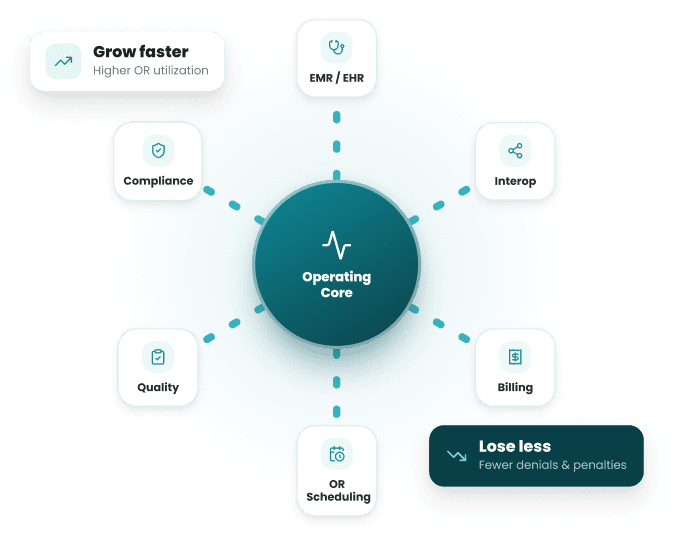
Surgical centers that reinvent their operating core grow faster and lose less.
Ambulatory surgical center software from OmniMD integrates EMR, EHR, facility billing, OR scheduling, quality reporting, and compliance in one platform. Built for how surgical centers operate. Not adapted from how hospitals do.
Why Most ASCs Are Losing
Money on Technology
Half of healthcare organizations lack a technology strategy aligned to their
operating model. The cost does not show up as a system error. It shows up in
OR utilization, denied claims, and CMS penalties.

The reimbursement gap is
structural, not configurational
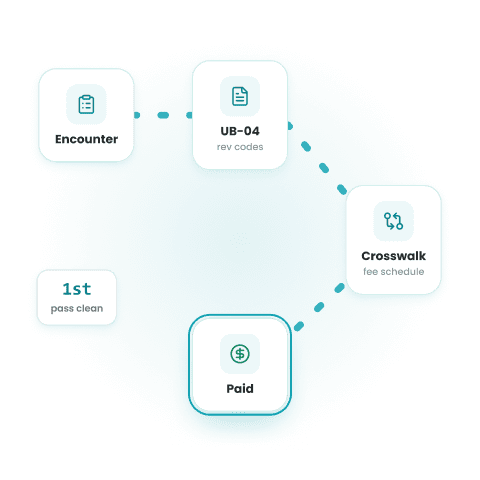
General platforms produce physician claims. ASCs require UB-04 claims, facility fee schedules, and revenue codes that do not exist in physician billing. Configuration does not close that gap.
OR time is unmanaged in most
platforms
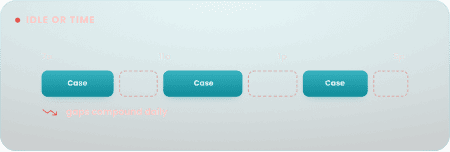
Block scheduling, preference cards, and real-time room coordination are the revenue core of a surgical center. Most EHRs have no architecture for them. The cost compounds daily.

Quality compliance is a financial
control now
Centers that collect ASCQRP measures manually absorb a defined risk: a 2% Medicare reduction, every period. Centers that embed collection into care delivery remove that risk entirely.
How OmniMD Helps You
One platform across every function a surgical center depends on. Built for ASC care economics, billing rules, and compliance from the start.

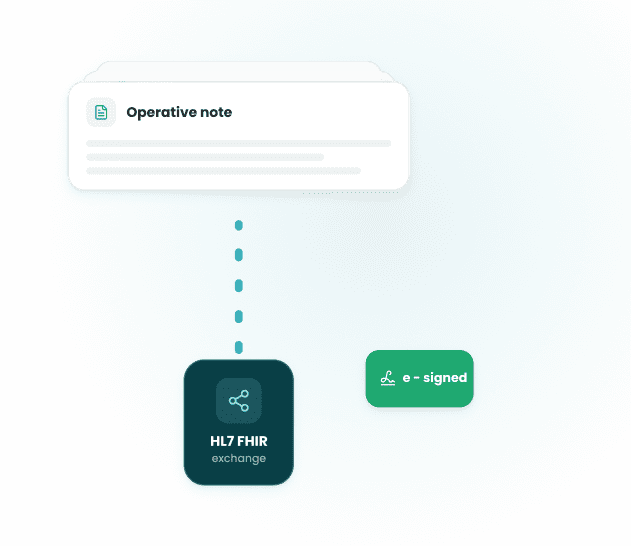
Specialty-specific templates, anesthesia documentation, post-op notes, and consent management with electronic signatures. HL7 FHIR exchange connects the surgical EHR across payers, referral networks, and facilities.

Specialty-specific surgical note templates
Anesthesia documentation, post-op notes, consent forms
Electronic signatures for compliance handoffs
Interoperable EHR HL7 FHIR exchange across payers & facilities

UB-04 generation with automated revenue code assignment. Medicare fee schedule crosswalk built into claim logic. Denial management on ASC-specific adjudication rules. HCPCS coding and modifier optimization as standard.
Built-in UB-04 claim generation with automated revenue code assignment
ASC fee schedule crosswalk for Medicare claims
Denial management with ASC-specific reason code logic
HCPCS coding support and modifier optimization

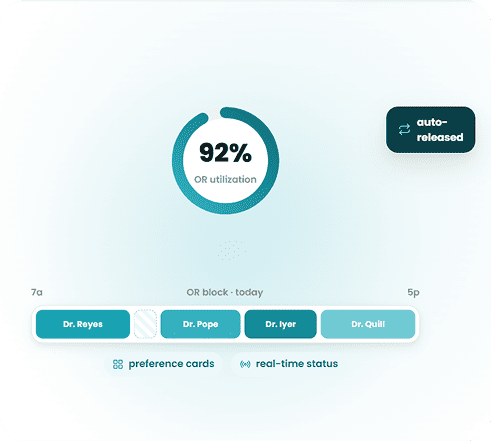
Block time assigned, tracked, and released at the surgeon level. Preference cards at scheduling. Real-time room status. Pre-op tied to the OR calendar. Same-day admission through discharge without gaps.
OR block time management: assign, track, and release surgeon blocks
Surgeon preference cards auto-loaded at time of scheduling
Real-time room status board and wait time tracking
Same-day admission to discharge workflow
Pre-op appointment scheduling linked to OR calendar

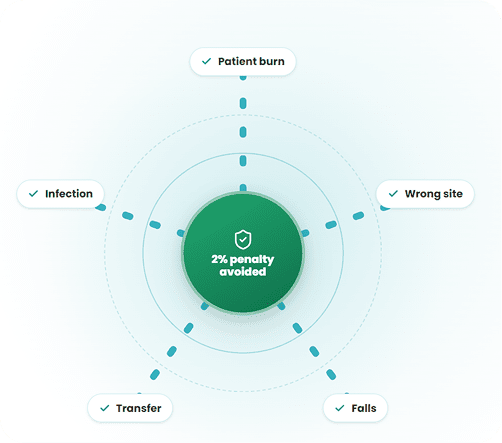
ASCQRP measures collected automatically as care is delivered. No secondary entry. No 2% Medicare exposure. Benchmarked continuously against national ASC averages.
Automated ASCQRP measure collection from clinical documentation
CMS quality data submission management
Avoid the 2% Medicare payment reduction for non-compliant ASCs
Quality benchmarking dashboard vs. national ASC averages

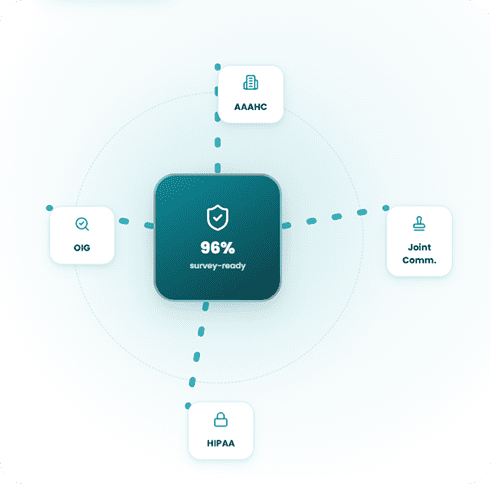
AAAHC and Joint Commission documentation support continuously, not only before surveys. Live survey-readiness tracking. HIPAA audit trails on demand. OIG monitoring for high-risk procedures.
AAAHC and Joint Commission accreditation documentation support
Policy and procedure management with survey-readiness tracking
HIPAA audit trail and access control reporting
OIG compliance program monitoring for high-risk ASC procedures

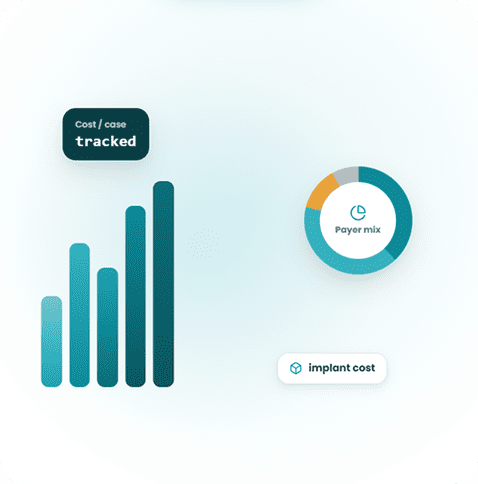
Per-case cost including implants and devices. Payer mix and contract performance alongside clinical and billing data. Supply chain cost tied to case outcomes.
Per-case cost analysis and implant cost tracking
Payer mix reporting and contract performance
Supply chain cost visibility
What You’ll Achieve By Specialty

Orthopedic ASC EHR
Bilateral procedures, implant tracking, bone graft billing, and preference cards. Built for orthopedic workflows, not approximated from general templates.

ASC Pain Management
Fluoroscopy templates, PDMP integration, and injection documentation for interventional workflows. Consistent across every physician.

Multispecialty ASC
One platform across every service line. No parallel systems, no
reconciliation between disconnected tools.

Same-Day Surgery Center
Rapid check-in through same-day discharge. The platform accelerates throughput rather than constraining it.
Why OmniMD Over a General
EHR or Hospital System
The best ASC software is not the broadest platform. It is the one designed around ASC care economics, billing rules, and compliance from the start.
Capability
ASC surgical templates
OR block scheduling
Integrated UB-04 billing
ASCQRP automated reporting
Implant & device cost tracking
Accreditation compliance tools
ASC surgical templates
Generic EHR

Add-on
Limited
Hospital System
Limited



What ASC leaders say
After comparing many EMRs, I determined that OmniMD was the best software for my new clinic. I run a high volume family practice clinic. OmniMD is used for scheduling, reminder calls, medical records, insurance and patient billing. OmniMD is a critical tool for my practice. It is a very good software, but I am also very pleased with the level of service OmniMD provides with their technical support team.

Our practice has been very pleased with the outcomes of your billing and collection services. You have been both informative and patient as we continue to become a more efficient practice. We have recognized that collections have been improved due to your diligence and tenacity. Thank you for your kindness and hard work.
OmniMD EHR and Billing software has truly streamlined our operations at Solid Sobriety. Their billing tools have improved our efficiency, significantly reducing errors and boosting revenue. What stands out most is their exceptional customer support- the team is always available, knowledgeable, and proactive in solving any challenges we face. We couldn’t be happier with the partnership.
I have been a practitioner for over a decade and worked various EMR programs in the past by far OmniMD surpasses all my expectations. It’s easy to navigate and your entire note in one page with only a few clicks to complete. I own a family medical practice/ spa and I am very happy that I chose OmniMD. Their support staff is amazing they are always available to assist you.

As a new startup practice, we knew that selecting the right EHR system was crucial for establishing efficient workflows and seamless patient care. OmniMD exceeded our expectations with its intuitive, customizable platform and outstanding customer support. From implementation to ongoing assistance, their team has been incredibly responsive, guiding us through every step and ensuring a smooth transition.

For more than a decade, OmniMD has been an integral part of our practice, offering a user-friendly software wireframe that makes charting extremely easy and enhancing our approach to out-of-network patients. The intuitive design and functionality have allowed us to improve patient care and operational efficiency significantly.
Hello, I’m Eman, for the past 10 years, OmniMD has been instrumental in transforming our billing operations. The reduction in claim denials and the ease of handling claims have not just streamlined our work but have also allowed us to focus more on patient care. The efficiency and reliability that OmniMD offers are unparalleled, and it has been a vital component of our practice’s success.






Book your free ASC demo
A working session on your specialty, your case volume, and the gaps you are currently managing around.
Still Have Questions?
Brands That Trust Us