

Physical Therapy Billing Services Compared: Which Vendor Actually Reduces Denials by 32.5%+?
Key Takeaways
| Vendor | Pricing | Clean Claim Rate | Key Credential | Biggest Strength | Biggest Trade-off |
| WebPT + Therabill | $99/provider/mo plus 6.5% of collections for RCM | 98.50% | Best in KLAS 2024 (Outpatient Therapy) | Deepest PT-specific workflows; 150,000+ PT users | Two separate systems to manage; documented billing and overcharge complaints |
| CompuGroup ARIA RCM | Custom (billing-only service) | Not disclosed | Best in KLAS 3 years running (2024, 2025, 2026), the only vendor here with this | Works on top of ANY EMR you already use | Their own software isn’t PT-specialized |
| DrChrono | 4 to 8% of collections OR monthly minimum | Not disclosed | PT-specific variant; certified coders included | iPad-first mobile workflow | Notable recent BBB complaints; slow ticket-only support |
| OmniMD | Billing services with EHR included | 98% | 94% client satisfaction; 20+ years serving US providers | Dedicated Account Manager for every client; strong multi-specialty interoperability | Multi-specialty platform, not PT-exclusive |
| CollaborateMD | Starts at $235/user/mo | Not disclosed | Strong reporting platform | Best-in-class analytics for multi-clinic billers | Not an EMR; no phone support; rocky clearinghouse transition |
According to a December 2025 industry analysis, US physical therapy practices lose an average of $50,000 per year to medical billing services errors, claim denials, and administrative drag. For most small and mid-size clinics, that’s not a rounding error. It’s the difference between hiring another therapist and delaying the hire. Between opening a second location and staying put. And with new CMS requirements like the 2026 prior authorization mandate, the cost of having the wrong billing partner is only going up.
Hence, we put this guide together because we talk to US clinic owners every day, and we consistently hear the same questions. How does WebPT compare to OmniMD? Is CompuGroup’s billing team really that good? What about the newer AI Medical Scribe and other AI-focused platforms? Which vendors have reliable support, and which ones disappear after you sign the contract?
Rather than ask you to take our word for it, we pulled together the actual data. Hundreds of reviews from Capterra, G2, Trustpilot, and Software Advice. Public Better Business Bureau complaint records. Verified pricing from third-party software directories. The 2026 KLAS Research rankings, which are the only independent evaluations in US healthcare IT built on structured provider interviews rather than incentivized reviews.
If we couldn’t verify something, we left it out. That said, now, let’s walk through it together.
1. WebPT (Paired with Therabill and Their RCM Service)
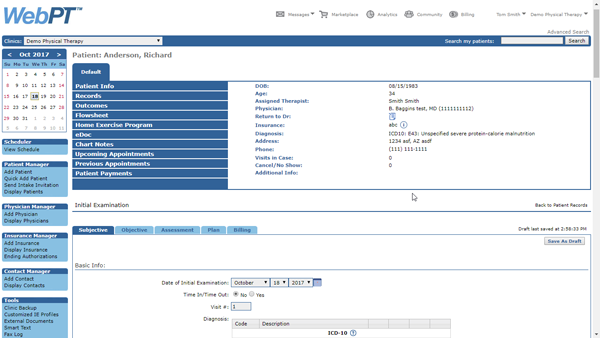
WebPT is the most widely recognized name in US physical therapy software. Over 150,000 rehab therapy professionals use it across more than 27,000 clinics nationwide. Headquartered in Phoenix, Arizona, the company has been serving US rehab therapy practices for more than 15 years.
One thing worth understanding upfront is how WebPT’s billing actually works. WebPT itself is the EMR. Billing happens through a separate product called Therabill, which WebPT acquired in 2015 according to FindEMR. So your team logs into WebPT for documentation and Therabill for billing. They’re two platforms that need to stay in sync.
If you’d prefer not to manage billing yourself, WebPT also offers a full revenue cycle management team that handles it for you. Compare Top Systems for Faster Patient Flow and automated AI Front Desk solutions.
- EMR pricing starts at $99 per provider per month.
- Full-service RCM runs about 6.5% of monthly collections.
- WebPT reports a 98.5% clean claim rate.
- Their clearinghouse partner is Waystar.
- WebPT won Best in KLAS for Outpatient Therapy in 2024.
What Users Appreciate
There’s a clear reason WebPT has the market presence it does. People who use it often feel it was built specifically for physical therapists.
Reading through hundreds of Capterra reviews, the positive themes are consistent:
- Templates that fit therapy workflows.
- Medicare 8-Minute Rule alerts that save real time.
- CPT and modifier guidance that reduces errors.
- A documentation flow that matches how US PTs actually work day to day.
A new US clinic owner quoted on WebPT’s homepage reported getting paid by most insurance companies within 2 to 3 weeks, with some claims paid in as little as 5 days. That’s a hand-picked testimonial, but it lines up with what independent reviewers describe.
Things to Consider Carefully
A few patterns show up consistently in user feedback that are worth knowing before you sign.
- Managing two systems creates real friction. A Capterra reviewer shared a story about entering incorrect insurance information in WebPT, having it cross over into Therabill incorrectly, and being unable to fix it even after multiple corrections in both systems. Workflow breakdowns like this can cost claims.
- Several US customers have filed specific BBB complaints. The BBB WebPT complaints page documents one practice being charged for 3 Therabill licenses when their contract was for 1, leading to $3,069 in overcharges. Another customer was overcharged $7,000 and needed four weeks to resolve it. A third complaint describes WebPT cutting off a customer’s Therabill access during a clearinghouse migration, leaving them unable to collect for weeks.
- Occasional outages affect clinics. A Software Advice review from a multi-year user reports roughly one major outage per quarter, sometimes lasting over a day.
- Cash-based US practices sometimes struggle with the fit. As per the HENO’s competitor analysis, WebPT is fundamentally designed around insurance workflows. Clinics moving toward cash-pay or hybrid models may feel friction.
Who CGM ARIA Works Best For
- Good fit if: You already have an EMR you like and want the most highly-rated outsourced billing team available to US practices.
- May not be the best fit if: You want tightly integrated all-in-one software, or you want a PT-specialized EMR.
2. CompuGroup Medical (CGM) and ARIA RCM
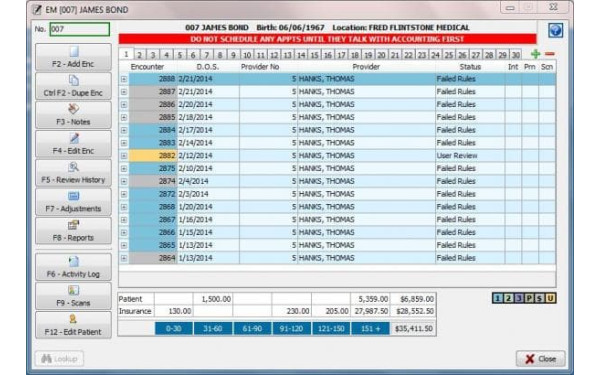
Most vendors on this list want you to buy both their software AND their billing services. CGM takes a different approach. Their billing team works on top of whatever EMR you already use. This is stated openly on CGM’s own website: “Our billing services are technology-independent and not tied to any particular software or vendor.”
CompuGroup Medical US is headquartered in Richardson, Texas. The parent company operates globally, but ARIA RCM is specifically a US-focused billing service for US healthcare providers.
The Distinction Worth Knowing About
Of everything in this comparison, the credential that stands out most is this:
ARIA RCM has won Best in KLAS for Ambulatory RCM Services: EHR-Associated for three consecutive years in 2024, 2025, and 2026.
KLAS is different from typical review sites in a meaningful way. They conduct structured phone interviews with actual US healthcare providers rather than relying on incentivized online reviews. You can verify this ranking on the official KLAS 2026 report, which shows CompuGroup Medical US ARIA RCM at a score of 82.2. It’s also covered in Healthcare IT News’ 2026 KLAS coverage and CGM’s February 2026 press release.
No other vendor in this comparison holds this distinction, which is worth noting if you’re specifically evaluating billing service quality.
What Users Say About ARIA
The PT-specific expertise is genuine. As per the CGM’s physical therapy billing page, the ARIA team is trained on the 8-Minute Rule, GP modifier, timed codes like 97110 and 97112, and Medicare therapy threshold tracking.
Verified reviews on Software Finder give CGM 4 out of 5 stars across 50 reviews, with 42% at 5 stars and 34% at 4 stars. Reviews highlight responsive US-based account management and simple patient record workflows.
Where CGM Is Weaker
While the billing service rates highly, the CGM software itself receives more mixed feedback.
A G2 reviewer of CGM CLINICAL described an unresolved e-fax issue that stretched from January 2022 through May 2022. Software Finder reviewers mention occasional delays with updates and limited options for custom feature add-ons.
Worth noting also: CGM’s software isn’t PT-specialized. CGM CLINICAL is a multi-specialty EHR, so any PT-specific value comes from the ARIA billing team’s training rather than purpose-built workflows in the app itself.
Who DrChrono Works Best For
- Good fit if: Your practice is genuinely iPad-first, you value having coding handled for you, and you’re prepared to work with a ticket-based support model.
- May not be the best fit if: You rely on responsive phone support, you’ve had contract issues with vendors before, or the recent user feedback gives you pause.
3. DrChrono (EverHealth)
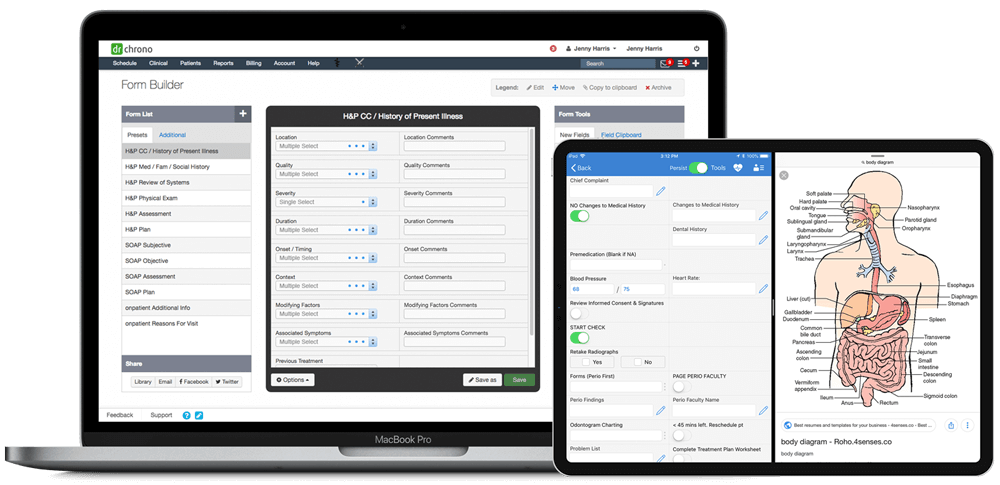
DrChrono is the iPad-first option in this comparison. If your therapists prefer to work from tablets during patient sessions, this is the only vendor in the group built around a truly mobile workflow. Headquartered in Sunnyvale, California, DrChrono has a PT-specific variant, though the underlying platform is a general-purpose multi-specialty EHR for US providers.
The billing is integrated and includes full-service RCM with something most competitors don’t offer: certified coders who handle your coding for you. As per DrChrono’s PT page, the RCM team handles coding, analyzes rejections within 48 hours, and provides a Live Claims Feed dashboard.
How Pricing Works
As per the detailed Business.com review, DrChrono uses a hybrid pricing model. You pay either a monthly minimum OR 4 to 8% of collections, whichever is higher. Four tiers are available: Prometheus, Hippocrates, Apollo, and Apollo Plus. A 30-day free trial is available, and contracts are typically required, with longer terms common for advanced RCM packages.
What Users Appreciate
Billing profiles save real time. A Capterra review featured on DrChrono’s homepage describes the feature cutting billing work by about a third, especially for repeat visit types where the profile pre-fills codes automatically.
The iPad mobility gets consistent praise in Software Advice reviews. Clinicians can document during sessions without being tied to a desktop.
Things to Consider Carefully
This section requires some care because several concerning patterns show up in public records.
- A 5-year US customer on Trustpilot wrote: “To this day, I have never successfully submitted a medical claim through DrChrono that resulted in payment.” The same reviewer reported being asked to pay extra for training that they felt should have been included.
- The BBB records describe some serious situations. The DrChrono BBB page documents a case where the company revoked a practice’s access to patient records on October 15, 2025 during a billing dispute, while the practice maintained they were current on all payments.
- Support quality is a recurring theme across reviews. Users on Trustpilot, Software Advice, and BBB describe a similar pattern: ticket-only support, 3 to 5 day response times, and tickets marked “resolved” when the underlying issue wasn’t fixed.
Who CGM ARIA Works Best For
- Good fit if: You already have an EMR you like and want the most highly-rated outsourced billing team available to US practices.
- May not be the best fit if: You want tightly integrated all-in-one software, or you want a PT-specialized EMR.
4. OmniMD (That’s Us)
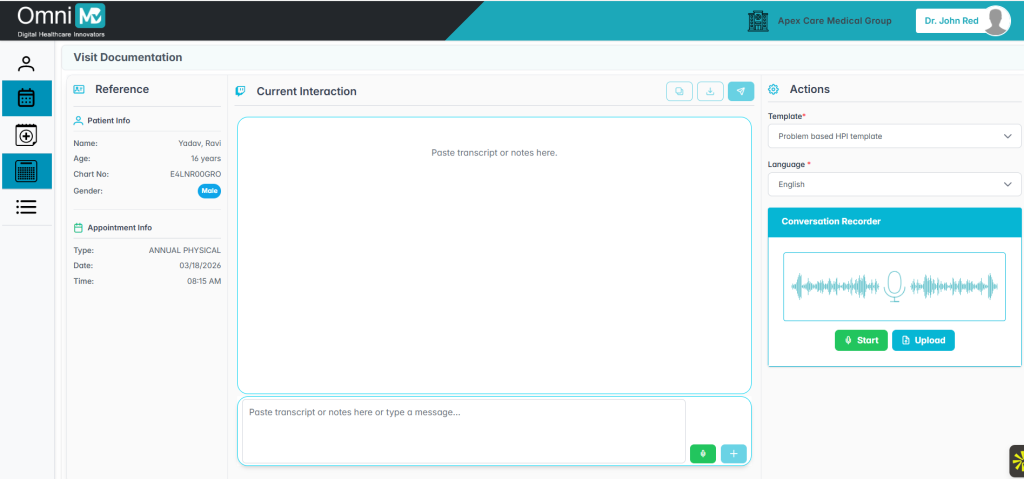
We’re a multi-specialty EHR and billing services vendor headquartered in Hawthorne, New York. We support physical therapy, EHR for Orthopedics, pain management, occupational therapy, and other specialties across the United States. We’ve been serving US healthcare providers for over two decades, and today we work with more than 12,000 providers nationwide.
Our commercial model is a little different. We offer integrated EHR software to US practices that subscribe to our billing services. Most vendors charge separately for both. Our thinking is simple: if our billing team is doing the work of recovering your revenue, the EHR should come along with it. It’s one less thing for you to budget for, and it aligns our incentives with yours.
We report a 98% first-pass clean claim ratio and 94% client satisfaction, and every client works with a dedicated Account Manager.
These are our own numbers. We stand behind them, but the right way to evaluate any vendor (including us) is to speak with current customers before signing. We’re happy to connect you with a few.
What Our Customers Tend to Say
The strongest feedback we hear is about billing outcomes. One long-time customer on Capterra shared that after over 9 years of losing money with their in-house billers, they finally moved to our billing services, and now feel confident they’ll be debt-free in time. Stories like that are why we do this work.
Customer support comes up often too. Reviewers describe our training team with words like “sweet patience,” especially during long training sessions. When a new US practice owner is learning everything from scratch, that patience matters.
Interoperability is another area our customers highlight. US diagnostic labs requiring LIS EHR integration that connect to multiple EMRs have told us we provided the best client training they’ve experienced in 20 years of diagnostic work.
Where We Want to Do Better
Some of our customers have flagged workflow issues. We’ve also had feedback that some of our support staff can be difficult to understand. Our business headquarters and account management are US-based, while part of our technical support team operates globally. We’re actively working on clearer communication training across our support organization.
A few reviewers have pointed out reporting gaps, particularly inconsistencies between older and newer versions of our software. This is a real issue we’re addressing in our current development roadmap.
And the most important honest note for US PT practices specifically: we’re not a PT-first EHR. We’re a multi-specialty platform that supports PT well, but the depth of PT-specific workflows isn’t the same as vendors like WebPT that focus exclusively on rehab therapy. If your entire practice is physical therapy and you need the deepest PT-specific clinical templates, one of those platforms might serve you better. We’d rather tell you that upfront than have you discover it later.
Who CGM ARIA Works Best For
- We’re a good fit if: You’re a US-based multi-specialty practice that includes PT alongside other specialties. Or you’re a cost-sensitive US clinic that likes the EHR-with-billing model. Or you’ve struggled with in-house billing for years and want a team that will actually chase down your aging AR.
- We may not be the best fit if: You’re a pure PT practice wanting the deepest therapy-specific clinical workflows.
- If you’d like to explore working with us: The easiest starting point is a free medical billing audit. No commitment required. We’ll take an honest look at your current billing and show you what we’d do differently. If it works for you, we can go from there. If not, you still walk away with useful information for your decision.
5. CollaborateMD (Part of EverHealth / EverCommerce)
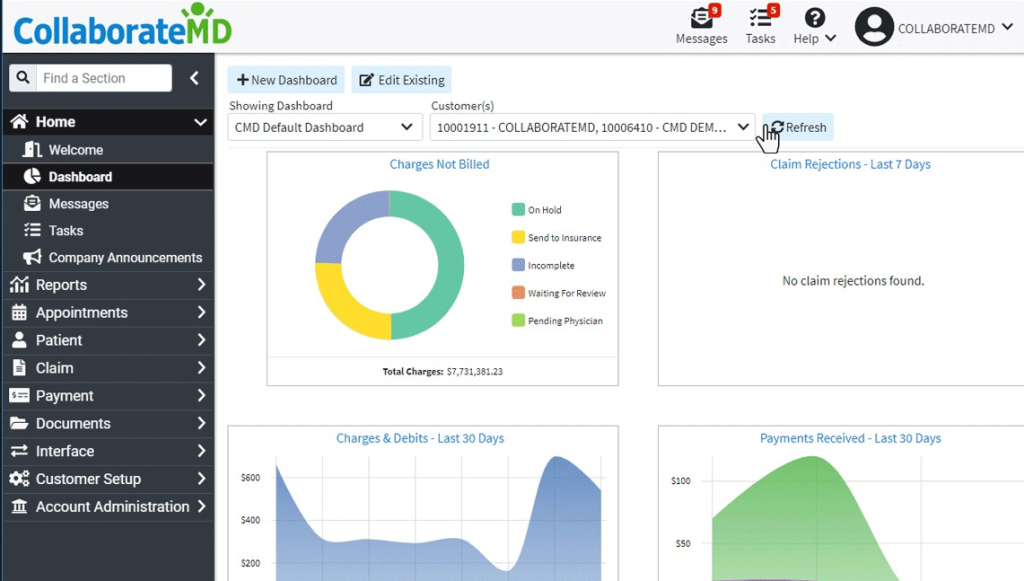
One important distinction upfront: CollaborateMD is not an EMR. It’s a US practice management and medical billing platform designed to connect to your existing clinical software.
This makes CollaborateMD especially well-suited for US billing companies serving multiple clinics, or for US practices that already have clinical software they like and just need a strong billing system to pair with it.
- Starts at $235 per month per user.
- Four pricing tiers: Starter, Basic, Growth, Unlimited
- Built-in clearinghouse (originally Change Healthcare, now eProviderSolutions)
Where CollaborateMD Shines
Reporting is a real strength. If you’re a US billing company or a practice that lives by analytics, the platform is strong. Billing managers on Capterra describe it as the best billing platform they’ve used. The ability to create custom reports for specific clients is especially valuable for US billing services juggling multiple PT clinics.
Things to Consider Carefully
The clearinghouse transition is worth understanding before you commit.
- When CollaborateMD switched from Change Healthcare to eProviderSolutions (ePS), some longtime customers had difficult experiences. A 10-year US customer wrote on Capterra about receiving a surprise $199 bill in January 2023 because they hadn’t manually updated 30+ payor agreements, without receiving advance notice.
- Another review on the same page cautioned other shoppers: “I have never had so many support tickets open with them, and they have all been unresolved.”
- Support structure has also shifted. TechRadar’s review confirms that toll-free phone support has been discontinued. US customers now have access to chat (8am to 6pm Eastern weekdays) and a ticket portal. If your US clinic is on Pacific or Mountain time, the available support window is narrower.
- One Software Advice review summarized the concern this way: “CollaborateMD severely lacks customer support responsiveness.”
Who CollaborateMD Works Best For
- Good fit if: You run a US billing company serving multiple PT clinics, or reporting depth matters more to you than integrated clinical workflows.
- May not be the best fit if: You need phone support or PT-specific billing logic built in.
How to Think About This Decision
Here’s our honest take on how to match the right vendor to your specific situation. We’re happy to point you toward a competitor where they’re the better fit. That’s what builds relationships that last.
- If You’re an Established Mid-to-Large US PT Clinic: WebPT is likely your best starting points. WebPT has the largest US PT-specific user base and the most mature rehab workflows.
- If You Love Your Current EMR and Just Need Better Billing: CompuGroup’s ARIA RCM is an excellent choice here. Three consecutive Best in KLAS awards is the strongest independent signal in US healthcare IT. You can keep your EMR and upgrade just the billing.
- If You’re a US Multi-Specialty Practice That Includes PT: OmniMD tends to be a strong fit. The EHR-with-billing model is unique in the US market, and we have real experience serving multi-specialty practices. If you’d like us to take a look at your revenue cycle, we’re happy to do a free billing audit. No commitment, just a useful conversation.
- If You’re iPad-First and Willing to Accept Support Trade-offs: DrChrono is still worth considering. Just go in with eyes open. Read the BBB complaints and get current US customer references before committing.
- If You Run a US Billing Company Serving Multiple PT Clinics: CollaborateMD has the reporting depth you’d want.
OmniMD’s medical billing software supports physical therapy billing across single-specialty and multi-specialty practices, with PT-specific billing rules, timed service unit calculation, and payer contract rate management built into the same platform.
Three Things Worth Doing Before You Sign Any Contract
Whichever US vendor you choose, including us, these three steps protect you.
#1. Request 3 Current US Customer References You Can Call Directly
Real conversations with real US PT clinic owners will tell you more than any demo. Ask about support response times, unexpected fees, and what they wish they’d known before signing. If a vendor can’t or won’t provide references, that itself is useful information.
#2. Take Time to Read the BBB Complaints
Every US vendor in this comparison has a BBB profile. Spending 20 minutes reading through them will reveal patterns that marketing materials never will. Vendors with few complaints who respond thoughtfully are generally safer bets than vendors with recurring issues.
#3. Get Cancellation and Data-Export Terms in Writing
This is the single most common BBB complaint across vendors on this list. “I tried to cancel and they kept billing me.” Protect yourself upfront. Know exactly how to leave before you commit. If a vendor won’t provide cancellation terms in writing, that tells you something important.
A Final Thought
Choosing your physical therapy billing partner is one of the most important decisions you’ll make as a US clinic owner. The right choice gives you back time, money, and peace of mind. The wrong one quietly affects your practice for years.
We put this guide together because we believe US clinic owners deserve the full picture when they’re making this decision. That meant giving credit to WebPT where WebPT earns it, pointing toward CompuGroup when they’re the best fit, and honestly acknowledging the areas where OmniMD can do better.
If you’d like to explore whether OmniMD could be the right fit for your specific US practice, we’d be glad to talk. The easiest starting point is a free medical billing audit. We’ll take an honest look at your revenue cycle and share what we’d do differently. If we’re a fit, we can go from there. If we’re not, you’ll still walk away with useful information for your decision.
Either way, we hope this guide helps you make the choice that’s right for your practice.
A Note on Transparency
We’ve done our best to write this fairly. Every claim here is linked to a public source, and we’ve included the areas where OmniMD could do better alongside the areas where we shine. Our goal isn’t to “win” this comparison. It’s to help you find the right fit for your practice, even when that fit is someone else. The information in this guide is based on publicly available sources, including third-party review platforms (Capterra, G2, Trustpilot, Software Advice), Better Business Bureau records, KLAS Research reports, and vendor websites, all accurate to the best of our knowledge at the time of publication. Pricing, features, product offerings, certifications, and user feedback can change without notice, so we recommend verifying current details directly with each vendor before making a purchasing decision. Customer reviews reflect individual experiences and may not represent typical outcomes. OmniMD is not affiliated with, endorsed by, or sponsored by any of the other vendors mentioned in this guide, and all trademarks, product names, and company names belong to their respective owners. This content is intended for informational purposes only and does not constitute legal, financial, or professional advice.
Before evaluating which billing service or software to use, understanding how the 8-minute rule actually works clarifies what to look for in a platform’s timed service unit logic. Physical therapy billing: the 8-minute rule explained covers the calculation method, common errors, and documentation requirements that determine whether a PT billing system is handling timed codes correctly.
Physical therapy denial rates sit above the industry median because of the timed service complexity and payer-specific documentation requirements. Average claim denial rates by medical specialty provides PT-specific benchmarks so practices can evaluate whether their current billing platform is performing at, above, or below specialty norms.

Stop Losing Revenue to PT Billing Errors
Cut denials, speed up payments & improve cash flow with expert PT billing

Dr. Giriraj Tosh Purohit is an experienced Product Manager and Business Analyst with a strong background in healthcare technology and management consulting. With expertise spanning clinical workflows, EHR, RCM, Digital Health, and AI-driven products, he has been instrumental in shaping innovative healthcare solutions.