
Ambulatory Surgical Center Software: EMR, EHR, Billing and Scheduling
Surgical centers that reinvent their operating core grow faster and lose less.
Ambulatory surgical center software from OmniMD integrates EMR, EHR, facility billing, OR scheduling, quality reporting, and compliance in one platform. Built for how surgical centers operate. Not adapted from how hospitals do.
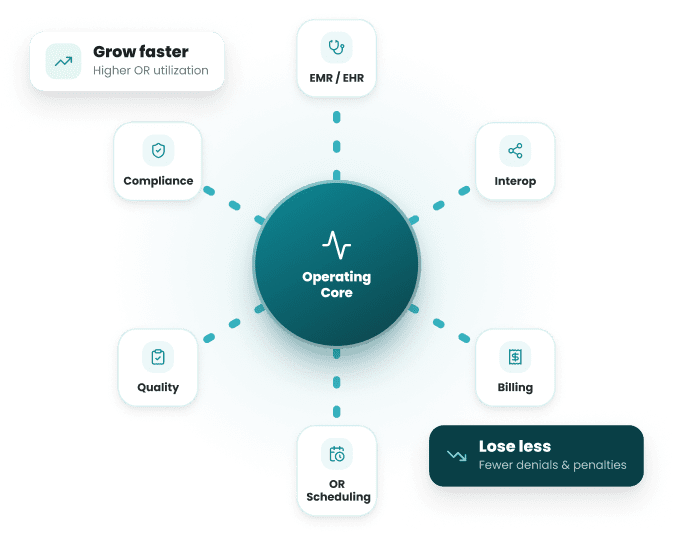
Why Most ASCs Are Losing
Money on Technology
Half of healthcare organizations lack a technology strategy aligned to their
operating model. The cost does not show up as a system error. It shows up in
OR utilization, denied claims, and CMS penalties.
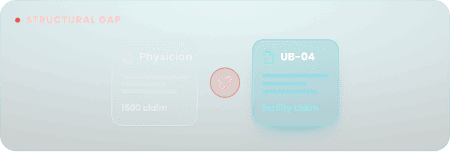
The reimbursement gap is
structural, not configurational
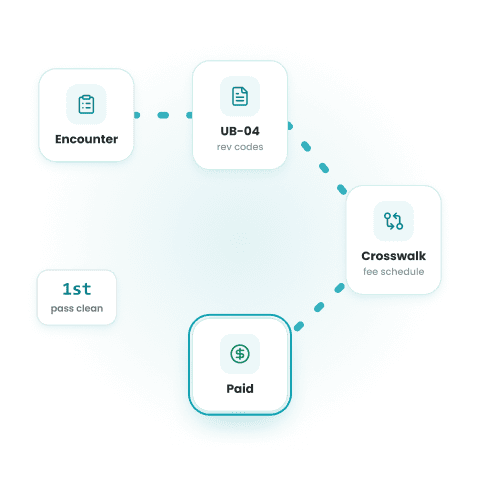
General platforms produce physician claims. ASCs require UB-04 claims, facility fee schedules, and revenue codes that do not exist in physician billing. Configuration does not close that gap.
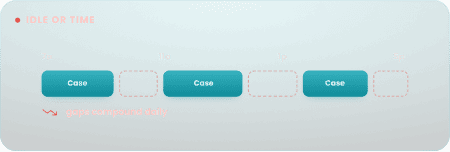
OR time is unmanaged in most
platforms
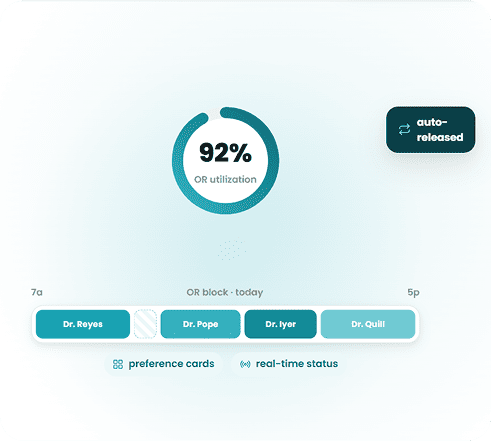
Block scheduling, preference cards, and real-time room coordination are the revenue core of a surgical center. Most EHRs have no architecture for them. The cost compounds daily.

Quality compliance is a financial
control now
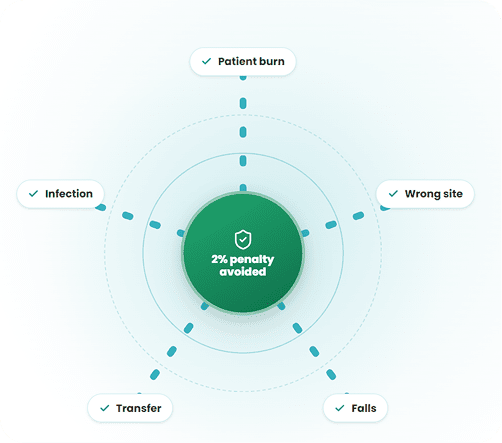
Centers that collect ASCQRP measures manually absorb a defined risk: a 2% Medicare reduction, every period. Centers that embed collection into care delivery remove that risk entirely.
How OmniMD Helps You
One platform across every function a surgical center depends on. Built for ASC care economics, billing rules, and compliance from the start.

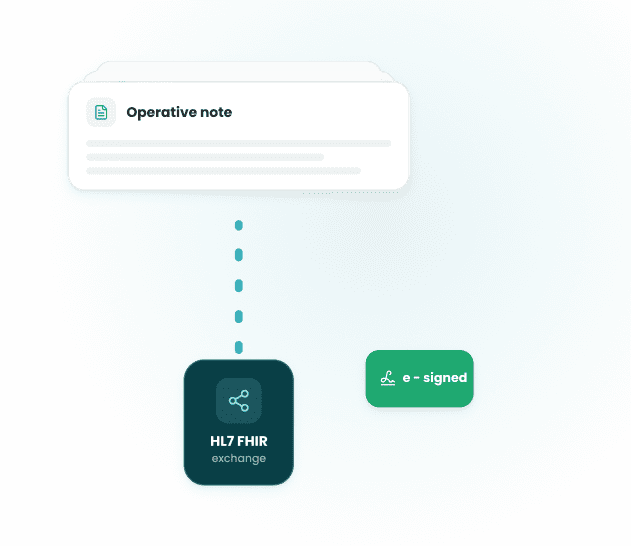
Specialty-specific templates, anesthesia documentation, post-op notes, and consent management with electronic signatures. HL7 FHIR exchange connects the surgical EHR across payers, referral networks, and facilities.

Specialty-specific surgical note templates
Anesthesia documentation, post-op notes, consent forms
Electronic signatures for compliance handoffs
Interoperable EHR HL7 FHIR exchange across payers & facilities

UB-04 generation with automated revenue code assignment. Medicare fee schedule crosswalk built into claim logic. Denial management on ASC-specific adjudication rules. HCPCS coding and modifier optimization as standard.
Built-in UB-04 claim generation with automated revenue code assignment
ASC fee schedule crosswalk for Medicare claims
Denial management with ASC-specific reason code logic
HCPCS coding support and modifier optimization

Block time assigned, tracked, and released at the surgeon level. Preference cards at scheduling. Real-time room status. Pre-op tied to the OR calendar. Same-day admission through discharge without gaps.
OR block time management: assign, track, and release surgeon blocks
Surgeon preference cards auto-loaded at time of scheduling
Real-time room status board and wait time tracking
Same-day admission to discharge workflow
Pre-op appointment scheduling linked to OR calendar

ASCQRP measures collected automatically as care is delivered. No secondary entry. No 2% Medicare exposure. Benchmarked continuously against national ASC averages.
Automated ASCQRP measure collection from clinical documentation
CMS quality data submission management
Avoid the 2% Medicare payment reduction for non-compliant ASCs
Quality benchmarking dashboard vs. national ASC averages

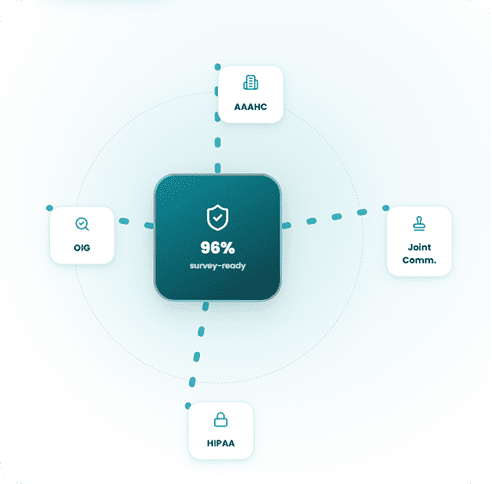
AAAHC and Joint Commission documentation support continuously, not only before surveys. Live survey-readiness tracking. HIPAA audit trails on demand. OIG monitoring for high-risk procedures.
AAAHC and Joint Commission accreditation documentation support
Policy and procedure management with survey-readiness tracking
HIPAA audit trail and access control reporting
OIG compliance program monitoring for high-risk ASC procedures

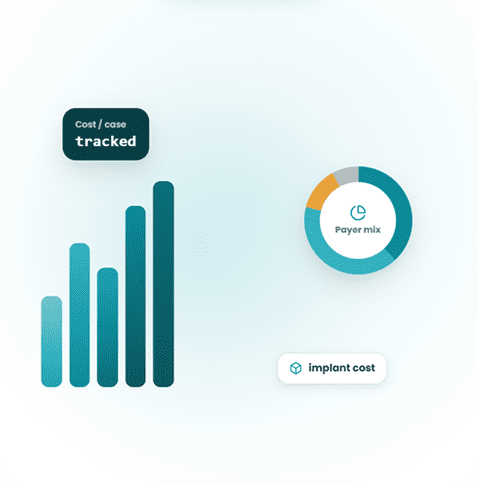
Per-case cost including implants and devices. Payer mix and contract performance alongside clinical and billing data. Supply chain cost tied to case outcomes.
Per-case cost analysis and implant cost tracking
Payer mix reporting and contract performance
Supply chain cost visibility
What You’ll Achieve By Specialty

Orthopedic ASC EHR
Bilateral procedures, implant tracking, bone graft billing, and preference cards. Built for orthopedic workflows, not approximated from general templates.

ASC Pain Management
Fluoroscopy templates, PDMP integration, and injection documentation for interventional workflows. Consistent across every physician.

Multispecialty ASC
One platform across every service line. No parallel systems, no
reconciliation between disconnected tools.

Same-Day Surgery Center
Rapid check-in through same-day discharge. The platform accelerates throughput rather than constraining it.
Why OmniMD Over a General
EHR or Hospital System
The best ASC software is not the broadest platform. It is the one designed around ASC care economics, billing rules, and compliance from the start.
Capability
ASC surgical templates
OR block scheduling
Integrated UB-04 billing
ASCQRP automated reporting
Implant & device cost tracking
Accreditation compliance tools
ASC surgical templates
Generic EHR

Add-on
Limited
Hospital System
Limited



What ASC leaders say
After comparing many EMRs, I determined that OmniMD was the best software for my new clinic. I run a high volume family practice clinic. OmniMD is used for scheduling, reminder calls, medical records, insurance and patient billing. OmniMD is a critical tool for my practice. It is a very good software, but I am also very pleased with the level of service OmniMD provides with their technical support team.

Our practice has been very pleased with the outcomes of your billing and collection services. You have been both informative and patient as we continue to become a more efficient practice. We have recognized that collections have been improved due to your diligence and tenacity. Thank you for your kindness and hard work.

OmniMD’s EHR and Billing software has truly streamlined our operations at Solid Sobriety. Their billing tools have improved our efficiency, significantly reducing errors and boosting revenue. What stands out most is their exceptional customer support- the team is always available, knowledgeable, and proactive in solving any challenges we face. We couldn’t be happier with the partnership.

I have been a practitioner for over a decade and worked various EMR programs in the past by far OmniMD surpasses all my expectations. It’s easy to navigate and your entire note in one page with only a few clicks to complete. I own a family medical practice/ spa and I am very happy that I chose OmniMD. Their support staff is amazing they are always available to assist you.

As a new startup practice, we knew that selecting the right EHR system was crucial for establishing efficient workflows and seamless patient care. OmniMD exceeded our expectations with its intuitive, customizable platform and outstanding customer support. From implementation to ongoing assistance, their team has been incredibly responsive, guiding us through every step and ensuring a smooth transition.

For more than a decade, OmniMD has been an integral part of our practice, offering a user-friendly software wireframe that makes charting extremely easy and enhancing our approach to out-of-network patients. The intuitive design and functionality have allowed us to improve patient care and operational efficiency significantly.

Hello, I’m Eman, for the past 10 years, OmniMD has been instrumental in transforming our billing operations. The reduction in claim denials and the ease of handling claims have not just streamlined our work but have also allowed us to focus more on patient care. The efficiency and reliability that OmniMD offers are unparalleled, and it has been a vital component of our practice’s success.


Book your free ASC demo
A working session on your specialty, your case volume, and the gaps you are currently managing around.
Top-Volume ASC Procedure CPT Codes: Cataract, Arthroscopy, Endoscopy, and Pain Management
In reviewing ASC billing patterns across OmniMD’s surgical center client base, the most consistent revenue gap Dr. Giri’s team identifies is mismatched CPT codes between the surgeon’s operative note and the ASC facility claim. The ASC facility uses a separate fee schedule and separate claim from the physician’s professional claim — and the facility claim must independently support the procedure code billed, the implant device codes, and the modifier applied when a case is cancelled or shortened. A code that the surgeon correctly bills on their professional claim can still fail on the facility claim if the ASC’s charge entry does not match the operative report. Verified by Dr. Giri, 2026-06-19.
| CPT Code | Procedure | ASC Facility Billing Note |
|---|---|---|
| 66984 | Cataract extraction with IOL implant, extracapsular | Highest-volume ASC procedure nationally; IOL billed separately as V2632 or V2634 depending on lens type; payer authorization required for premium lenses |
| 29881 | Knee arthroscopy with meniscectomy, medial or lateral | NCCI edits bundle 29876 (synovectomy) into 29881; only bill 29880 (both compartments) when operative report documents both menisci treated |
| 45378 | Colonoscopy, diagnostic | Upgrade to 45380 (with biopsy) or 45385 (with polypectomy) when pathology is taken; ASC facility fee includes anesthesia supply cost |
| 43239 | Upper GI endoscopy with biopsy | Bundle 43235 (diagnostic EGD) into 43239 when biopsy is performed; do not bill both on same claim |
| 64721 | Carpal tunnel release, open | Short procedure; often same-day bilateral — use Modifier -50 or -RT/-LT per payer; verify authorization before scheduling bilateral cases |
| 62322 | Lumbar epidural injection with imaging guidance | Imaging guidance (77003) included in 62322 as of 2017 CPT changes; do not bill 77003 separately or claim will be denied as duplicate |
| 64483 | Transforaminal epidural injection, lumbar, first level | Add 64484 for each additional level; authorization requirements vary significantly by payer — verify per level before scheduling |
| 29827 | Shoulder arthroscopy with rotator cuff repair | High-value procedure; NCCI bundles 29826 (subacromial decompression) — only unbundle with Modifier -59/XS when distinct site documented |
| 27447 | Total knee arthroplasty | CMS added TKA to ASC-covered procedure list in 2020; implant invoice reconciliation required within payer deadline; C1713 per device |
OmniMD’s ASC EHR maintains a procedure-level charge master that maps each CPT code to its current ASC facility fee schedule rate, identifies NCCI bundle edits that apply, and flags cases where the authorization on file does not match the procedure charged before the facility claim is submitted. For multi-specialty ASCs with cataract, GI, orthopedic, and pain management cases running concurrently, the charge master prevents the most common code-level errors at the point of charge entry rather than at the denial stage. See the AI medical coder and AI revenue cycle management pages for the full ASC coding and billing workflow.
ASCQR Mandatory Quality Reporting: CMS Requirements, Measures, and the 2% Payment Reduction Risk
The ASC Quality Reporting (ASCQR) program is a CMS mandatory reporting program under which all Medicare-certified ambulatory surgical centers must submit quality measure data or face a 2 percentage point reduction in their annual ASC fee schedule update. For an ASC with $2 million in annual Medicare facility collections, non-participation in ASCQR costs $40,000 per year — permanently, not as a one-time penalty. The reporting deadline for the following year’s payment update is typically the fourth quarter of the current calendar year. ASCs that miss the submission window cannot retroactively restore the 2% reduction. OmniMD’s ASCQR reporting module collects all required measure data within the clinical workflow during each case and formats the submission file per CMS specifications.
| ASCQR Measure | Measure Name | Data Collection Method | Submission Deadline |
|---|---|---|---|
| ASC-1 | Patient Burn (patient safety) | Claims-based; CMS extracts from facility claims automatically | No separate submission required |
| ASC-2 | Patient Fall (patient safety) | Claims-based; CMS extracts from facility claims automatically | No separate submission required |
| ASC-11 | Cataracts: Improvement in Patient’s Visual Function within 90 Days | Patient survey; requires structured post-op visual function assessment at 90 days | Q4 of the performance year via QualityNet |
| ASC-12 | Facility 7-Day Risk-Standardized Hospital Visit Rate | Claims-based; tracks unplanned hospital visits within 7 days of ASC procedure | No separate submission; CMS calculates from claims data |
| ASC-13 | Normothermia Outcome | Structural measure; attests whether ASC has a policy for maintaining patient normothermia | Annual attestation via QualityNet by Q4 deadline |
| ASC-14 | Unplanned Anterior Vitrectomy | Claims-based for cataract ASCs; tracks intraoperative complication rate | No separate submission required |
| ASC-15 | OAS CAHPS Patient Experience Survey | CMS-approved vendor administers survey to randomly selected patients post-procedure | Vendor submits on ASC’s behalf; ASC must contract with approved vendor |
OmniMD’s ASCQR workflow captures the clinical data points required for each measure at the point of care. For ASC-11 (cataract visual function), the system schedules and tracks the 90-day follow-up survey for each eligible patient and collects responses through the integrated patient portal. For ASC-13 (normothermia attestation), the annual policy attestation is generated from the documented normothermia protocol and submitted to QualityNet through the OmniMD reporting module. ASCs that have previously managed ASCQR reporting manually — tracking cases in spreadsheets and submitting through QualityNet directly — report a significant reduction in administrative time when reporting is integrated into the clinical workflow. See the AI RCM software page for how OmniMD connects ASCQR data collection to the case documentation workflow.
ASC Accreditation Requirements: AAAHC, The Joint Commission, and QUAD A Documentation Standards
Accreditation by AAAHC, The Joint Commission, or QUAD A is required for Medicare enrollment for most ASC ownership structures, and most major commercial payers (United, Aetna, Cigna, BCBS) require active accreditation as a condition of network participation. The accreditation survey process evaluates clinical, operational, and administrative documentation systems — and the EHR is the primary source of evidence for the majority of standards. An ASC operating on paper charts or a generic EHR not configured for ASC-specific workflows faces significantly higher deficiency rates during survey than one with an ASC-purpose-built documentation system.
| Accreditor | Survey Cycle | Key Documentation Requirements | EHR Must Support |
|---|---|---|---|
| AAAHC | 3-year cycle; unannounced resurveys possible | Pre-op H&P within 30 days of procedure; informed consent in chart; anesthesia assessment; post-op instructions documented | Structured H&P template, consent tracking, anesthesia note, discharge documentation with time stamps |
| The Joint Commission | 3-year accreditation; unannounced surveys | Universal Protocol (time-out checklist in chart), medication reconciliation, fall risk assessment, infection prevention documentation | Surgical safety checklist integrated into procedure note; structured time-out with provider attestation; medication reconciliation workflow |
| QUAD A | 3-year cycle; desk audit option available | Peer review process documented; QI program with data; adverse event tracking; credentialing file for each surgeon | Quality improvement data reporting, adverse event log, credentialing document storage linked to provider profile |
| CMS Conditions for Coverage | Part of Medicare certification; state survey agency | Medical records complete within 30 days of procedure; transfer agreement with hospital documented; emergency equipment log | Record completion tracking with overdue alerts; transfer protocol documentation; equipment maintenance log integration |
OmniMD’s ASC EHR includes accreditation-ready templates for each standard: structured H&P with time-stamp locking, informed consent with e-signature and version control, Universal Protocol time-out checklist embedded in the procedure note, and post-operative discharge instruction documentation with patient acknowledgment. For AAAHC and Joint Commission surveys, OmniMD generates chart audit reports that identify records with missing required elements — pre-op H&P older than 30 days, missing consent, incomplete anesthesia notes — so the ASC can correct deficiencies before the survey rather than during it. See the EHR software page for OmniMD’s full compliance documentation features.
ASC Facility Billing: Modifiers -73 and -74, Device C-Codes, and the ASC Fee Schedule
The ASC facility billing system operates on a separate fee schedule from the Medicare Physician Fee Schedule (MPFS) and follows distinct rules for discontinued procedures, implantable device cost pass-through, and case cancellation documentation. Many ASCs that handle their own billing or use a general billing service apply physician fee schedule logic to the facility claim, resulting in systematic claim errors that are often not identified until a CMS audit or accreditation survey. The three most frequent ASC facility billing errors are: using the wrong modifier when a procedure is cancelled mid-case, omitting device C-codes from the facility claim, and submitting without the ASC group indicator that identifies the procedure’s payment rate under the ASC fee schedule.
| Rule / Code | Description | Billing Impact |
|---|---|---|
| Modifier -73 | Procedure discontinued by physician before anesthesia administration or surgical preparation | ASC receives 50% of the facility fee; must be appended to the procedure code on the facility claim; no physician professional fee is owed |
| Modifier -74 | Procedure discontinued after anesthesia induction or after patient prepared and brought to OR | ASC receives 100% of the facility fee even though procedure was not completed; document reason for discontinuation in the anesthesia and procedure notes |
| C1713 | Anchor/screw for use in bone, implantable | Each device unit billed separately; must match implant log quantity; UDI required per 42 CFR 424.516; missing units = direct revenue loss |
| V2632 | Posterior chamber monofocal intraocular lens (IOL) | Billed alongside 66984 on ASC facility claim; premium lenses (V2787 toric, V2788 multifocal) are not covered by Medicare and must be patient-pay |
| ASC Fee Schedule | CMS assigns each CPT code to an ASC payment group; rates are approximately 55-65% of the HOPD outpatient prospective payment rate | Practices evaluating ASC vs HOPD should model the rate differential per procedure type before migration; some high-volume procedures (66984, 45378) pay more in ASC than HOPD after device pass-through |
OmniMD’s ASC billing module applies Modifier -73 or -74 automatically based on the documented cancellation point recorded in the anesthesia note: if anesthesia start time was not documented, the system defaults to -73 and alerts the billing team to verify before submission. For device claims, OmniMD reconciles the OR implant log against the facility claim within 24 hours of each case, flags any quantity discrepancy, and attaches UDI data to the claim line for each implantable device. See the prior authorization workflows page for OmniMD’s ASC facility billing workflow.
ASC OR Scheduling and Case Throughput: Block Time, Turnover, and Cancellation Rate Metrics
OR scheduling efficiency is the primary operational lever in an ASC’s financial performance. A 10-minute average improvement in room turnover time across 20 cases per day creates the capacity for 2-4 additional cases per week — at an average ASC facility fee of $800-$1,200 per case, that is $83,000-$249,000 in additional annual revenue without adding a single surgeon or room. ASC administrators who track block time utilization, case start time variance, and turnover time by room and by surgeon can identify specific bottlenecks — whether a surgeon’s cases consistently run long, whether a particular room’s turnover is slower than others, or whether pre-op clearance delays are causing same-day cancellations.
| Metric | Definition | Industry Benchmark | OmniMD Tracking |
|---|---|---|---|
| Block time utilization | Percentage of reserved OR block time actually used for scheduled cases | 80-85% is target; below 75% signals over-allocated block time; above 90% signals under-supply | Auto-calculated per surgeon per room per period; surgeon-level and room-level reports |
| Room turnover time | Time from one patient leaving OR to next patient entering OR (cleaning + setup) | Target 15-20 minutes for outpatient procedures; over 25 minutes reduces daily case capacity | Captured from documented room-in and room-out times in the anesthesia/nursing note |
| First-case on-time start rate | Percentage of first scheduled cases that begin within 5 minutes of scheduled start time | Target above 85%; first-case delays cascade through all subsequent cases in the room | Tracked against scheduled start time; root cause coded (patient late, pre-op incomplete, consent missing) |
| Same-day cancellation rate | Cases cancelled on the day of surgery as a percentage of total scheduled cases | Target below 2%; above 5% indicates pre-op clearance or patient preparation failures | Cancellation reason coded at point of cancellation; pre-op checklist completeness tracked per case |
| Pre-op clearance completion rate | Percentage of scheduled cases with complete pre-op workup (H&P, labs, consent, anesthesia) by T-1 day | Target 95%+; incomplete pre-op is the leading cause of same-day cancellations | Automated pre-op checklist tracks each required element per case; alert sent to scheduler if not complete by T-2 days |
OmniMD’s ASC scheduling dashboard presents all five metrics in real time, with drill-down by surgeon, room, and procedure type. The system generates a daily pre-op readiness report the morning of each surgery day that flags cases with incomplete pre-op elements before the patient arrives. For block time management, OmniMD sends automated block release alerts to the ASC coordinator when a surgeon has underutilized block time available within 72 hours of the scheduled date, allowing the coordinator to fill open slots rather than let them go unused. See the AI front desk and pre-authorization pages for the scheduling and pre-op clearance workflow.
Who Should Use OmniMD ASC EHR Software?
- Single-specialty ASCs (ophthalmology, GI, orthopedic, pain management): High-volume single-specialty centers need an EHR with procedure-specific templates and a charge master pre-loaded with the specialty’s top CPT codes — not a generic outpatient EHR adapted for surgical use. OmniMD’s cataract workflow captures IOL type and power within the operative note and links it directly to the V-code on the facility claim. The GI workflow timestamps scope insertion and withdrawal for colonoscopy quality measure documentation (adenoma detection rate, cecal intubation rate). The orthopedic workflow captures implant lot numbers, UDIs, and quantities at the point of charge entry.
- Multi-specialty ASCs with diverse surgical service lines: Multi-specialty centers running ophthalmology, orthopedic, GI, and pain management cases in the same facility on the same day need a scheduling and OR management system that can assign correct room setups, preference cards, implant trays, and billing templates by procedure type — not by surgeon alone. OmniMD’s multi-specialty ASC configuration maintains separate procedure-level settings for each service line within a single platform. See the AI medical coder page for how billing templates shift by case type automatically.
- ASCs preparing for or maintaining AAAHC, Joint Commission, or QUAD A accreditation: Accreditation survey readiness requires that clinical documentation meet specific structural standards — time-stamped H&P, signed informed consent, Universal Protocol time-out in the procedure note, complete anesthesia assessment — and that the ASC can produce audit reports demonstrating compliance across all cases in the survey window. OmniMD generates accreditation audit reports on demand, identifying records with missing required elements before a surveyor does. See the EHR software overview for accreditation documentation capabilities.
- ASCs transitioning from paper or legacy systems: Paper-based ASCs or those on end-of-life software face increasing risk at survey (missing documentation), at billing (delayed charge capture, incomplete device reconciliation), and at ASCQR (no structured data to report). OmniMD’s onboarding team maps existing paper workflows to EHR templates before go-live, loads the ASC’s existing preference cards and physician protocols, and runs a parallel billing period so that revenue does not drop during the transition. The medical billing software page covers charge capture integration during system transitions.
Still Have Questions?
Brands That Trust Us