
Why Some Practices Are Looking Beyond AdvancedMD for a More Automated Healthcare Operating System
Every EHR vendor talks about reducing friction.
AdvancedMD does too.
In fact, its entire positioning is built around helping independent practices remove everyday friction through a unified platform that combines EHR, practice management, patient engagement, billing, reporting, and AI tools.
On paper, that sounds exactly like what most healthcare organizations want.
- One login 🔐
- One database 🗄️
- One workflow 🔁
- One source of truth 📚
And to be fair, AdvancedMD delivers many of those capabilities.
The interesting question is not whether AdvancedMD has enough features.
The question is whether your practice has enough time, technical resources, and operational bandwidth to fully take advantage of them.
Because when you look beyond the marketing pages and start reading what actual users say, a different conversation begins to emerge.
AdvancedMD’s biggest strength is also where some practices struggle
One thing appears consistently across customer reviews.
AdvancedMD is powerful.
Very powerful.
Users frequently mention its extensive reporting capabilities, billing tools, scheduling functions, and customization options.
But power often comes with complexity.
Several users describe the platform as difficult to learn, difficult to customize, and requiring significant effort during onboarding. Some reviewers specifically mention steep learning curves, cumbersome setup processes, and challenges creating templates without technical expertise.
One reviewer summarized it this way:
“Robust software but not user-friendly.”
Another described AdvancedMD as:
“Not turn key at all.”
Those comments point to something important.
Many practices are not looking for more functionality.
- They are looking for faster adoption.
- They want staff members to become productive quickly.
- They want workflows that feel intuitive from day one.
- They want technology that works without requiring weeks of configuration.
For those organizations, the conversation shifts from feature count to operational simplicity.
That is where OmniMD has an opportunity to differentiate.
Not every practice wants to become an EHR expert
Healthcare leaders rarely buy software because they enjoy software.
They buy software because they want to run a better practice.
Yet many AdvancedMD reviews mention spending substantial time learning the system, configuring workflows, managing onboarding, or relying on support resources during implementation.
That may be acceptable for organizations with:
- Dedicated IT staff
- Internal EHR specialists
- Implementation teams
- Multi-location administrative resources
But smaller and growing practices often operate differently.
- The physician may also be the owner. 👩⚕️🏢
- The office manager may also handle billing. 🧑💼💳
- The front desk may already be stretched thin. 🧾⚠️
In those environments, ease of adoption can matter more than deep customization.
OmniMD, on the other hand, helps practices get operational faster with less setup effort, which becomes a meaningful advantage for organizations that simply do not have time to manage a complex implementation project.
Support becomes critical when healthcare workflows stop
Another theme appears repeatedly in public reviews.
Support.
Multiple reviewers express frustration with response times, onboarding assistance, communication challenges, and customer service experiences.
That does not mean every customer has a negative experience.
Many do not.
But the volume and consistency of support-related complaints make it difficult to ignore.
Healthcare software is different from most business software.
If a marketing platform goes down, work slows.
If an EHR workflow breaks, patient care, scheduling, billing, documentation, and revenue can all be affected.
That means buyers often evaluate vendors on a simple question:
“When something goes wrong, how quickly can I get help?”
OmniMD answers that question better than anyone. Its decades-long track record and commitment to live, 24/7 human support mean healthcare teams don’t wait for tickets or automated queues. We get real people solving real problems immediately. That responsiveness preserves clinical workflows, protects revenue, and reduces downtime faster than added features ever could.
The future may not belong to the platform with the most features
It may belong to the platform with the least friction.
AdvancedMD has invested heavily in AI-enabled workflows, including documentation assistance, coding support, eligibility verification, and insurance capture automation.
The healthcare industry is moving rapidly toward AI-assisted operations.
But many providers are experiencing a different problem.
- They already have too many tools. 🧰🏥
- Too many screens. 🖥️👀
- Too many workflows. 🔁📋
- Too many clicks. 🖱️⚡️
The real challenge is not adding another AI feature.
The challenge is making AI feel invisible.
When physicians talk about reducing burnout, they rarely ask for more technology.
They ask for less administrative work.
OmniMD’s current approach focuses heavily on automation across the entire patient journey. Our AI Front Desk handles appointment scheduling, patient intake, insurance verification, billing workflows, follow-up communication, and after-hours patient interactions while writing information directly into the EHR. Instead of introducing separate tools for each task, our goal is to automate the workflow itself.
Why Front Desk Operations Have Become a Major Pain Point
Many healthcare practices are facing staffing challenges.
Administrative teams are being asked to do more with fewer people.
- Phone calls ☎️
- Appointment scheduling 📅
- Insurance verification 🧾
- Prior authorizations ✅📄
- Patient reminders 🔔
- Follow-ups 🔁
- Billing questions 💳❓
These responsibilities often consume significant staff time.
OmniMD’s AI Front Desk is designed specifically around this challenge. The platform automates scheduling, check-in, eligibility verification, billing workflows, patient communication, and after-hours interactions while continuously updating patient records. For practices struggling with front desk workload, this may represent a more meaningful advantage than simply adding another software module.
The Difference Between Integration and Workflow Continuity
Many healthcare platforms integrate multiple functions.
That is valuable.
But integration is not the same thing as workflow continuity.
An integrated platform may still require staff members to trigger processes manually.
A workflow-first platform attempts to automate those transitions automatically.
OmniMD repeatedly emphasizes that scheduling, intake, insurance verification, documentation, billing, and follow-up activities operate from a shared workflow and write directly into the same patient record.
For practice leaders, the practical question becomes:
How many administrative handoffs can be eliminated?
Because every handoff creates an opportunity for delay, rework, or human error.
Who Should Stay with AdvancedMD?
Not every practice should switch.
In fact, AdvancedMD remains a strong option for organizations that:
- Need extensive customization
- Have dedicated administrative resources
- Want deep reporting capabilities
- Require highly configurable workflows
- Are comfortable investing time in implementation and training
For these organizations, the platform’s flexibility can outweigh the operational effort required to manage it.
Who May Be Better Served by OmniMD?
OmniMD is worth evaluating if your organization is focused on reducing operational overhead.
That includes:
- Fast-growing practices
- Multi-location organizations
- Practices dealing with staffing shortages
- Teams overwhelmed by front desk workload
- Organizations pursuing workflow automation
- Practices seeking fewer manual administrative processes
The key difference is not feature count.
The key difference is workflow philosophy.
AdvancedMD vs OmniMD: The Real Choice
Most comparison blogs frame this decision as a software comparison.
That misses the bigger story.
The real decision is about how your organization wants to operate.
AdvancedMD is designed to give practices a comprehensive platform for managing healthcare operations.
OmniMD is increasingly positioning itself as a platform that automates healthcare operations.
Both approaches can be successful.
But they solve different problems.
- If your primary goal is flexibility and customization, AdvancedMD remains a strong contender. ⚙️✨
- If your primary goal is reducing administrative workload through workflow automation, OmniMD becomes a compelling alternative worth serious consideration 🤖📈
And for many healthcare organizations facing staffing shortages, rising administrative costs, and increasing patient expectations, that difference may matter more than any feature checklist ever could.
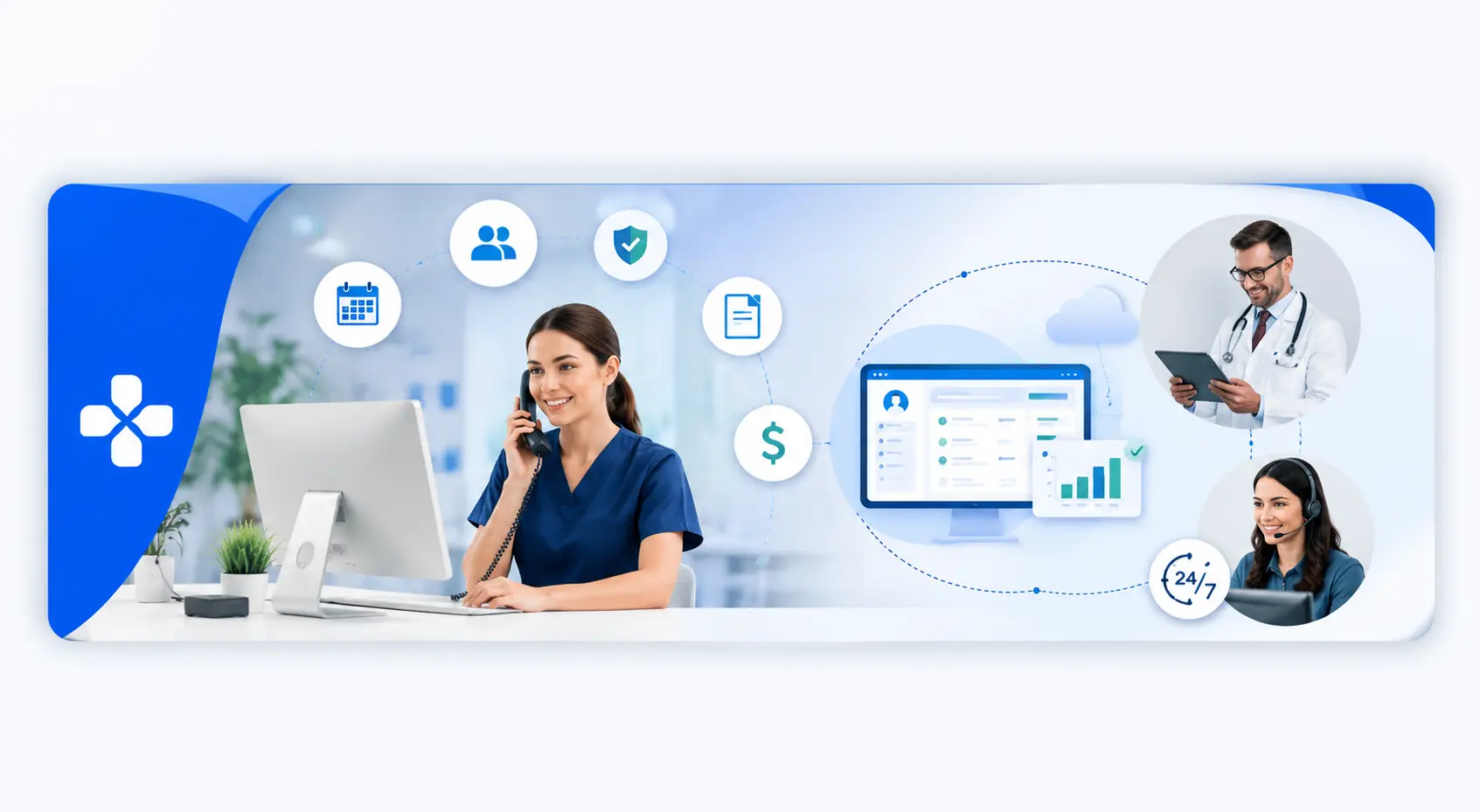
See How OmniMD Simplifies Healthcare Operations
Automate scheduling, billing, documentation, and patient communication with one AI-powered platform backed by 24/7 live support.

Dr. Giriraj Tosh Purohit is an experienced Product Manager and Security officer with a strong background in healthcare technology and management consulting. With expertise spanning clinical workflows, EHR, RCM, Digital Health, and AI-driven products, he has been instrumental in shaping innovative healthcare solutions.