
 Written by Dr. Girirajtosh Purohit
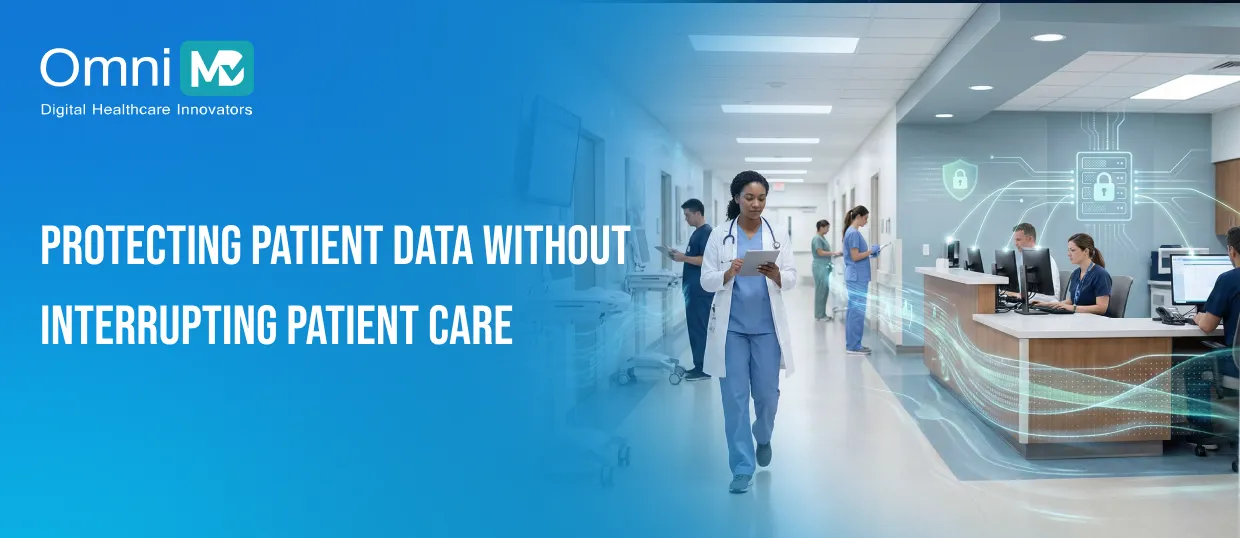
Implementing HHS Cybersecurity Goals Without Slowing Healthcare Down
Healthcare cybersecurity expectations are not just evolving gradually anymore, rather they are accelerating.
According to recent guidance and direction from the U.S. Department of Health and Human Services (HHS), healthcare cybersecurity compliance is no longer just an IT priority. It is an organisational responsibility, tied up directly to healthcare operation resilience.
But for healthcare leaders, a very real concern remains as it is, “How do you empower cybersecurity in healthcare operations without disrupting clinical workflows, revenue cycle performance and patient access?”
In a sector where even minor system slowdowns can ripple across scheduling, documentation, billing, and care delivery, healthcare data security cannot come at the expense of operational continuity. The challenge is not simply implementing safeguards. The challenge is integrating them in a way that supports, instead of slowing the organisation.
The False Trade-Offs Between Security and Speed
For years, many healthcare organizations treated cybersecurity compliance for healthcare as a reactive layer. When a new risk emerged, another tool was added. When an audit approached, processes tightened temporarily.
This approach often created friction across healthcare IT security environments:
- Additional login steps without workflow review
- Monitoring tools operating separately from operational dashboards
- Security reviews delaying vendor integrations
- Compliance initiatives disconnected from frontline realities
Over time, stronger healthcare cybersecurity became associated with operational drag, even though the true risk came from weak defenses.Ransomware incidents and outages have shown that poor cybersecurity risk management in healthcare causes far greater disruption than proactive security ever could.
Start With Operational Risk, Not Technical Complexity
Not all systems carry equal operational weight.
An EHR outage impacts patient care immediately. A billing platform disruption affects cash flow within days. A compromised scheduling system limits access.
A successful healthcare cybersecurity strategy starts by mapping operational dependency, not technical complexity.Organizations that align HHS cybersecurity goals with revenue critical and care critical systems protect continuity while reducing unnecessary friction. This approach strengthens healthcare cybersecurity compliance without slowing operations.
Embed Security Into Existing Workflows
One of the most common reasons cybersecurity in healthcare operations creates resistance is poor workflow integration.
Security should be embedded into existing processes that clinicians and staff already use:
- Session aware authentication to reduce repetitive access challenges
- Role based permissions aligned with real-world responsibilities
- Monitoring tools integrated into operational dashboards
When healthcare cybersecurity frameworks support workflows instead of interrupting them, organizations improve both protection and efficiency.
Move From Periodic Compliance to Continuous Visibility
Treating HIPAA cybersecurity requirements as annual events creates operational strain. Audit-driven cycles often lead to last minute process changes and documentation overload.
Modern healthcare cybersecurity compliance requires continuous visibility.
Real-time insight into system access, vulnerabilities, and performance allows organizations to respond incrementally, helping prevent healthcare system downtime while maintaining operational stability.
Leadership Accountability Strengthens Operations
Cybersecurity governance has moved beyond IT departments. Today, healthcare cybersecurity strategy is an executive and board level responsibility.
When leadership integrates cybersecurity risk management in healthcare into broader operational planning, organizations improve:
- Vendor risk oversight
- Incident response readiness
- Business continuity planning
- Patient data protection
Strong leadership alignment ensures healthcare data security supports growth instead of slowing it.
Cybersecurity as an Operational Advantage
Organizations often ask how to meet HHS cybersecurity goals without disrupting workflows.
In reality, well-executed healthcare cybersecurity reduces operational risk.
Healthcare organizations with mature security programs are better positioned to:
- Prevent healthcare system downtime
- Protect patient data
- Maintain revenue cycle continuity
- Build payer and partner trust
In today’s digital healthcare environment, operational efficiency in healthcare depends on secure infrastructure.
The Path Forward
Implementing HHS cybersecurity goals does not require sacrificing speed for safety.
By prioritizing operational risk, embedding security into workflows, maintaining continuous visibility, and elevating leadership accountability, organizations can achieve healthcare cybersecurity compliance while strengthening resilience.
Cybersecurity is no longer separate from operations. It is foundational to how modern healthcare functions.

Secure Without Slowdowns
Align HHS cybersecurity goals with daily healthcare operations.