
 Written by Dr. Girirajtosh Purohit
Using The Provider Access API To Eliminate Eligibility Bottlenecks
Imagine a patient, walking into a clinic, all ready for his appointment. The clinical team, well prepared as well. The schedule is full, everything is moving smoothly until insurance eligibility brings it to a halt.
The front desk switches between payer portals. A phone call goes on hold, someone double checks an ID number. And as a result, what should have taken just seconds, takes minutes and sometimes even more.
The waiting room grows quieter, the workflow grows heavier, and eventually the patient check-in process slows down, not because of people but because of the critical data that is missing.
The real problem isn’t the efforts or the staffing, it’s the access. Critical payer data access still lives in disconnected systems forcing teams to chase information instead of receiving it when they need it.
In today’s healthcare environment, data exists everywhere, yet eligibility verification remains one of the most manual and disruptive steps in care delivery. As care spreads across providers, locations and networks, this gap is becoming harder to ignore.
Where Eligibility Breaks Down
Eligibility bottlenecks appear early and ripple outward. What starts as a delay in check-in, often leads to downstream problems across billing, collections and patient experience.
When coverage details are unclear or outdated, practices face:
- Appointment delays or rescheduling
- Increased administrative workload
- Patient frustration and confusion
- Higher risk of claim denials
These issues are often treated as operational inefficiencies, but at their core, they are actually data flow problems. Eligibility information exists, it just doesn’t arrive in time, in the right place or in a usable format.
Why Eligibility Verification Still Slows Practices Down
Despite digital tools, many practices still depend on fragmented workflows for eligibility checks. Most common challenges include:
- Manual logins across multiple payer portals
- Phone calls for coverage confirmation
- Inconsistent or outdated eligibility data
- Staff reacting to problems after they occur
These manual processes put pressure on front desk and billing teams and force them to work reactively. As volumes increase, these inefficiencies multiply and affect revenue cycle workflows and patient trust.
As healthcare continues to modernize, these approaches are no longer sustainable.
What the Provider Access API Changes
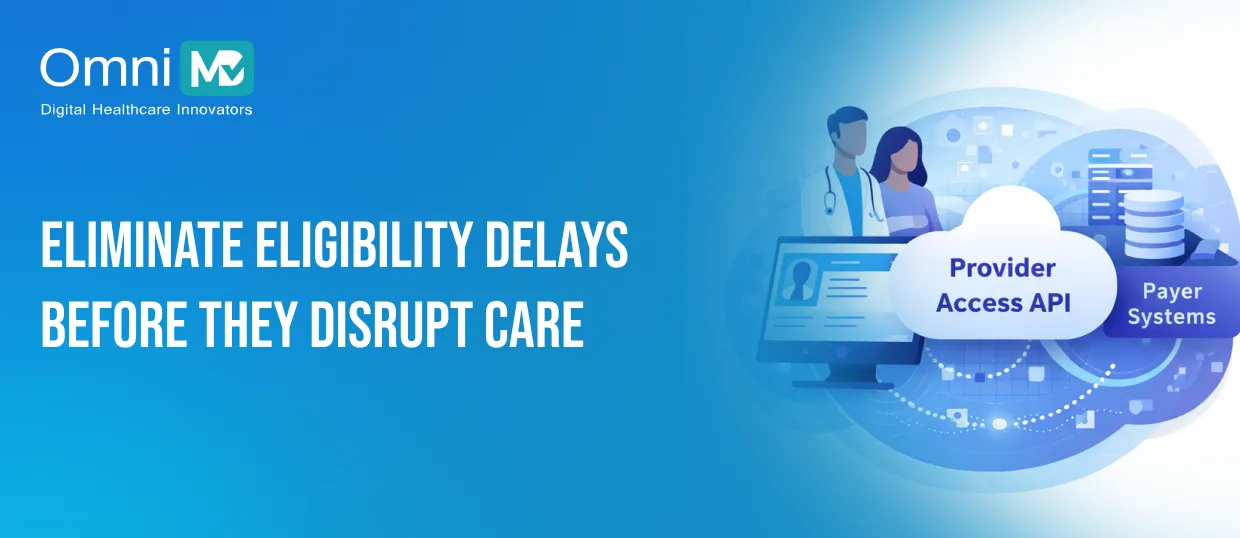
The Provider Access API introduces a different way to access eligibility information. Instead of chasing data, providers can receive it through secure, standards-based connections.
In simple terms, the Provider Access API allows healthcare organizations to:
- Access payer-held eligibility and coverage data
- Receive real-time eligibility or near real-time updates
- Use standardized formats instead of custom integrations
This shift replaces one-off connections and manual lookups with consistent, automated data access. Eligibility becomes embedded into workflows rather than handled as a separate task.
Eliminating Bottlenecks Through API-Driven Workflows
When eligibility verification is powered by APIs, workflows begin to change meaningfully.
API-driven eligibility enables:
- Faster verification during scheduling or check-in
- Reduced manual work for staff
- Fewer eligibility related claim denials
- Smoother patient visits and financial conversations
By improving payer data access, practices can identify coverage issues earlier, set clearer expectations, and reduce friction across the patient journey.
However, APIs alone are not enough. Their real value depends on how well they integrate into daily operations.
The Role of Healthcare Interoperability
For eligibility improvements to stick, APIs must connect directly into the systems teams already use. This is where healthcare interoperability plays a critical role.
Interoperable systems ensure:
- Eligibility data appears at the right time
- Information flows across scheduling, intake, and billing
- Standards like FHIR support scalable data exchange
When systems are interoperable, eligibility becomes part of routine care delivery instead of a recurring obstacle. This transforms interoperability from a technical requirement into an operational advantage.
How OmniMD Supports Eligibility-Driven Interoperability
At OmniMD, interoperability is built into how data moves across workflows.
By supporting standards based exchange and API-driven connectivity, OmniMD enables practices to:
- Integrate eligibility checks directly into operational workflows
- Reduce manual intervention across front-desk and billing teams
- Improve visibility into coverage before care is delivered
This approach helps in removing eligibility bottlenecks at the source, by making sure that data arrives when and where it is needed, without disrupting staff or patient experience.
Turning Eligibility From a Barrier Into a Strength
When eligibility workflows are modernized, the impact goes beyond speed.
Practices benefit from:
- Faster financial clearance
- Improved staff efficiency
- Greater patient confidence and transparency
- Stronger foundations for automation and analytics
Eligibility shifts from a recurring pain point into a strategic asset, supporting better decisions and smoother operations across the organization.
Preparing for What Comes Next
The Provider Access API is part of a larger movement toward connected healthcare. As data sharing expectations grow, practices that modernize eligibility today are better prepared for future initiatives, including automation and AI-driven workflows.
Early adoption reduces disruption later and positions organizations to adapt as interoperability becomes the norm rather than the exception.
Final Thoughts
Eligibility bottlenecks aren’t caused by staffing issues. They happen because data is hard to access. The Provider Access API enables real-time, standardized eligibility, making verification fast and seamless.
At OmniMD, interoperability is part of everyday workflows, helping practices reduce delays, improve revenue flow, and create a smoother patient experience.
Healthcare works best when data moves freely. Practices that remove friction today will be better prepared for what comes next.
Real-Time Eligibility
Still checking payer portals manually?