Remote Patient Monitoring Trends and Statistics for U.S. Practices
A patient with uncontrolled hypertension visits their primary care provider every few months. Between visits, rising blood pressure goes unnoticed until it converts into an avoidable emergency room visit. The practice loses visibility into patient health, while clinical risk and costs continue to rise.
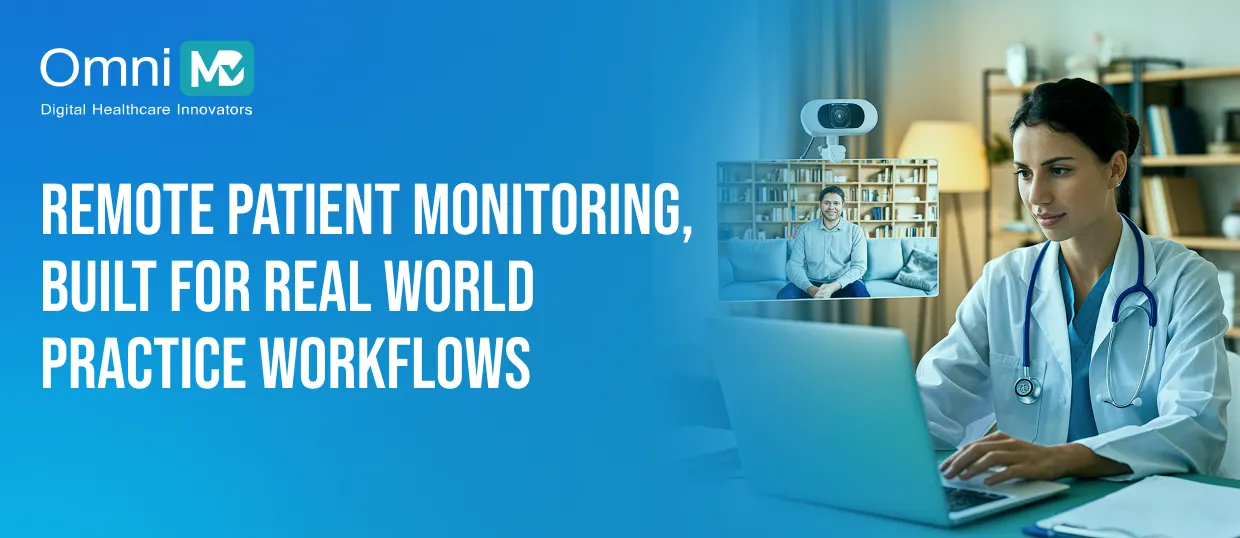
Remote Patient Monitoring (RPM) fills this gap by allowing ongoing patient monitoring outside the traditional clinical settings using connected medical devices and digital health platforms. Rather than depending solely on episodic, in office visits, providers get ongoing insight that supports earlier intervention, better chronic disease management, and stronger patient engagement. Today, RPM has evolved from an emerging technology into a strategic pillar of care delivery for U.S. medical practices. Beyond improving outcomes, RPM also creates recurring revenue opportunities when implemented with structured workflows, automation, and compliant documentation.
The State of Remote Patient Monitoring in the U.S.
RPM adoption has accelerated across the U.S. healthcare system, driven by rising chronic disease prevalence, value based care initiatives, and expanded Medicare reimbursement. What was once a pilot technology is now a mainstream care delivery model.
- Rapid growth fueled by chronic disease burden and value based care models
- Expanded Medicare reimbursement accelerating provider adoption
- Shift from experimental programs to routine clinical use
The scale and utilization of RPM continue to rise, supported by strong market growth and increasing Medicare participation.
- U.S. RPM market valued at approximately $14.3 billion in 2024, projected to exceed $18 billion by 2026
- Estimated 71 million Americans expected to use RPM by 2025, representing about 26% of the population
- Medicare RPM claims (CPT 99453 to 99458) increased by 3,000%+ since 2019
- Medicare and Medicare Advantage RPM reimbursements exceeded $500 million in 2024
RPM adoption has expanded beyond limited pilots and specialty use cases, becoming a standard component of outpatient care.
- Widely implemented across primary care, cardiology, endocrinology, pulmonology, nephrology, and multispecialty practices
- Supports both chronic disease management and post acute care pathways
Why RPM Matters for Clinical and Operational Performance
RPM enables practices to move from reactive, visit based care toward proactive, continuous care models that better align with modern patient needs.
From a clinical perspective, RPM supports:
- Earlier identification of patient deterioration
- Improved control of chronic conditions
- Reduced hospitalizations and emergency department utilization
Operationally, RPM delivers meaningful benefits as well:
- Sustained patient engagement between visits
- Expanded care team reach without increasing in office volume
- Predictable, recurring service revenue tied to ongoing care
However, clinical and financial success is closely tied to execution. Without automation, integrated data flows, and structured documentation, RPM programs can create additional staff burden and limit return on investment.
Adoption Trends Across U.S. Practices
RPM adoption is the strongest in outpatient, physician led environments where chronic disease management is a primary focus. Nearly half of RPM services are delivered by primary care providers, with cardiology, endocrinology, pulmonology, and nephrology also leading adoption.
Hypertension remains the most common RPM use case, followed by diabetes, heart failure, and Chronic Obstructive Pulmonary Disease (COPD). Increasingly, practices are deploying RPM as part of hybrid care models, combining in person visits with continuous remote oversight to improve outcomes while optimizing clinic capacity.
Patient Engagement and Clinical Outcomes
Patient engagement continues to rise as RPM devices become easier to use and practices adopt more structured outreach and education workflows. Consistent monitoring, combined with timely care team intervention, has demonstrated measurable impact.
RPM programs have shown:
- Reductions in hospital admissions of up to 38%
- Emergency department visit reductions exceeding 50%
- Patient satisfaction rates above 85%, driven by improved access, faster interventions, and ongoing communication
These outcomes reinforce RPM’s role not only as a monitoring tool, but as a driver of sustained patient trust and engagement.
Technology and AI Trends in Remote Patient Monitoring
As RPM programs scale, technology and artificial intelligence have become essential to maintaining efficiency and clinical effectiveness. Modern RPM platforms leverage automation to streamline device data collection, alerting, and documentation.
AI-driven capabilities such as alert prioritization, predictive risk analytics, and EHR integrated workflows allow care teams to focus attention on patients who require intervention most, minimising administrative overhead simultaneously. Beyond vital signs, RPM platforms are expanding into symptom tracking, medication adherence, and behavioral health indicators, enabling more comprehensive remote care delivery.
RPM CPT Codes and Revenue Potential
RPM creates a recurring reimbursement stream for U.S. practices. Below is a focused view of RPM CPT codes and average medicare reimbursement.
RPM CPT Revenue Table (Medicare National Averages)
| CPT Code | Description | Avg. Medicare Reimbursement |
| 99453 | Initial device setup & patient education | About $21.93 |
| 99454 | Device supply & data transmission (16+ days) | About $70.34 |
| 99457 | First 20 minutes of clinical management | About $51.48 |
| 99458 | Each additional 20 minutes | About $41.07 |
Practices handling patients monthly can generate recurring RPM revenue per patient when documentation, time tracking, and data review are consistently captured.
Connecting RPM Strategy to OmniMD Workflows
The success of RPM depends less on devices and more on how monitoring fits into daily operations.
OmniMD helps practices run RPM as a part of routine care instead of a separate program. Monitoring data flows into existing workflows, encouraging clinical review, patient follow-up, and documentation aligned with medicare, without adding administrative steps.
By integrating RPM with telehealth and care coordination tools already used by the staff, OmniMD allows practices to:
- Review patient data and intervene early without manual data entry
- Capture device usage and clinical time consistently for billing
- Extend RPM programs across specialties using the same workflow framework
- Meet compliance requirements while reducing staff workload
This approach allows RPM to operate as a repeatable, long term care service, instead of a disconnected add on that strains terms.
Future Outlook
Remote Patient Monitoring is becoming a core component of U.S. healthcare delivery. As reimbursement stabilizes and AI tools become more practical in day to day use, RPM will continue shifting care from reactive visits to ongoing, preventive management.
For U.S. practices, RPM represents a strategic opportunity to enhance outcomes, strengthen patient relationships, and build resilient, data driven care delivery systems. OmniMD supports this transition by offering RPM workflows that align clinical operations, telehealth services, and medicare documentation requirements.
Adoption rates vary significantly by specialty and care setting, which is why the aggregate growth statistics only tell part of the story. How RPM fits into primary care, chronic care, and specialty practices breaks down how RPM program structures differ across care models and which patient populations are generating the highest enrollment and billing rates.
The reimbursement growth trend in the statistics reflects CMS adding and adjusting the CPT codes that support RPM billing. RPM reimbursement guide 2026: CPT codes and billing explained covers the current code set, time thresholds, and payer coverage rules that translate the macro reimbursement trend into actual monthly billing for individual practices.
Evaluating RPM for Your Practice?
See how RPM trends, outcomes, and reimbursement are shaping U.S. practices.

Dr. Giriraj Tosh Purohit is an experienced Product Manager and Security officer with a strong background in healthcare technology and management consulting. With expertise spanning clinical workflows, EHR, RCM, Digital Health, and AI-driven products, he has been instrumental in shaping innovative healthcare solutions.