
AI-Powered Remote Patient
Monitoring (RPM)
OmniMD RPM connects FDA-cleared devices to the same EHR your providers chart in, automating CPT billing for 99453, 99454, 99457, and 99458 each month. Practices report $42 to $250 in monthly revenue per enrolled patient, with no separate billing system or middleware required.
Technology That Helps You Do More With Less
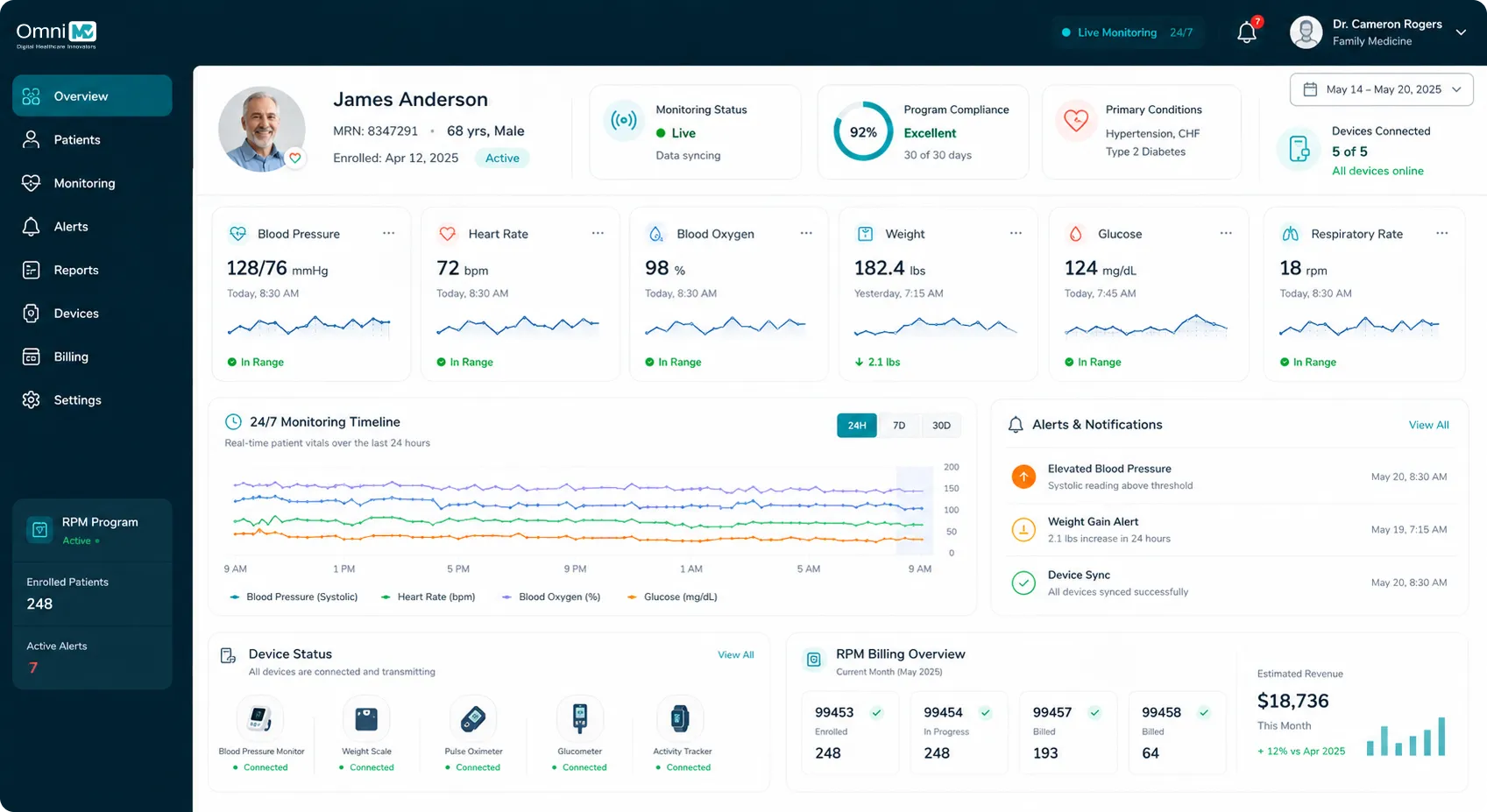
24/7 Continuous Monitoring
Establishes a persistent layer of clinical awareness, where patient physiology is tracked continuously, minimizing reliance on periodic check-ins. This constant observation enables earlier recognition of changes, turning physiological shifts into opportunities for timely, informed intervention.
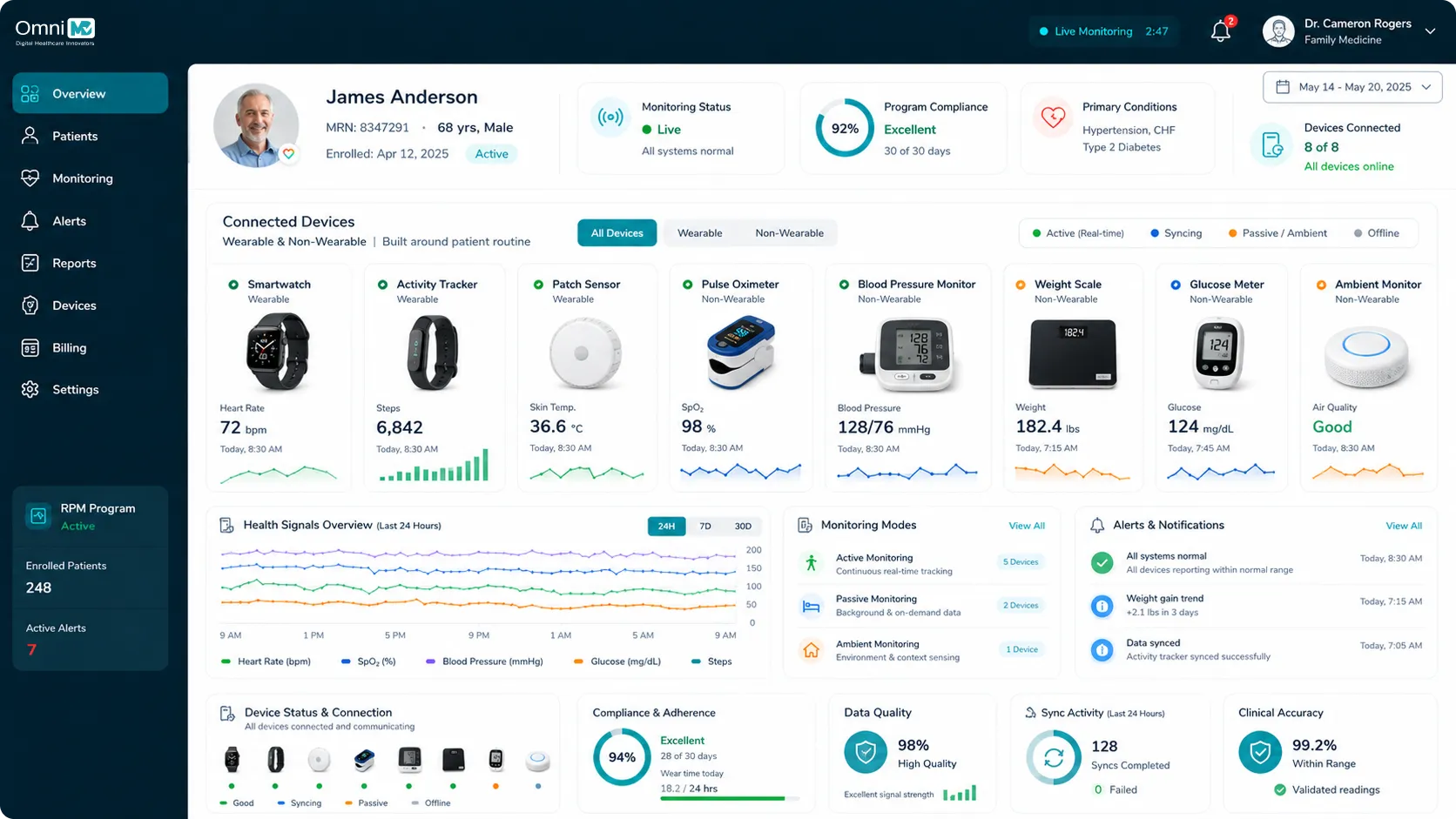
Wearable & Non-Wearable Devices
Implements a flexible sensor framework, ambient, active, or passive, aligned with patient preferences and routines. This adaptable design enhances usability and compliance while upholding clinical accuracy in health signal capture.
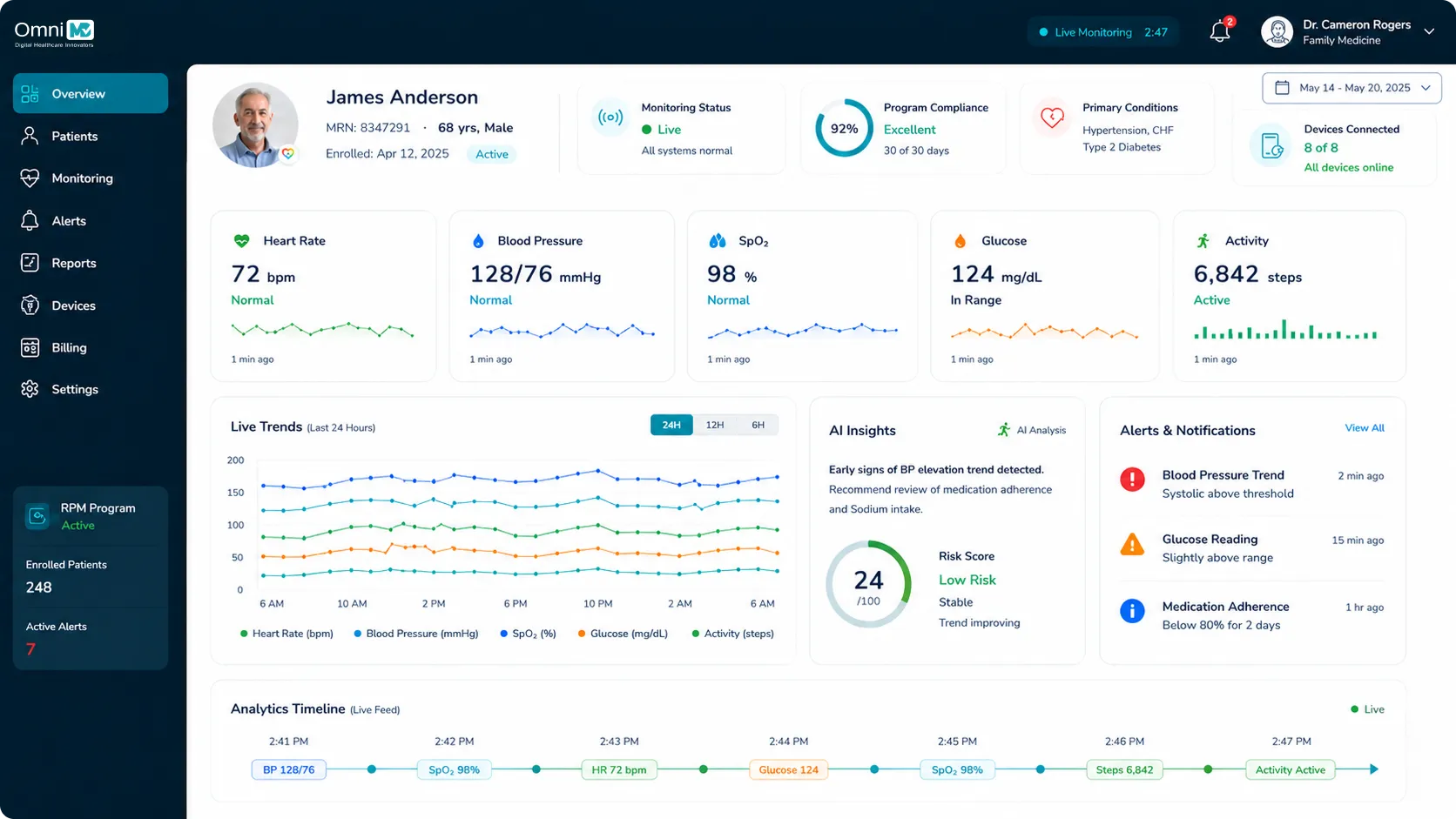
Real-Time Data Analytics
Continuous device data replaces static snapshot interpretation, giving clinicians live visibility into patient trends. AI-supported analytics and signal processing reveal early deviations, allowing care teams to act with speed and precision.
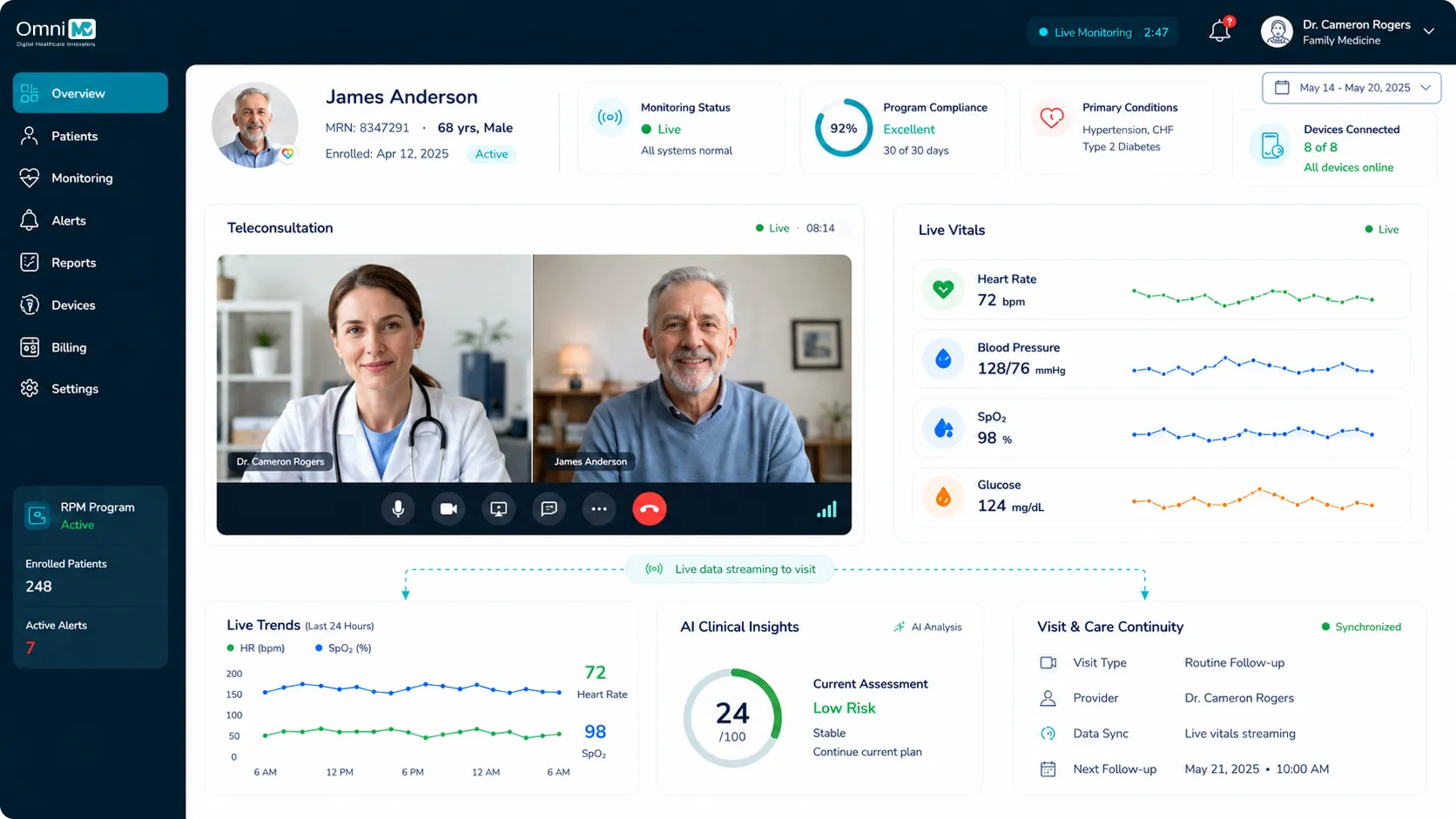
Teleconsultation Integration
Connects live physiological data with virtual care encounters, ensuring remote assessments are grounded in current clinical reality. This alignment improves diagnostic accuracy, simplifies care delivery, and strengthens the continuity of virtual care.
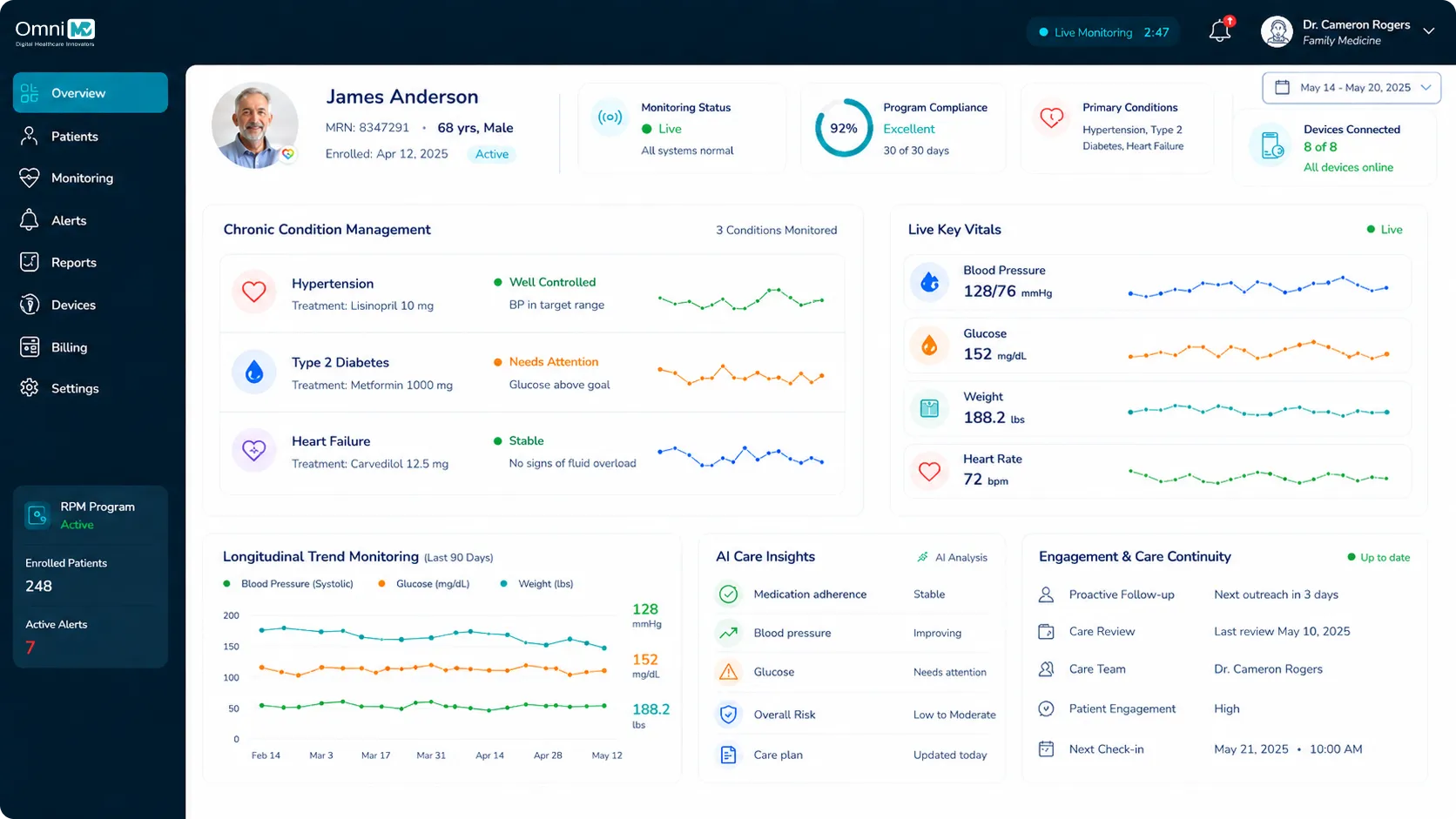
Chronic Condition Management
Shifts chronic disease oversight from periodic reviews to ongoing optimization, guided by real-world patient metrics. This model allows subtle, data-driven care adjustments that support better outcomes through proactive, continuous engagement.
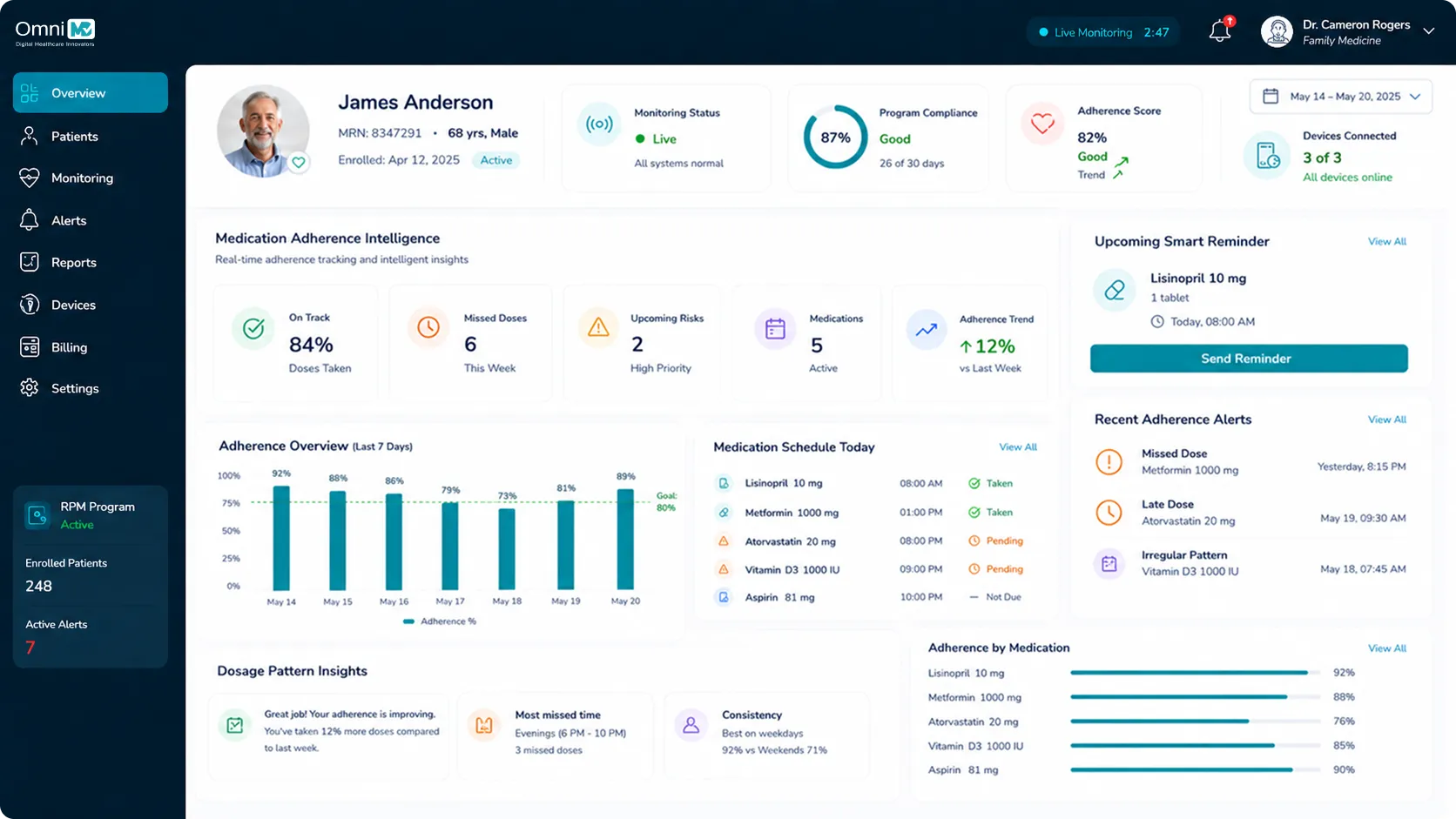
Medication Adherence Intelligence
Upgrades adherence tracking to a dynamic system that anticipates and addresses patient behavior in real time. By integrating sensor-based cues, intelligent reminders, and dosage pattern monitoring, it ensures that medication plans are actively followed, not passively assumed.

RPM with Automated Time
Tracking and Billing Reports
Designed for healthcare leaders who seek financial clarity without disrupting clinical workflows, our Remote Patient Monitoring (RPM) software ensures care delivery remains transparent, compliant, and aligned with evolving reimbursement standards.
By capturing time-stamped care activities at the point of service, our system creates a verifiable ledger of patient-provider interactions, accurately reflecting both clinical engagement and billing requirements without the need for manual reconciliation.

AI Predictive Analytics

Device Integration

Automated Alerts

Enhanced Interoperability

Scalable for All Practices

Real-Time Insights
Experience the OmniMD Advantage
Real Stories From Medical Practices Thriving With OmniMD
After comparing many EMRs, I determined that OmniMD was the best software for my new clinic. I run a high volume family practice clinic. OmniMD is used for scheduling, reminder calls, medical records, insurance and patient billing. OmniMD is a critical tool for my practice. It is a very good software, but I am also very pleased with the level of service OmniMD provides with their technical support team.

Our practice has been very pleased with the outcomes of your billing and collection services. You have been both informative and patient as we continue to become a more efficient practice. We have recognized that collections have been improved due to your diligence and tenacity. Thank you for your kindness and hard work.

OmniMD’s EHR and Billing software has truly streamlined our operations at Solid Sobriety. Their billing tools have improved our efficiency, significantly reducing errors and boosting revenue. What stands out most is their exceptional customer support- the team is always available, knowledgeable, and proactive in solving any challenges we face. We couldn’t be happier with the partnership.

I have been a practitioner for over a decade and worked various EMR programs in the past by far OmniMD surpasses all my expectations. It’s easy to navigate and your entire note in one page with only a few clicks to complete. I own a family medical practice/ spa and I am very happy that I chose OmniMD. Their support staff is amazing they are always available to assist you.

Frequently Asked Questions
What Is Remote Patient Monitoring?
Remote patient monitoring (RPM) is a care delivery model that uses FDA-cleared connected devices to collect patient health data outside clinical settings and transmit it to the care team for review between visits. Common devices include blood pressure monitors, pulse oximeters, glucometers, weight scales, and continuous glucose monitors (CGMs). Unlike a telehealth visit, RPM operates continuously, capturing daily readings that give providers a longitudinal view of a patient’s condition rather than a single point-in-time snapshot.
RPM is billed under a dedicated CPT code set (99453, 99454, 99457, 99458) on a monthly billing cycle tied to device data transmission days and documented care management time. Reimbursement rates are published in the CMS Physician Fee Schedule, updated annually. This makes RPM a recurring monthly revenue stream for practices, not a per-visit transaction. Enrolled patients generate reimbursement every month they remain active in the program.
CPT codes 99453, 99454, 99457, and 99458 and their time thresholds referenced on this page reflect CMS guidance under the 2026 Physician Fee Schedule and the Medicare telehealth extension through December 2027. OmniMD has supported remote patient monitoring program implementation across primary care, internal medicine, cardiology, endocrinology, and nephrology practices since 2005. Individual payer contracts vary – verify coverage and prior authorization requirements with each payer before enrolling patients in an RPM program.
RPM vs. Telehealth: What Is the Difference?
Telehealth is a scheduled virtual encounter between a provider and patient using video or phone. RPM is continuous or periodic device data collection that happens between encounters. The two programs are complementary. A provider can review RPM trend data during a telehealth visit but they are billed under separate CPT code sets, require different documentation, and are subject to different payer coverage rules. A practice can run both programs simultaneously for the same patient without billing conflicts.
RPM vs. RTM: Understanding the Difference
Remote therapeutic monitoring (RTM) covers a separate category of patient-reported outcome data under CPT codes 98975-98984. RTM tracks therapeutic response, including musculoskeletal function, respiratory status, and therapy adherence, rather than physiological device readings. RTM is used primarily in physical therapy, orthopedics, and pulmonology. RPM covers physiological data from connected devices: blood pressure, glucose, oxygen saturation, weight, and cardiac data. Billing the wrong code set is one of the most common RPM audit triggers. If your practice monitors device readings from chronic disease patients, RPM is the applicable code set. If you track patient-reported therapy outcomes, RTM applies.
Remote Patient Monitoring by the Numbers
The growth in RPM adoption reflects both clinical effectiveness and expanding payer coverage across Medicare, Medicaid, and commercial plans.
- The U.S. RPM market is projected to reach $42 billion by 2028, growing at a 20% compound annual growth rate (MarketsandMarkets).
- Medicare claims for CPT 99454 increased 82% between 2021 and 2023, reflecting rapid adoption across primary care and chronic disease practices (CMS data).
- UPMC reported a 76% reduction in 30-day hospital readmissions among heart failure patients enrolled in RPM programs.
- 42 states now have active Medicaid RPM coverage policies, up from fewer than 20 states in 2020.
- McKinsey (2021) estimates $250 billion in U.S. healthcare spending could shift to virtual and remote care delivery models.
How Remote Patient Monitoring Works
An RPM program follows a six-stage workflow from patient enrollment through monthly billing. Each stage has specific clinical and documentation requirements that determine billing eligibility.
Step 1: Patient Enrollment and Consent
Identify qualifying patients with chronic conditions including hypertension, type 2 diabetes, COPD, heart failure, and obesity. Patient consent must be obtained and documented before monitoring begins. CPT 99453 covers the one-time device onboarding and patient education, billed once per patient at enrollment.
Step 2: Device Setup and Distribution
The patient receives an FDA-cleared monitoring device matched to their condition. Cellular-connected devices transmit readings automatically without requiring the patient to manage a Bluetooth pairing, which matters significantly for older and less tech-comfortable patient populations. Bluetooth devices offer lower hardware cost but require an active smartphone and patient participation in daily data sync.
Step 3: Daily Data Collection
The device must transmit readings on a minimum of 16 days in the calendar month to qualify for CPT 99454 billing. Readings are reviewed against individualized alert thresholds set at enrollment. Days with no transmission do not count toward the 16-day requirement, making patient adherence to daily device use a direct billing variable that practices must monitor proactively.
Step 4: Alert Management and Clinical Response
Alert thresholds trigger notifications when readings fall outside the defined clinical range. The care team reviews flagged data and responds via call, message, or care plan adjustment. Alert response time and documentation are key metrics in both clinical performance reviews and payer audits. OmniMD routes alerts to the appropriate care team member and logs the response in the patient record automatically.
Step 5: Monthly Care Management Time
CPT 99457 requires a minimum of 20 minutes of interactive communication with the patient or caregiver in the calendar month, with real-time interactive contact documented. CPT 99458 covers each additional 20-minute increment. Time must be logged as it occurs. Reconstructing time records after the fact at billing is the primary audit risk for RPM programs that rely on manual time tracking rather than automated logging.
Step 6: Monthly Billing Submission
At calendar month close, the applicable CPT codes are submitted based on device days transmitted and documented care management time. OmniMD automates CPT code selection for each enrolled patient, generates the time and data documentation record, and flags patients at risk of missing the 16-day or 20-minute billing thresholds before the month ends, giving care teams the opportunity to intervene before a billing gap occurs.
Which Conditions RPM Monitors
RPM is clinically effective across a broad range of chronic conditions. The following represent the highest-volume RPM patient populations in U.S. primary care and specialty practices.
- Hypertension: Automated blood pressure monitors transmit daily readings. Hypertension is the most common RPM indication and the condition with the strongest published evidence base for RPM clinical effectiveness.
- Type 2 Diabetes: Glucometers and CGMs track glucose patterns between office visits. CGM data integrated with the EHR gives providers a complete glycemic picture without relying on A1C alone.
- COPD and Asthma: Pulse oximeters and spirometers monitor oxygen saturation and peak flow. Early desaturation trends allow clinical intervention before an exacerbation reaches ED or hospitalization level.
- Heart Failure and CHF: Connected weight scales combined with blood pressure monitors flag fluid retention patterns that precede decompensation. RPM in heart failure has the strongest published readmission reduction data of any chronic condition.
- Obesity and Weight Management: Connected scales with trend analysis support structured weight management programs and GLP-1 therapy monitoring between visits.
- Post-Surgical Recovery: Vital sign and activity monitoring during recovery reduces unplanned readmissions and supports earlier discharge with clinical confidence.
- Gestational Hypertension: Blood pressure monitoring in high-risk obstetric patients reduces in-person visit burden while maintaining the clinical oversight required for preeclampsia prevention.
What Practices Earn From RPM in 2026
The following reflects 2026 Medicare national average reimbursement rates. Actual reimbursement varies by geographic practice location (GPCI adjustment). Commercial payer rates are negotiated separately and vary by contract.
- CPT 99453: Approx. $19 per patient (one-time, billed at enrollment for device setup and patient education)
- CPT 99454: Approx. $47 per month per enrolled patient (device supply and 16 or more days of data transmission)
- CPT 99457: Approx. $50 per month (first 20 minutes of interactive care management time)
- CPT 99458: Approx. $40 per month (each additional 20-minute care management increment)
A 50-patient RPM panel billing 99454 and 99457 generates approximately $4,850 per month, or $58,200 per year, before device and platform costs. A 100-patient panel reaches approximately $9,700 per month, or $116,400 per year.
Practices billing RPM and CCM (Chronic Care Management) for the same chronic disease patients can generate up to $113 per patient per month in combined reimbursement. Because RPM and CCM time cannot be double-counted, practices must track each program’s care management minutes separately. OmniMD maintains separate time logs for each program within the same monthly billing workflow.
RPM Reimbursement for FQHCs and Rural Health Clinics
Federally Qualified Health Centers (FQHCs) and Rural Health Clinics (RHCs) bill RPM under a different mechanism than traditional fee-for-service practices. CMS has been transitioning FQHC and RHC RPM billing from the combined G0511 code toward standard CPT codes. Practices operating under FQHC or RHC designation should confirm the current applicable billing methodology with their billing team before launching an RPM program, as the reimbursement calculation differs from the fee-for-service rates above.
Remote Patient Monitoring: Resources and Guides
OmniMD’s remote patient monitoring platform connects continuous device data to automated billing, care management workflows, and EHR documentation across chronic care, primary care, and specialty practices. The guides below cover the billing requirements, implementation decisions, and performance benchmarks that practice owners and clinical operations teams use to run RPM programs that generate consistent reimbursement.
RPM Billing and Reimbursement
- RPM Reimbursement Guide 2026: CPT Codes and Billing Explained – A complete breakdown of CPT codes 99453, 99454, 99457, and 99458 with time thresholds, documentation requirements, and payer-specific billing rules that determine reimbursement for each RPM service category.
- RPM Pricing Models Explained: Per-Patient, Per-Month, and Program-Based – How the three main RPM pricing structures compare across vendor types, what each model means for your program margin, and which pricing approach fits different practice sizes and specialties.
RPM Implementation and Operations
- How the RPM Care Model Works in Modern Clinics – A workflow-level look at how RPM fits into the clinical day: device onboarding, data review cadence, alert thresholds, care team roles, and the documentation cycle that supports monthly billing.
- How RPM Fits Into Primary Care, Chronic Care, and Specialty Practices – The operational differences in how RPM programs run across care settings, which patient populations generate the highest reimbursement per enrolled patient, and how to structure the program by specialty.
- How Clinics Measure RPM Program Performance: Key KPIs Explained – The metrics that distinguish a high-performing RPM program from one that generates device data without consistent billing: enrollment rate, monthly billing rate, alert response time, and patient retention benchmarks.
- Common RPM Implementation Mistakes Clinics Should Avoid – The operational and billing errors that most commonly reduce RPM program revenue in the first six months, with the process changes that prevent each one from recurring.
RPM Market Data and Strategy
- Remote Patient Monitoring Trends and Statistics for U.S. Practices – CMS enrollment data, reimbursement growth rates, specialty adoption benchmarks, and payer coverage trends that give context for where RPM sits in the current reimbursement landscape.
- Best Chronic Care Management Software: An Honest Vendor Comparison – How CCM and RPM programs interact in the same patient population, which platforms handle both billing workflows natively, and what to look for when evaluating CCM software that pairs with an existing RPM program.
Telehealth and Remote Care Integration
- Telehealth Reimbursement 2026: What Providers Need to Know – Current payer coverage rules, place-of-service requirements, and documentation standards for telehealth billing across Medicare, Medicaid, and commercial payers in 2026.
- How to Integrate Telehealth With Your EHR System – Integration architecture, data flow requirements, and the EHR configuration steps that allow telehealth visit documentation to feed directly into billing without manual re-entry.
- Telehealth Software Features Clinics Should Look for in 2026 – The feature set that separates telehealth platforms that support billing and compliance from those that only handle video calls, with the specific capabilities that matter for practices billing Medicare and commercial payers.
- Best Telehealth Software for Clinics in 2026: A Clear Comparison – A ranked comparison of telehealth platforms by EHR integration depth, billing support, patient experience, and total cost, covering the platforms most commonly deployed in primary care, mental health, and specialty practices.
- How to Start a Telehealth Business: A Step-by-Step Blueprint – Entity setup, payer credentialing, platform selection, and the operational workflows for launching a telehealth practice from the ground up or adding telehealth to an existing clinic.