
Primary Care EHR
Primary care demands efficiency, coordination, and continuity. The OmniMD Primary Care EMR system brings documentation, patient engagement, and practice management together, helping providers deliver better care with simpler workflows.
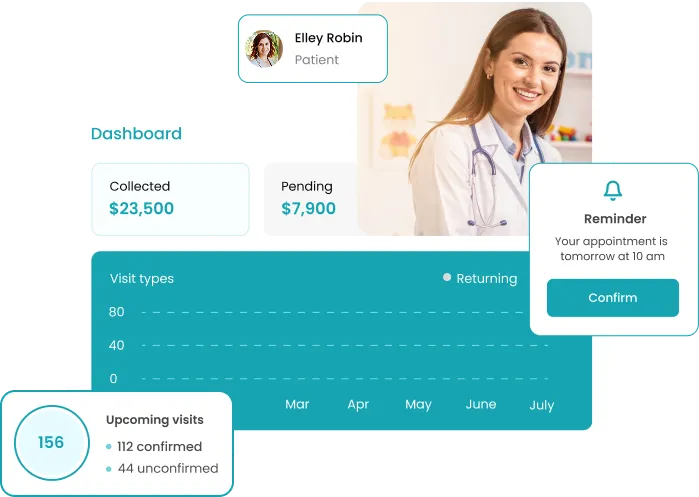
Trusted by Healthcare Providers Nationwide
Healthcare organizations across the country rely on the OmniMD platform to support clinical care, simplify operations, and strengthen revenue performance. With decades of experience in healthcare technology, OmniMD continues to equip practices with solutions designed specifically for modern medical environments.
12,000+ Healthcare Professionals
Using OmniMD solutions across the United States to manage clinical and operational workflows.
600+ Healthcare Facilities
Including independent primary care practices, specialty clinics, and multi-provider organizations.
Millions of Patient Records Managed
Securely stored and accessible through OmniMD’s integrated digital platform.
25+ Years of Healthcare Technology Innovation
Delivering trusted solutions built to support evolving healthcare needs.

Built for the Way Primary Care Works
Primary care practices operate at the center of the healthcare ecosystem. Providers must balance patient care with documentation, coordination, and administrative responsibilities. OmniMD’s EHR is designed to support these realities, helping physicians simplify workflows, maintain accurate records, and improve care delivery across every patient interaction.
Key Features of OmniMD Primary Care EHR
Intuitive templates tailored for common primary care encounters, allowing providers to document visits quickly while maintaining detailed and structured records.

Annual wellness
visits

Chronic care
managementvisits

Preventive
screenings

Acute and same day
visits

AI Clinical Scribe automatically generates structured visit notes

Ambient Listening Technology captures patient conversations and converts them into documentation

Intelligent Coding Suggestions support accurate billing and reduce manual effort

Laboratories and
diagnostic services

e-Prescribing networks and pharmacies

Health information
exchanges

HL7 and FHIR interoperability
standards
Connected Solutions for Primary Care Practices
Primary care practices operate at the center of the healthcare ecosystem. Providers must balance patient care with documentation, coordination, and administrative responsibilities. OmniMD’s EHR is designed to support these realities, helping physicians simplify workflows, maintain accurate records, and improve care delivery across every patient interaction.
Medical Billing for Primary Care
Simplify clinical documentation with templates designed for preventive care, chronic disease management, and routine patient visits.
Revenue Cycle Management (RCM) Software for Primary Care
Optimize revenue cycle performance for primary care with automated coding, real-time eligibility verification, and simplified claims management.
Appointment Management Software
Manage appointments, digital intake, patient communication, and engagement through a connected patient management system.
Telehealth for Primary Care
Offer virtual visits and remote consultations through secure telehealth tools integrated directly into the EHR.
Remote Patient Monitoring (RPM)
Track patient health data outside the clinic and support chronic disease management with remote monitoring tools.
Measurable Impact for Primary Care Practices
Practices using OmniMD often experience meaningful improvements in efficiency, productivity, and revenue performance.
70%
Improvement in Front Desk Efficiency
Up to 4
More Patients Seen Per Day
98%
Accuracy in Insurance Eligibility Verification
30%
Faster Revenue Collection
Everyday Workflows Supported by the EHR

Preventive Care Management
Track immunizations, screenings, wellness visits

Chronic Disease Management
Organize patient data for conditions like diabetes, hypertension, cardiovascular disease

Acute Care Visits
Quick documentation for same day appointments
Why Primary Care Practices Choose OmniMD
- AI-assisted documentation reduces administrative workload
- Integrated billing and revenue cycle management tools
- Telehealth and remote patient monitoring capabilities
- Specialty-specific workflows designed for primary care
- Scalable technology that grows with the practice
Trusted by 12,000+ Providers in 600+ Clinics
After comparing many EMRs, I determined that OmniMD was the best software for my new clinic. I run a high volume family practice clinic. OmniMD is used for scheduling, reminder calls, medical records, insurance and patient billing. OmniMD is a critical tool for my practice. It is a very good software, but I am also very pleased with the level of service OmniMD provides with their technical support team.

Our practice has been very pleased with the outcomes of your billing and collection services. You have been both informative and patient as we continue to become a more efficient practice. We have recognized that collections have been improved due to your diligence and tenacity. Thank you for your kindness and hard work.
OmniMD’s EHR and Billing software has truly simplified our operations at Solid Sobriety. Their billing tools have improved our efficiency, significantly reducing errors and boosting revenue. What stands out most is their exceptional customer support- the team is always available, knowledgeable, and proactive in solving any challenges we face. We couldn’t be happier with the partnership.
I have been a practitioner for over a decade and worked various EMR programs in the past by far OmniMD surpasses all my expectations. It’s easy to navigate and your entire note in one page with only a few clicks to complete. I own a family medical practice/ spa and I am very happy that I chose OmniMD. Their support staff is amazing they are always available to assist you.


Annual Wellness Visit Workflows and Medicare Billing in OmniMD
The Annual Wellness Visit (AWV) is one of the highest-value preventive care services in primary care. Medicare covers it at 100% with no cost-sharing for the patient, which means a higher show rate than most billable services. OmniMD includes a structured AWV template that covers every required component: Health Risk Assessment (HRA), cognitive assessment, functional ability screen, and Personalized Prevention Plan of Service (PPPS). Providers complete the visit and capture the correct G code without post-visit chart review. Verified on 2026-06-18 by Dr. Giri.
AWV and Preventive Care HCPCS/CPT Codes
| Code | Visit Type | Eligibility | OmniMD Support |
|---|---|---|---|
| G0402 | Initial Preventive Physical Examination (Welcome to Medicare) | First 12 months of Medicare Part B enrollment | Dedicated IPPE template with HRA and screening checklist |
| G0438 | First Annual Wellness Visit | Medicare beneficiaries, 12+ months after IPPE | AWV template with HRA, PPPS auto-generation, cognitive screening prompt |
| G0439 | Subsequent Annual Wellness Visit | Medicare beneficiaries, annually after G0438 | Subsequent AWV template, prior PPPS pulled forward for comparison |
| 99406 | Tobacco cessation counseling, 3 to 10 minutes | Billable separately on same day as AWV | Add-on code flagged automatically when tobacco use is documented |
| 99407 | Tobacco cessation counseling, 10+ minutes | Billable separately on same day as AWV | Add-on code flagged automatically when tobacco use is documented |
| 99385-99387 | Preventive visit, new patient, age 18 to 65+ | Commercial and Medicaid patients; age-stratified | Age-based code auto-selected from date of birth at visit creation |
| 99395-99397 | Preventive visit, established patient, age 18 to 65+ | Commercial and Medicaid patients; age-stratified | Age-based code auto-selected from date of birth at visit creation |
OmniMD tracks each patient’s AWV eligibility date and surfaces an alert inside the patient record when the patient becomes eligible for G0438 or G0439. Practices using OmniMD’s AI-powered RCM can run an AWV eligibility report across the full Medicare panel to identify patients who are due but not yet scheduled. Source: CMS Annual Wellness Visit coverage guidelines.
Chronic Care Management and Transitional Care Billing in Primary Care
Chronic Care Management (CCM) and Transitional Care Management (TCM) are two of the highest-return billing opportunities in primary care. A practice with 200 Medicare patients enrolled in CCM at the 99490 rate generates over $12,000 per month in additional reimbursement for care coordination work the clinical team is already performing. OmniMD includes a CCM time-tracking module and TCM workflow that captures these billing opportunities without adding a separate documentation system. Integrates with remote patient monitoring for practices managing chronic disease across care settings.
CCM and TCM CPT Codes
| Code | Service | Time Requirement | OmniMD Tracking |
|---|---|---|---|
| 99490 | CCM, non-complex | 20+ min/month, clinical staff time | Automatic time log per patient per month |
| 99439 | CCM add-on, each additional 20 minutes | 20-min increments after first 20 | Auto-flagged when cumulative time crosses each threshold |
| 99487 | Complex CCM | 60+ min/month, clinical staff time | Complexity flag triggered when 2+ chronic conditions are active |
| 99491 | CCM, physician/QHP-directed time | 30+ min/month, physician direct time only | Provider time logged separately from clinical staff time |
| 99495 | TCM, moderate complexity | Contact within 2 business days of discharge; face-to-face within 14 days | TCM task auto-created on hospital discharge notification |
| 99496 | TCM, high complexity | Contact within 2 business days of discharge; face-to-face within 7 days | High-complexity flag, 7-day follow-up task auto-created |
Source: CMS Physician Fee Schedule, CCM and TCM billing guidelines.
Primary Care CPT Codes and EHR Documentation Support
Primary care has the broadest CPT code range of any outpatient specialty: office visits, preventive exams, counseling, telehealth, and care management all bill under different code sets. OmniMD’s AI medical scribe captures documentation at the level of detail required to support the correct E&M code, reducing the audit risk of upcoding or downcoding. Every code in the table below has a corresponding OmniMD template and billing rule set.
Office Visit and Preventive E&M Codes
| Code | Visit Type | Typical Time | MDM Level |
|---|---|---|---|
| 99202 | New patient office visit | 15-29 min | Straightforward |
| 99203 | New patient office visit | 30-44 min | Low complexity |
| 99204 | New patient office visit | 45-59 min | Moderate complexity |
| 99205 | New patient office visit | 60-74 min | High complexity |
| 99212 | Established patient office visit | 10-19 min | Straightforward |
| 99213 | Established patient office visit | 20-29 min | Low complexity |
| 99214 | Established patient office visit | 30-39 min | Moderate complexity |
| 99215 | Established patient office visit | 40-54 min | High complexity |
| 99385-99387 | Preventive visit, new patient (ages 18 to 65+) | 30-60 min | Age-stratified preventive |
| 99395-99397 | Preventive visit, established patient (ages 18 to 65+) | 25-45 min | Age-stratified preventive |
OmniMD’s E&M coding assistant reviews the documented MDM (Medical Decision Making) components: number of problems, data reviewed, and risk of complications. It suggests the appropriate code level before the encounter closes. Providers using the AI scribe see automatic MDM population from the clinical note, reducing documentation time per visit without reducing code accuracy or audit defensibility.
ICD-10 Codes for Common Primary Care Diagnoses
Primary care manages the largest share of chronic disease in the US healthcare system. Accurate ICD-10 coding for hypertension, diabetes, depression, and preventive exams directly affects reimbursement, quality measure capture, and payer risk-adjustment. OmniMD’s problem list includes ICD-10 code look-up at the point of documentation and flags common coding specificity errors before the claim leaves the practice. For example, unspecified type 2 diabetes (E11.9) versus type 2 with CKD (E11.65) carry different reimbursement rates under Medicare Advantage risk adjustment.
| ICD-10 Code | Diagnosis | Coding Note |
|---|---|---|
| I10 | Essential (primary) hypertension | Most frequently billed primary care diagnosis; HCC risk-adjustment applies for Medicare Advantage |
| E11.9 | Type 2 diabetes mellitus without complications | Use specific complication codes (E11.65, E11.40, E11.21) when documented; significant HCC weight difference |
| E78.5 | Hyperlipidemia, unspecified | Use E78.00 for pure hypercholesterolemia when LDL is documented in the chart |
| Z00.00 | General adult medical exam, without abnormal findings | Paired with preventive CPT 99395-99397; switch to Z00.01 when abnormal findings are documented |
| F32.1 | Major depressive episode, moderate | PHQ-9 score supports medical necessity; PHQ-9 completion is a MIPS quality measure for depression screening |
| F41.1 | Generalized anxiety disorder | GAD-7 score supports specificity; documents medical necessity for counseling referral |
| J06.9 | Acute upper respiratory infection, unspecified | High-volume acute visit code; use organism-specific code when rapid test confirms pathogen |
| M54.50 | Low back pain, unspecified | Updated ICD-10-CM 2024: use M54.51 (vertebrogenic) or M54.59 (other) when etiology is documented |
| E03.9 | Hypothyroidism, unspecified | Pairs with TSH lab order; HCC category for Medicare Advantage panels |
| J44.1 | COPD with acute exacerbation | HCC risk-adjustment code; document severity and treatment plan for audit support |
| K21.0 | Gastro-esophageal reflux disease with esophagitis | Use K21.9 without esophagitis; document symptom frequency for medical necessity of PPI therapy |
| Z87.891 | Personal history of nicotine dependence | Required on the claim for tobacco cessation counseling codes 99406 and 99407 |
OmniMD surfaces HCC (Hierarchical Condition Category) flags on chronic diagnosis codes. This matters for practices with Medicare Advantage patients, where HCC risk scores affect per-member-per-month payments. See the medical billing software page for how OmniMD handles risk-adjustment coding across the full patient panel.
MIPS Quality Reporting Built Into the Primary Care EHR
MIPS (Merit-based Incentive Payment System) affects Medicare Part B reimbursement by up to plus or minus 9% annually. Most primary care practices qualify as MIPS-eligible clinicians (MECs), and the performance categories reward exactly what primary care does well: chronic disease management, preventive screenings, care coordination, and patient engagement. OmniMD captures MIPS measure data automatically from clinical documentation rather than requiring a separate reporting workflow or registry submission tool.
MIPS Performance Categories for Primary Care
| Category | Weight | Primary Care Examples | OmniMD Capture Method |
|---|---|---|---|
| Quality | 30% | Controlling high blood pressure, diabetes HbA1c poor control, depression screening (PHQ-9), colorectal cancer screening | Auto-captured from problem list, lab results, and screening completions in visit documentation |
| Improvement Activities | 15% | CCM enrollment, care transitions, patient portal use, telehealth expansion, chronic disease self-management | CCM module and patient portal activity tracked inside OmniMD; no separate attestation tool needed |
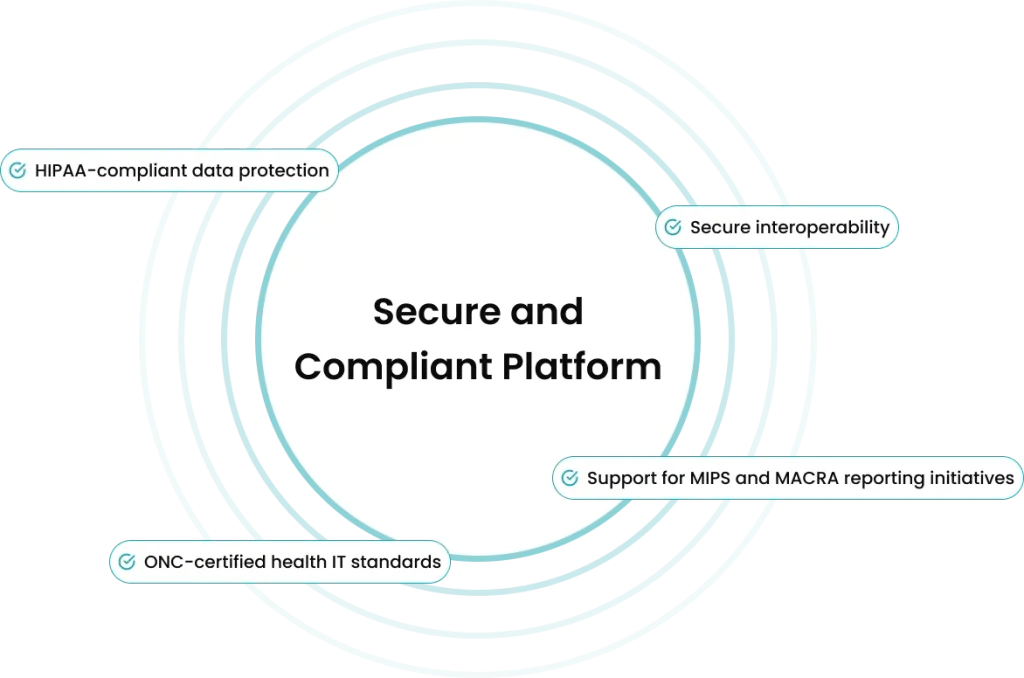
| Promoting Interoperability | 25% | e-prescribing rate, health information exchange, patient-generated data, referral tracking | ONC-certified EHR; PI measures calculated automatically from system activity |
| Cost | 30% | Total per capita cost, Medicare Spending Per Beneficiary (MSPB) | CMS-calculated; OmniMD population health dashboard flags high-cost outlier patients before year end |
Primary care practices using OmniMD can view a MIPS performance gap report inside the dashboard, showing which quality measures are below the performance threshold with enough lead time to close the gap before the performance year ends. Practices using OmniMD’s AI RCM have a single source of truth for both claims data and quality measure performance. Source: AMA MIPS Quality Payment Program guidelines.
Who Should Use OmniMD Primary Care EHR?
OmniMD is built for independent and small-to-mid-size primary care practices that want a single platform for clinical documentation, billing, scheduling, and care management. The following practice profiles get the most value from OmniMD’s primary care configuration.
- Solo and small-group PCPs (1 to 5 providers): OmniMD eliminates the need for separate billing software, patient portal, and telehealth subscriptions. The AI scribe reduces documentation time per visit, which matters most when there is no scribe staff on the team. Most solo practices go live in 30 to 45 days.
- Multi-provider primary care groups (6 to 20 providers): OmniMD handles multi-provider scheduling, provider-level billing reporting, and panel management across a shared patient population. Practices in this tier see the most return from the CCM time-tracking module. See the medical appointment software page for multi-provider scheduling details.
- Multi-location primary care practices: OmniMD supports multiple locations under a single tax ID with location-level reporting. Providers credentialed at multiple sites can access patient records across locations without a separate login or data export.
- Direct Primary Care (DPC) practices: DPC practices that maintain a small Medicare or Medicaid panel alongside their membership model need an EHR that handles both FFS billing and non-insurance patient workflows. OmniMD supports both models in the same platform without requiring a secondary system for the FFS portion of the panel.
- FQHCs and community health centers: OmniMD supports Federally Qualified Health Center billing, including UDS reporting and sliding fee scale documentation. Integration with remote patient monitoring supports high-risk chronic disease panels common in FQHC populations.
- Practices transitioning off legacy EHR platforms: OmniMD’s implementation team handles data migration from the prior system. The AI front desk and AI scribe modules are available from day one, so practices capture efficiency gains during the transition period rather than waiting for a separate optimization phase.
Not sure OmniMD fits your primary care setup? Compare with family medicine EHR and internal medicine EHR options to see how OmniMD configures for adjacent specialties. The EHR software hub covers the full feature comparison across all specialties.