
Is Praxis EMR Still Worth It in 2026? Here’s What the Reviews and the Data Say
It’s late at night. You’ve got a bunch of tabs open. One is Praxis EMR’s pricing page. Another is a review site you don’t fully trust. A third is just a blank search bar, because you’re not even sure what to type anymore.
You didn’t land here by accident. Something made you check. Maybe you already use Praxis and something feels slower than it should. Maybe a colleague told you about it and you’re checking if it’s still worth it in 2026. Maybe you’re opening a new practice and Praxis was just the first name that came up. Whatever the reason, you don’t want a sales pitch. You want the truth. So let’s just look at that first.
Who Built Praxis, and Why That Still Matters Today
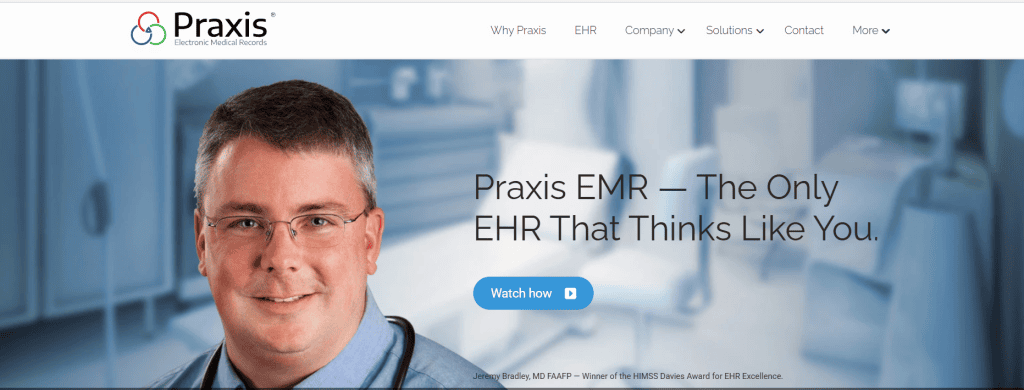
Praxis EMR started in 1989. A doctor named Richard Low built it. He went to Yale, and he spent 20 years working in emergency medicine and internal medicine. He had one simple idea.
- Software should learn how a doctor writes.
- Not the other way around, where the doctor has to squeeze their thoughts into boxes and dropdown menus.
That idea turned into something called the Concept Processor. It’s genuinely a smart piece of software, and it was built years before ‘AI that learns from you’ became something every company puts on their homepage.
Now the main thing. The pricing thing.
According to Praxis’s own pricing page:
- After that, ongoing support and updates cost $70 a month.
- The first provider license costs $219 a month for 60 months, or $259 a month for 48 months.
This is very different from most software today, where you just keep paying forever and never actually own anything. Some doctors pick Praxis specifically because of this. It’s a fair, honest way to price software, and it deserves credit.
What Praxis Users Say
Forget the marketing for a second. Here’s what real reviewers keep saying, over and over, across different review sites.
The good stuff, backed by real numbers:
- SelectHub looked at a bunch of reviews and found that 92 percent of people who talked about customization liked it. That’s a really high number.
- According to Praxis’s own AAFP survey history page, Praxis took the #1 spot in the American Academy of Family Physicians’ user satisfaction survey in 2008, 2009, and 2011, then swept 13 of 19 categories in 2012. Across those same survey years, Praxis was also the only EHR where 100 percent of respondents said they’d never go back to paper records.
- One reviewer on Capterra, who’d used it two years, said it just ‘gets fast’ once it learns how you work. No complaints after that.
- A doctor on Software Advice who works in multiple locations said Praxis lets them “document naturally without all the clicking” they had to deal with before.
Now, the downsides, also backed by real numbers:
- That same SelectHub report found that almost 90 percent of people who mentioned the learning curve said it was steep. That’s basically everyone.
- One reviewer on EMRFinder said training new staff “takes extra time” and the interface isn’t as easy to figure out as newer software.
- Another EMRFinder reviewer just said the system “looks a bit old.” Small comment, but it comes up more than once.
- Praxis does work on phones and tablets, but here’s the important detail. It works through remote access, meaning you’re basically connecting to your computer from a distance. It’s not a real app built specifically for a phone screen. It works, but it feels different.
- There’s no free trial listed on Praxis’s own site. You can book a live demo, but you can’t just try it yourself first.
None of this is made up or exaggerated. The same points keep showing up again and again, from different people, on different websites. When that happens, it usually means it’s true, not just a coincidence.
So What’s Missing Here
Even though none of the reviews say it directly, Praxis was never built to fix your billing. It was built in 1989 to solve one problem, and one problem only, which is how doctors write notes. That kind of focus is rare, and it’s probably why the Concept Processor works so well. When you only build one thing for decades, you tend to get really good at that one thing.
But that same narrow focus means there’s a whole side of running a practice that Praxis was never designed to touch. And in 2026, that side has gotten a lot more painful.
Here’s what a recent report from Kodiak Solutions found, looking at over 2,300 hospitals:
- Money lost to denied claims and unpaid bills jumped 25 percent in one year.
- That’s $48.4 billion lost in 2025, up from $38.6 billion in 2024.
- The biggest reason was more claims getting denied for missing prior authorizations or disputes over whether the care was even necessary.
This isn’t just a hospital problem. Small practices feel this too, sometimes even worse, because they don’t have a big billing team to catch it in time. Here’s the simple truth behind it.
- You can write the best note in the world.
- If the claim behind that note gets denied three weeks later because of one missing code, none of that speed matters.
Fast charting alone doesn’t fix that. Something else has to.
What’s Changed Since Praxis Was Built
Here’s where things get interesting. While Praxis stayed laser focused on the note, the rest of the industry didn’t just sit still.
OmniMD started in 2002. The founder, Divan Dave, asked a different question from the very beginning.
- Not “how do we make the note better.”
- Instead, “how do we fix everything connected to that note,” from the front desk call, to the visit, to the chart, to the claim, all the way to the money actually landing in the bank.
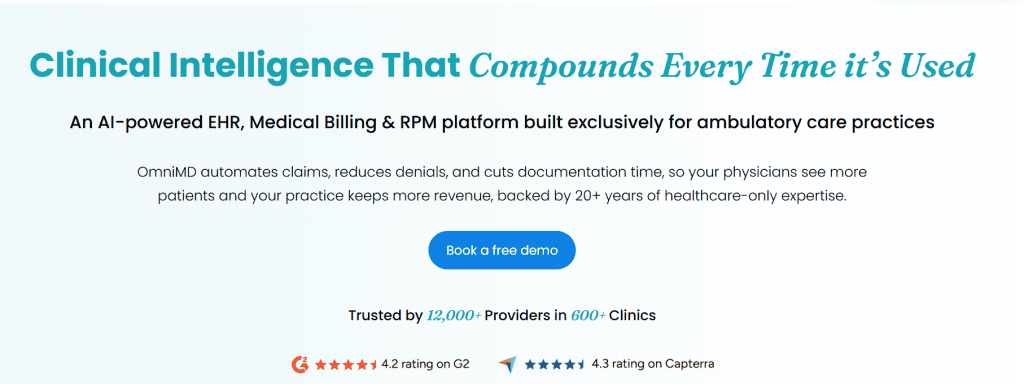
Today, OmniMD serves more than 12,000 providers across 600 plus clinics, in more than 20 different specialties.
We didn’t throw away the idea that Praxis started. We just made it bigger.
- AI Clinician and AI Medical Scribe both work on the same basic belief the Concept Processor was built on, that software should learn from the doctor.
- The difference is how it learns. Instead of studying your notes for years, it listens to the actual conversation with your patient and writes the note for you, right then and there.
- That means you’re not spending a year training it before it becomes useful. It starts helping from day one.
Then it goes even further, into an area Praxis was simply never built for.
In May 2026, we launched two new tools, AI Medical Biller and AI Medical Coder. Here’s what they actually do:
- They’re trained specifically on real healthcare billing data.
- They catch missing codes and denial risks before you even send the claim, not weeks later.
- You can test both with a free trial that runs on your own real claims, not some clean sample data made to look good.
It also directly solves the one gap we found in Praxis’s own pricing page. With us, you get to test everything against your own numbers before spending a single dollar, let alone signing a 48 or 60 month contract.
So, What Should You Do
It really comes down to what you’re trying to fix.
- If your only problem is the note itself, if charting is the one thing keeping you at the office late, Praxis has earned its reputation. There’s a real reason physicians in its own surveys said they’d never go back to paper charts.
- If your problem is bigger than the note, if it’s about denied claims, missed codes, or a front desk that can’t keep up, that’s a different kind of problem. Praxis was never built for that, and that’s okay, because it was never trying to be. OmniMD’s answer to that gap now runs as one connected system, covering documentation, front desk operations, clinical decision support, and revenue cycle together, rather than as separate disconnected tools.
Either way, don’t just take anyone’s word for it. Test it yourself. Book a free demo, or try the AI Medical Biller or AI Medical Scribe free trial. Run it against your own charts and your own claims, and see what actually happens with your real numbers.

Dr. Giriraj Tosh Purohit is an experienced Product Manager and Security officer with a strong background in healthcare technology and management consulting. With expertise spanning clinical workflows, EHR, RCM, Digital Health, and AI-driven products, he has been instrumental in shaping innovative healthcare solutions.