
AI-Powered Cardiology EHR
Talk to your patient, not your keyboard. Our AI scribe documents the visit in real time and auto-codes cath, device, and echo procedures before the claim goes out.



How AI Changes the Way Cardiologists Document and Bill
Cardiology visits carry more clinical data than most specialties can manage cleanly, EKG tracings, echo reports, cath lab findings, device interrogations, and a full cardiac history. OmniMD’s AI takes that burden off the physician.
Before the visit, it pulls prior EKG and echo trends into a single view and flags high-risk patients automatically. During the visit, the AI Medical Scribe documents in real time through ambient voice recognition. After the visit, it assigns accurate CPT codes, runs a denial check, and compiles ACC/STS registry data automatically.
The result: less chart time after hours, accurate coding on complex procedures, and registry submissions that go out on time, so your clinical judgment stays where it belongs.

Secure and
Compliant

Chronic Care
Management

Automated Billing
and Claims

Integrated Diagnostic
Tools

Customized Templates

AI Medical
Scribe
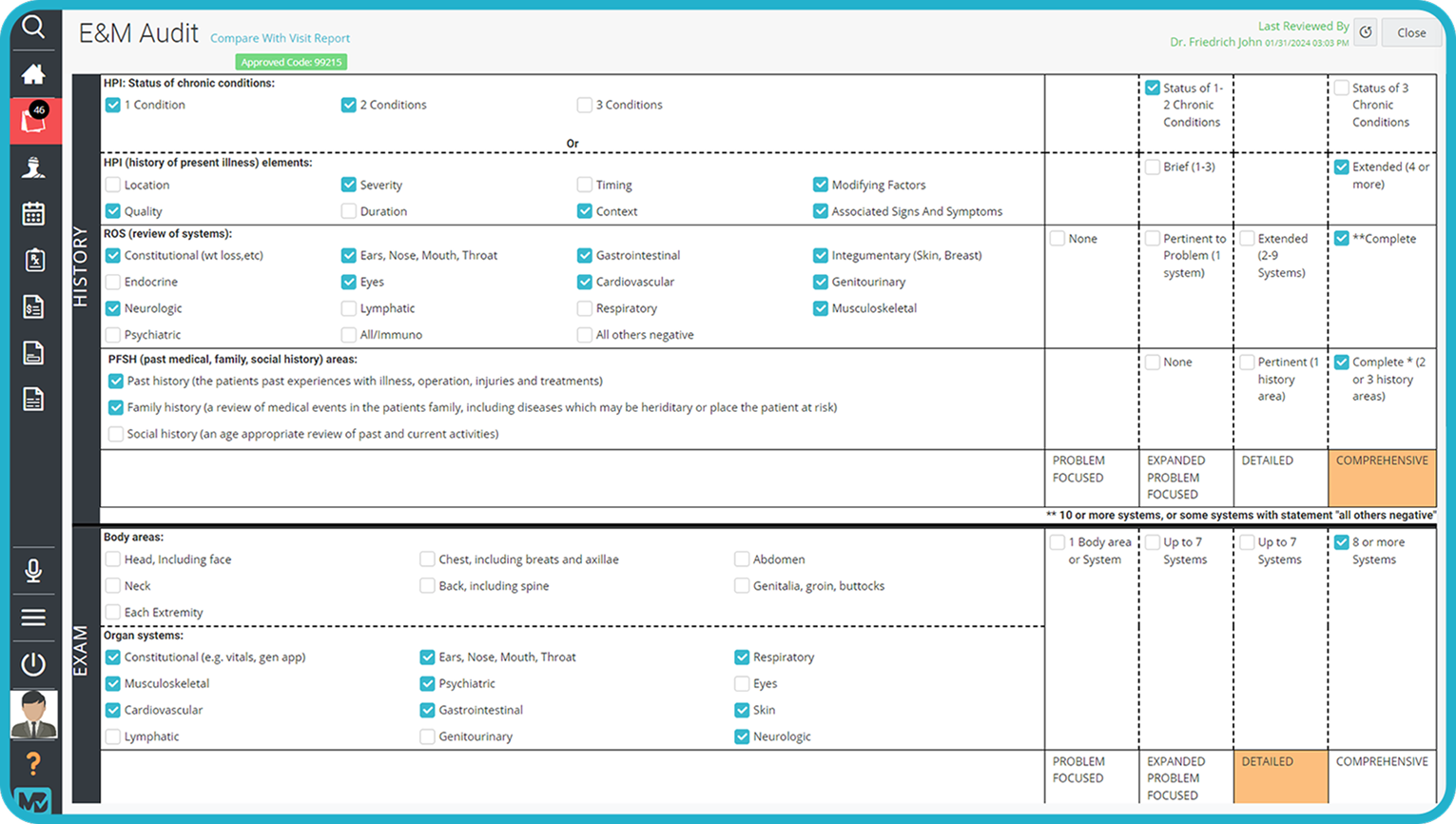
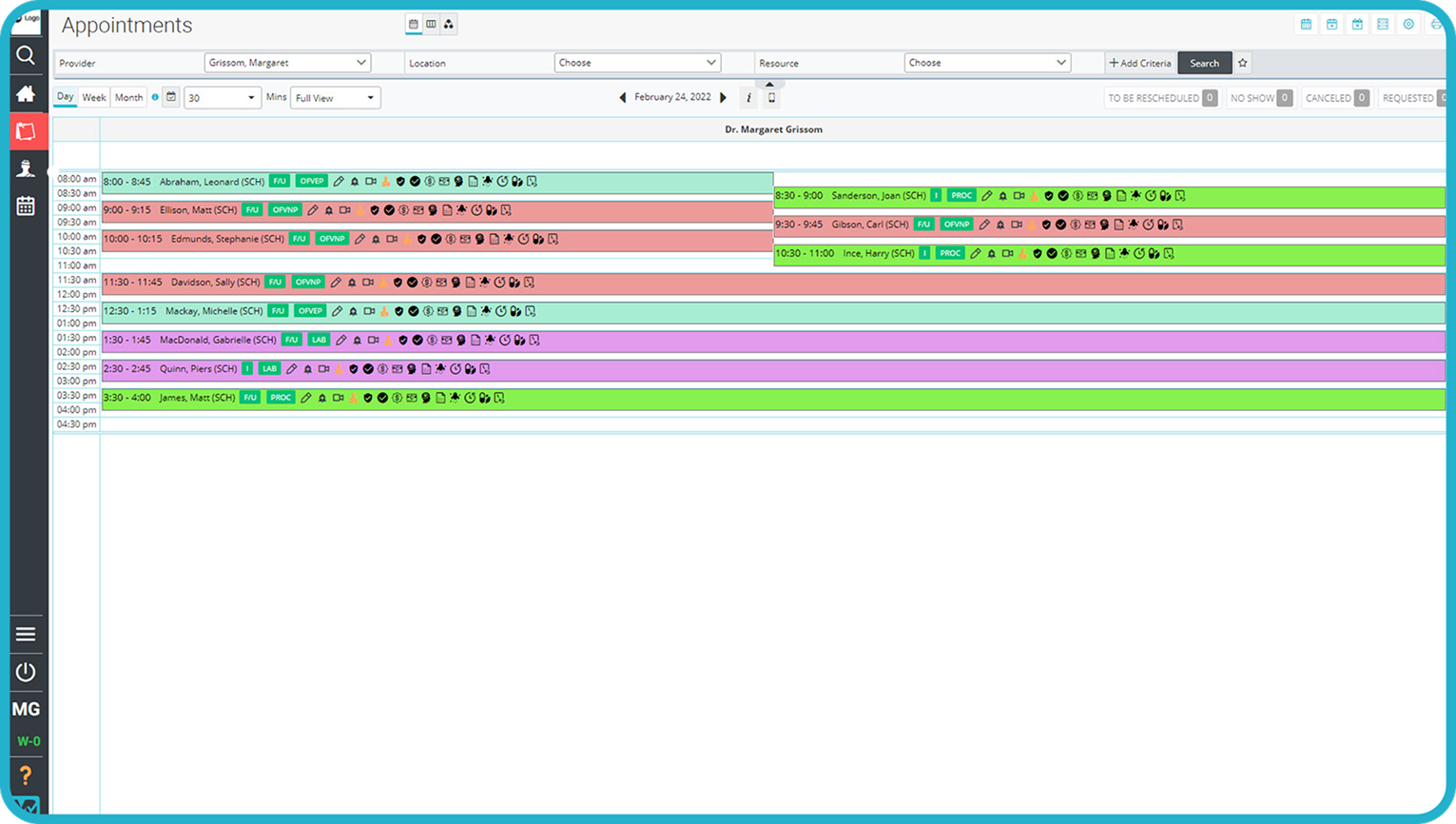
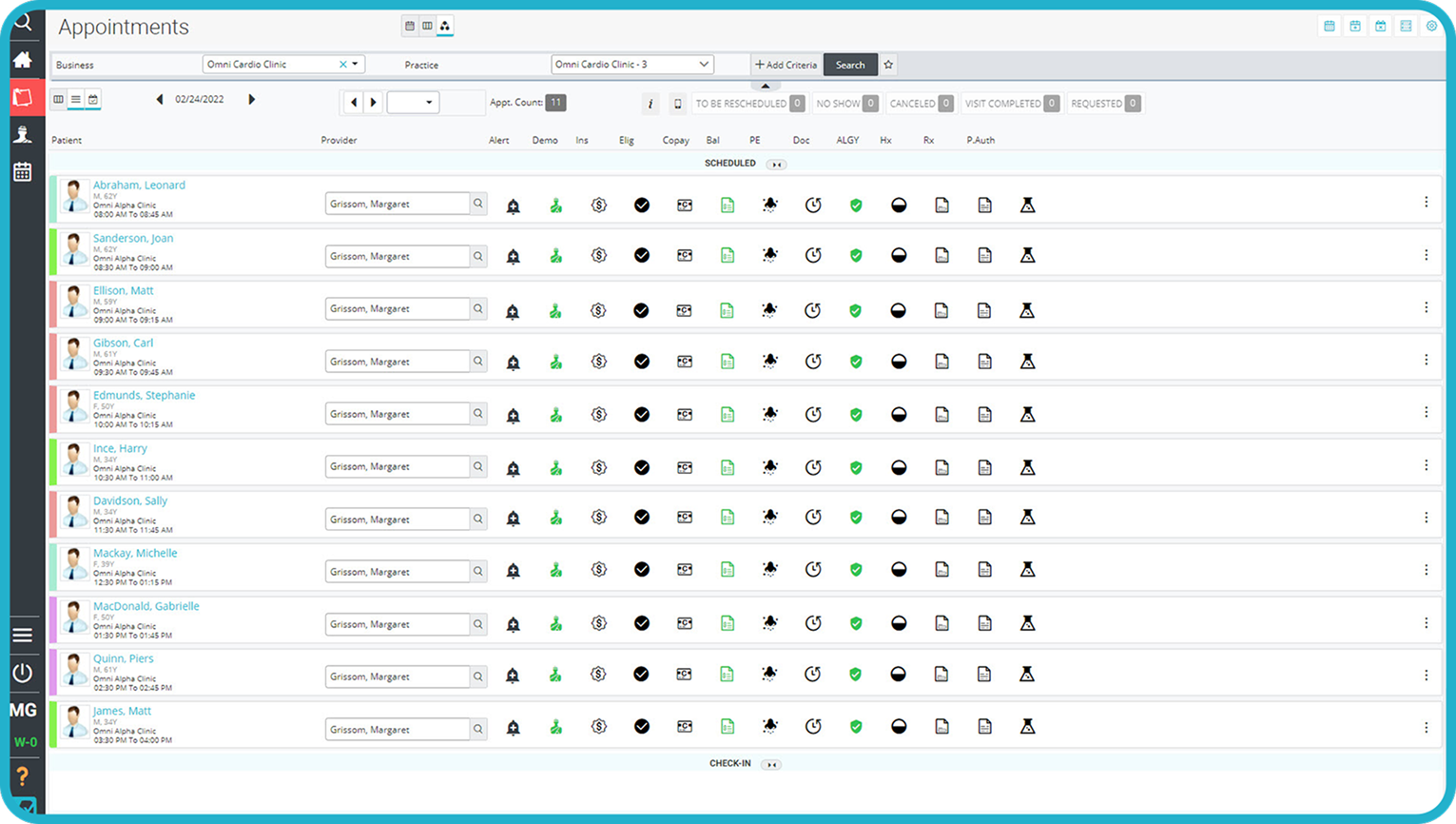
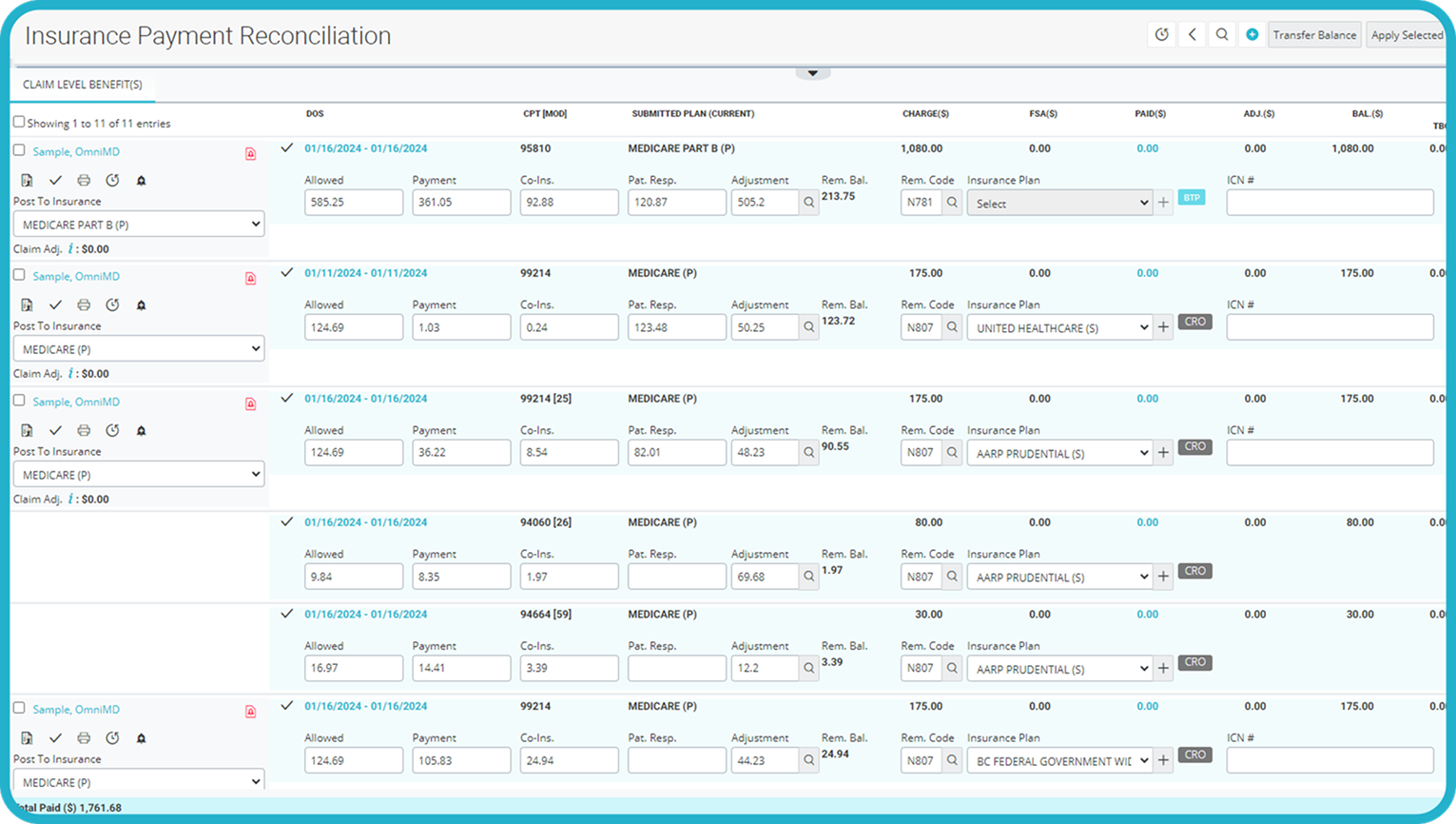
OmniMD Cardiology EHR Software Interface
Cardiology EHR Key Capabilities

Cardiology Device Integration EHR
Document faster and interpret diagnostics with precision using cardiology-specific templates, calculators, and UI. Built with cardiologists, our cloud EHR integrates labs and imaging for real-time patient visibility.

Cardiology Billing and Coding Software
Reduce billing denials through RCM embedded in workflows. Reduce denials through structured capture, cardiology CPT/ICD logic, and coding checks. Access dashboards and analytics that turn our cardiology billing services into a proactive revenue strategy.

Telecardiology software
Monitor vitals via EKG patches, Holter monitors, and Bluetooth BP cuffs. With lab syncing and virtual consult tools, our platform supports proactive care for arrhythmias, CHF, and post-procedure recovery.

Patient Engagement for Cardiology Practices
Boost satisfaction with scheduling software, intake, and secure messaging. Patients receive reminders, lab updates, and personalized care through health portals, improving adherence and reducing no-shows for better outcomes.

Chronic Care Management for Cardiac Conditions
Support high-acuity cardiac patients with structured care plans, CMS and value-based benchmarks, CQM tracking, and task automation. Facilitate interdisciplinary coordination and standardize documentation for ongoing care.

Security, Compliance, and Automation
Protect data and ensure compliance with role-based access, audit trails, and encryption. Our software reduces cognitive load, safeguards patient trust, and future-proofs your practice against compliance drift.
Real Stories From Medical Practices Thriving With OmniMD
Cardiology EHR Clinical Features
Cardiology practice requires documentation tools that match the breadth of the specialty. OmniMD includes native support for the following cardiology workflows:
- Echocardiography documentation — Structured templates for transthoracic echocardiogram (TTE) and transesophageal echocardiogram (TEE) findings. Ejection fraction (EF%), valve gradients, and chamber dimensions captured in discrete fields, not paragraph notes.
- EKG and ECG integration — 12-lead EKG data pulls directly into the encounter record. Interpretation notes, rhythm findings, and interval measurements stored in structured format for longitudinal tracking.
- Holter monitor and cardiac event monitoring — Report filing for 24-hour Holter (CPT 93224), 48-hour extended Holter (CPT 93226), and long-term cardiac event monitors, with CPT code auto-assignment based on monitoring duration.
- Stress test documentation — Templates for exercise treadmill testing, pharmacological stress, nuclear stress (myocardial perfusion imaging), and stress echocardiography. Protocol, heart rate, blood pressure response, and interpretation fields included.
- Cardiac catheterization notes — Left heart catheterization, right heart catheterization, and coronary angiography procedure notes with lesion location, vessel, and intervention detail fields.
- Electrophysiology (EP) and ablation — EP study documentation templates for arrhythmia mapping, ablation procedures, and post-procedure monitoring notes.
- CIED and remote device monitoring — Pacemaker, ICD, and cardiac implantable electronic device (CIED) remote check documentation with CPT 93279-93299 coding support.
- AI medical scribe integration — Voice-driven documentation during complex cardiology visits, with cardiology terminology recognition for PCI follow-ups, AFib management, and heart failure encounters. Connects with OmniMD’s AI medical scribe.
- Remote patient monitoring integration — Cardiac RPM data flows into the EHR workflow, with alert routing and CPT code capture for remote physiological monitoring. See OmniMD’s remote patient monitoring platform.
Cardiology CPT Codes and EHR Billing
Cardiology billing covers a wide range of CPT codes tied to specific procedures, monitoring durations, and service types. OmniMD maps these codes to encounter documentation so the correct code is selected at the point of care, reducing claim denials caused by documentation-coding mismatches.
| Category | CPT Codes | Description |
|---|---|---|
| Routine EKG | 93000, 93005, 93010 | With interpretation and report; tracing only; interpretation only |
| Holter monitoring (up to 48 hrs) | 93224, 93225, 93226, 93227 | Recording; scanning; analysis and interpretation; physician review |
| Extended cardiac monitoring (7-21 days) | 93241, 93243, 93245, 93247, 93248 | External cardiac event monitoring by duration and service type |
| Exercise stress test | 93015, 93016, 93017, 93018 | Combined; physician supervision; tracing only; interpretation only |
| Nuclear stress (SPECT/MPI) | 78451, 78452, 78453, 78454 | Myocardial perfusion imaging; SPECT; planar |
| Echocardiography (TTE) | 93306, 93307, 93308 | Complete with Doppler; complete without Doppler; follow-up or limited |
| Stress echocardiography | 93350, 93351 | Echo during stress; with contrast agent |
| TEE | 93312, 93313, 93314 | Complete; limited; interpretation only |
| Cardiac catheterization | 93453, 93454, 93455, 93456, 93461 | Left heart; combined; with coronary angiography; selective |
| EP studies and ablation | 93600, 93619, 93620, 93653 | Basic; full EP evaluation; full EP with ablation; SVT ablation |
| CIED device checks (in-person) | 93279, 93280, 93281, 93289 | Pacemaker, ICD, loop recorder interrogation and in-person evaluation |
| CIED remote monitoring | 93296, 93297, 93298, 93299 | Remote interrogation and monitoring; pacemaker and ICD |
| Remote patient monitoring | 93264, 99453, 99454, 99457, 99458 | Remote physiological monitoring; device supply; time-based management |
| Office visits (E/M) | 99202-99215 | New and established patient visits; complexity-based coding |
ICD-10-CM cardiology codes are embedded in OmniMD’s code sets: I10-I13 (hypertension), I20-I25 (coronary artery disease), I48 (atrial fibrillation), I50 (heart failure), and I34-I38 (valvular heart disease). OmniMD’s AI-powered RCM connects cardiology CPT codes to claim submission and tracks denial patterns by procedure type. See medical billing software for billing workflow details.
Cardiac Condition Documentation Workflows
Each cardiac condition carries distinct documentation requirements tied to diagnosis codes, risk scoring tools, and treatment planning. OmniMD provides condition-specific encounter templates that capture the right data in discrete fields for each clinical scenario.
| Condition | ICD-10-CM | Key Documentation Fields | Clinical Workflow |
|---|---|---|---|
| Atrial Fibrillation (AFib) | I48.0-I48.91 | CHA2DS2-VASc score, rhythm strip, DCCV or ablation plan, anticoagulation status | Rhythm monitoring, anticoagulation management, cardioversion or ablation planning |
| Heart Failure (HF) | I50.20-I50.9 | NYHA functional class, EF%, LVEF, daily weight trend, diuretic dose, BNP/NT-proBNP | NYHA classification, fluid status management, remote weight and symptom monitoring via RPM |
| Coronary Artery Disease (CAD) | I25.10-I25.9 | Lesion location, vessel, TIMI grade, stent type, intervention date, post-PCI plan | Cath lab results documentation, stent placement records, post-catheterization follow-up |
| Hypertension | I10-I13.10 | BP readings across visits, medication titration history, target BP documentation | Longitudinal BP trending, medication adjustment, ACC/AHA 2022 target (<130/80 mmHg) |
| Arrhythmia / VT / SVT | I47.0-I49.9 | Rhythm strip, Holter report, event monitor findings, EP study results | Ambulatory cardiac monitoring review, EP referral coordination, ablation planning |
| Valvular Heart Disease | I34-I38 | Aortic valve area, peak gradient, regurgitation grade, echo date, surgical planning notes | Echo-based disease staging, surgical or TAVR referral, follow-up interval documentation |
OmniMD’s remote patient monitoring integration supports heart failure and hypertension management by routing daily weight readings, blood pressure data, and symptom alerts directly into the EHR workflow for clinical review.