
Geriatric Medicine EHR
Purpose-built EHR for geriatric care – cognitive screening,
Medicare wellness visits, and chronic care billing, all in one system.

Software for Elderly Care Management
Older adults rarely present with a single condition; they carry layers of frailty, memory loss, and mobility risks. Our Geriatric Practice Software is built to map that complexity, capturing subtle declines before they turn into emergencies.
Medication pathways are customized for polypharmacy, reducing the hidden dangers of over- or under-treatment. Cognitive care modules recognize patterns of confusion, agitation, and wandering, alerting teams in real time.
Every care transition, from hospital to home, from rehab to assisted living, is tracked to close the gaps that put seniors at risk. Family and caregivers are no longer side notes; they’re woven directly into the care loop for true continuity, so you can focus on patient stability.

Automated Clinical
Documentation

Scheduling and
Appointments

Patient Portal

Integrated eRx & eFax

Interoperability

Data Analytics
Experience the OmniMD Advantage
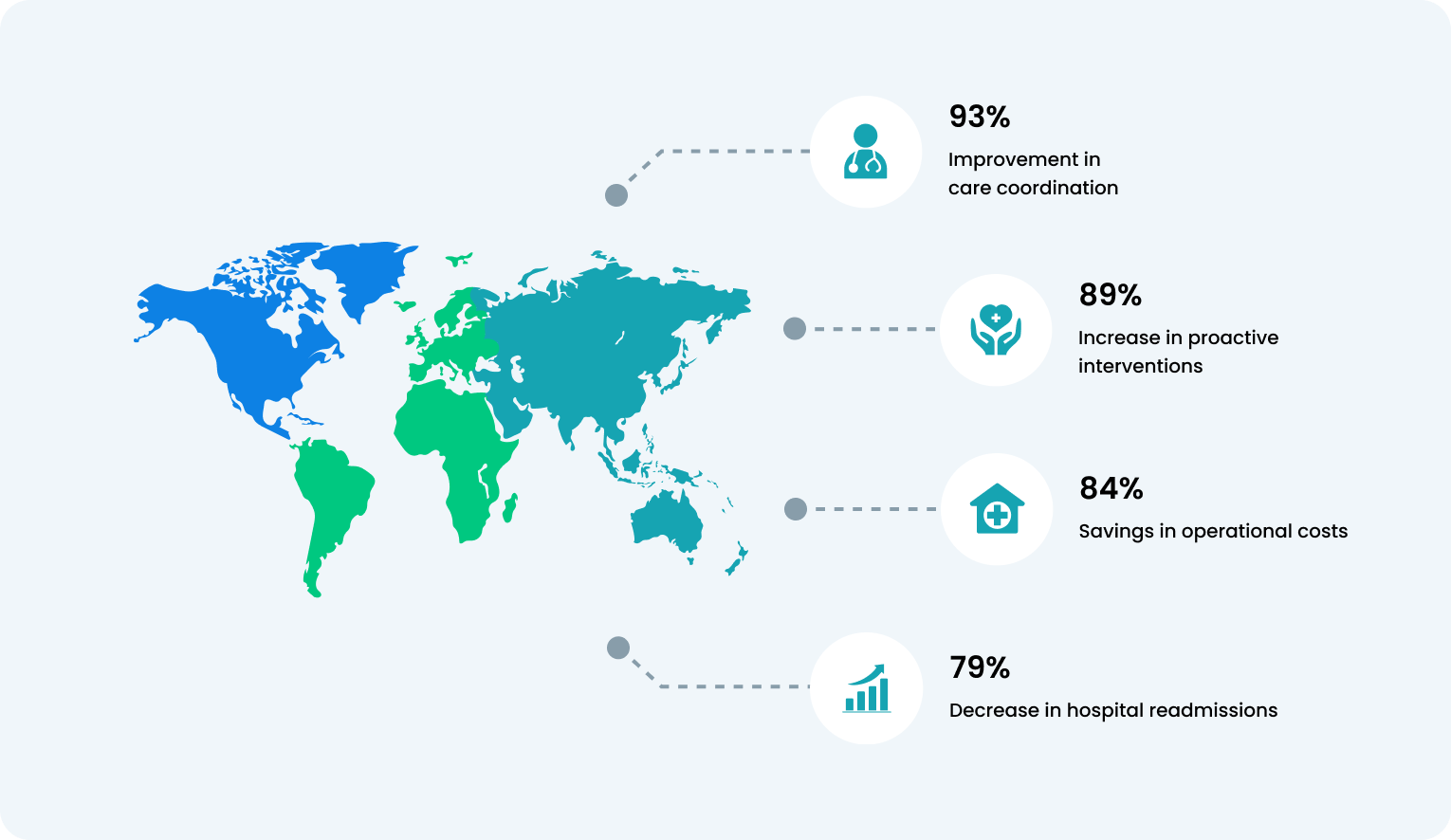
Driving Smarter Decisions at Every Step

Geriatric EHR With Chronic Disease Workflows
Tracker sheets map frailty and memory trends, while rooming adapts to mobility and cognition risks. Anesthesia logs capture age-related vulnerabilities, and authentication safeguards ensure accuracy with multiple caregivers.

Geriatric Billing & Care Management
RCM tuned for elder care supports split-claims across outpatient, nursing, and rehab. CQM reporting reflects geriatric benchmarks like fall prevention and reconciliation, ensuring reimbursement aligns with value-based care needs.

AI-Helped Documentation for Geriatrics
Voice-assisted prompts simplify capturing symptoms in elders with limited expression. AI summarizes caregiver notes into structured narratives without losing nuance. Automated coding adapts to chronic, overlapping conditions while avoiding redundancy. Real-time accuracy checks flag gaps in geriatric histories like falls, sleep patterns, or sensory decline.

Multi-Site Geriatric Practice Software
Shared records sync across hospitals, rehab centers, and nursing homes. Patient transfers carry complete geriatric histories, preserving medication continuity and risk profiles. Role-based access ensures family doctors, specialists, and caregivers see what they need, without data overload. Performance dashboards roll up multi-site metrics like frailty scores, readmission trends, and long-term care benchmarks.

Telehealth For Elderly Patients
Telehealth adapts for low vision, hearing loss, and limited literacy. Remote monitoring links fall detectors, mobility sensors, and adherence trackers. E-prescribing and lab integration prevent errors and redundant testing.

Patient Outreach & Adherence Tools for Seniors
Caregiver portals mirror patient records for shared accountability. Alerts escalate to family when adherence fails. Custom reminders (voice or text) and paperless tools support coordination without limiting geriatric accessibility.
Real Stories From Medical Practices Thriving With OmniMD
After comparing many EMRs, I determined that OmniMD was the best software for my new clinic. I run a high volume family practice clinic. OmniMD is used for scheduling, reminder calls, medical records, insurance and patient billing. OmniMD is a critical tool for my practice. It is a very good software, but I am also very pleased with the level of service OmniMD provides with their technical support team.

Our practice has been very pleased with the outcomes of your billing and collection services. You have been both informative and patient as we continue to become a more efficient practice. We have recognized that collections have been improved due to your diligence and tenacity. Thank you for your kindness and hard work.

OmniMD’s EHR and Billing software has truly streamlined our operations at Solid Sobriety. Their billing tools have improved our efficiency, significantly reducing errors and boosting revenue. What stands out most is their exceptional customer support- the team is always available, knowledgeable, and proactive in solving any challenges we face. We couldn’t be happier with the partnership.

I have been a practitioner for over a decade and worked various EMR programs in the past by far OmniMD surpasses all my expectations. It’s easy to navigate and your entire note in one page with only a few clicks to complete. I own a family medical practice/ spa and I am very happy that I chose OmniMD. Their support staff is amazing they are always available to assist you.

Geriatric Medicine CPT Codes OmniMD Auto-Captures
Geriatric medicine billing involves a distinct set of CPT codes that general EHRs often miss. OmniMD embeds these codes into every geriatric encounter template so documentation decisions happen at the point of care, not during a separate coding review. The platform auto-suggests codes based on documented diagnoses and time, reducing the manual lookup burden in high-volume elderly care practices. See the medical billing software page for full charge capture capabilities.
Core Geriatric CPT Code Reference
| CPT Code | Service | Typical Time | Key Billing Note |
|---|---|---|---|
| 99483 | Cognitive assessment and care planning | ~60 min face-to-face | Requires standardized cognitive assessment tool (MMSE or MoCA), functional assessment, and written care plan. Cannot be billed same day as 99202-99215. |
| 99497 | Advance care planning, first 30 min | 30 min | Add 99498 for each additional 30 min. Medicare covers 100% with no copay when billed as preventive. Document advance directive discussion in note. |
| G0402 | Welcome to Medicare visit (IPPE) | Once per lifetime | Eligible within first 12 months of Medicare Part B enrollment. Requires depression screening, cognitive impairment detection, and written preventive plan. |
| G0438 | Annual Wellness Visit (AWV), initial | Annual | First AWV after 12 months of Medicare Part B. Must include Health Risk Assessment, cognitive screening, and Personalized Prevention Plan. No co-pay for patient. |
| G0439 | Annual Wellness Visit (AWV), subsequent | Annual | Each year after the initial AWV. Update Health Risk Assessment, review medications, update Personalized Prevention Plan. Cannot bill on same day as G0402. |
| 99490 | Chronic Care Management (CCM), 20+ min/month | Monthly (non-face-to-face) | Requires 2+ chronic conditions expected to last at least 12 months. Written patient consent required before billing. Time tracked by clinical staff, not just physician. |
| 99491 | CCM, 30+ min personally by physician | Monthly | Higher-value CCM code when physician personally performs 30+ min of CCM work per calendar month. Cannot be billed together with 99490 in the same month. |
| 99354 | Prolonged office visit, first 30 min beyond typical | Add-on code | Appended to 99205 or 99215 when total time exceeds the typical time for that level. OmniMD tracks time at documentation and alerts when prolonged code threshold is met. |
Source: AAPC CPT 99483 reference. See AI medical coder for automated code suggestion workflows.
High-Volume ICD-10 Codes for Geriatric Documentation
Geriatric practices document a high burden of chronic, overlapping conditions that require precise ICD-10 coding to support medical necessity, avoid claim denials, and satisfy quality reporting requirements. OmniMD’s geriatric templates pre-load the most frequently used codes and prompt for specificity modifiers at the documentation step, reducing coding queries after the encounter.
| ICD-10 | Description | Documentation Tip |
|---|---|---|
| F03.90 | Unspecified dementia without behavioral disturbance | Use F03.91 when behavioral disturbance is documented. Pair with MMSE or MoCA score in the note to support specificity. |
| G30.9 | Alzheimer’s disease, unspecified | Use as primary diagnosis with dementia code (F02.80) as secondary. Specify early-onset (G30.0) when onset before age 65. |
| Z91.81 | History of falling / fall risk status | MIPS Measure #181 requires documentation of fall risk screening and intervention. OmniMD prompts for Timed Up and Go (TUG) test result. |
| R54 | Age-related physical debility | Use with frailty assessments. Document functional decline, ADL/IADL limitations, and weight loss to support medical necessity for home health referrals. |
| T88.7 | Unspecified adverse effect of drug or medicament (polypharmacy) | Use when adverse effects from drug interactions are documented. OmniMD flags high-risk drug combinations from the Beers Criteria list automatically. |
| M81.0 | Age-related osteoporosis without pathological fracture | Pair with Z91.81 for fall risk patients. DEXA scan results should be linked in the chart to support DXA monitoring codes (77080). |
| E11.9 | Type 2 diabetes mellitus without complications | Most common chronic condition in elderly patients. Qualifies patients for CCM (99490/99491) when combined with one additional chronic condition. |
MMSE, MoCA, and GDS: Cognitive Tools Embedded in Every Geriatric Encounter
Cognitive screening is a documentation requirement for Medicare’s cognitive assessment code (99483), Annual Wellness Visits (G0438/G0439), and MIPS quality reporting. Most EHRs treat these as free-text fields, which means scores get buried in notes and cannot be trended over time. OmniMD structures cognitive assessments as discrete data fields so scores appear in the problem summary, trigger alerts when they drop, and auto-populate the care plan. See the EHR software hub for how structured data capture works across all specialties.
Mini-Mental State Examination (MMSE): Scored 0-30, the MMSE tests orientation, registration, attention, recall, and language. OmniMD’s geriatric template includes a structured MMSE entry panel with scoring logic built in. A score below 24 auto-flags for follow-up and appends a documentation note to the encounter. The score is stored as a discrete value and displayed on the patient summary timeline, so trends across visits are visible without searching through individual notes.
Montreal Cognitive Assessment (MoCA): Scored 0-30, the MoCA is more sensitive than the MMSE for detecting mild cognitive impairment (MCI), which is the population at highest diagnostic risk in a geriatric practice. OmniMD includes the MoCA as an alternative assessment option within the same cognitive screening panel, with an adjustment for patients with fewer than 12 years of education (add 1 point). Results are stored identically to MMSE scores for trending and reporting.
Geriatric Depression Scale (GDS): The 15-item short-form GDS screens for depression in elderly patients who may not present with classic depressive symptoms. A score of 5 or higher is considered a positive screen and triggers a follow-up prompt in OmniMD. This satisfies the depression screening requirement for AWV visits (G0438/G0439) and MIPS Measure #370. The AI medical scribe captures verbal GDS administration during the encounter and populates the structured field automatically. See AI medical scribe for details on real-time documentation capture.
From Dr. Krishna Nathwani, Product Specialist: “The most common documentation gap I see in geriatric practices is cognitive screening that exists somewhere in the chart but cannot be retrieved as a trend. When a patient’s MMSE drops from 26 to 22 over 18 months, that trajectory matters for care planning decisions. OmniMD treats cognitive scores the same way it treats blood pressure readings: structured, timestamped, and visible on the summary without digging.”
Medicare Annual Wellness Visit (AWV) Documentation in OmniMD
Medicare’s Annual Wellness Visit is one of the highest-value preventive services in geriatric medicine, yet it is consistently underbilled because the documentation requirements are specific and time-sensitive. CMS requires a Health Risk Assessment (HRA), cognitive impairment detection, depression screening, functional ability review, personalized prevention plan (PPP), and review of providers and suppliers. Missing any element can result in claim denial. See the CMS preventive services coverage page for the full AWV requirements. OmniMD’s AWV template enforces all required elements through structured prompts so no field is missed before the encounter closes. See AI front desk for how OmniMD pre-screens AWV eligibility before scheduling.
- G0402 (Welcome to Medicare): One-time visit within first 12 months of Part B enrollment. Includes review of medical and family history, depression screening, EKG (optional), and referrals for preventive services. OmniMD prompts for Part B enrollment date and flags eligible patients in the schedule view.
- G0438 (Initial AWV): First AWV after the Welcome to Medicare period ends. Requires the full HRA, cognitive screening (MMSE or MoCA), fall risk assessment, and written PPP. OmniMD generates the PPP from documented responses automatically.
- G0439 (Subsequent AWV): Each annual visit after G0438. Updates the HRA, reviews the prior PPP, and documents changes in chronic conditions. Cannot be billed on the same calendar day as G0402. OmniMD blocks same-day billing conflicts for these codes.
The AI revenue cycle management module tracks AWV completion rates per provider and alerts billing staff when a patient is overdue for their annual visit, capturing revenue that would otherwise be missed.
Chronic Care Management Billing for Geriatric Practices (99490 and 99491)
Chronic Care Management is one of the most underutilized revenue streams in geriatric medicine. A patient with type 2 diabetes and hypertension qualifies for CCM the moment both conditions are documented as expected to last 12+ months. Yet most geriatric practices bill CCM on fewer than 10% of eligible patients, leaving significant monthly revenue uncaptured. OmniMD identifies CCM-eligible patients from the active problem list, generates the required written care plan, tracks time spent per month, and reminds staff when the 20-minute threshold is approaching. See the CMS Chronic Care Management guide for billing requirements. See AI RCM software for automated CCM billing workflows.
- 99490 (CCM, 20+ min/month): Billed when clinical staff (not necessarily the physician) spend at least 20 minutes per calendar month on CCM services. Requires written patient consent, a comprehensive care plan, 24/7 access to the care team, and care coordination across providers. OmniMD stores consent in the patient chart and tracks CCM time with a dedicated timer per patient per month.
- 99491 (CCM, 30+ min personally by physician): Higher reimbursement when the physician personally performs 30+ minutes of CCM. Cannot be billed in the same month as 99490. OmniMD enforces this billing rule and flags same-month conflicts automatically.
- 99487 (Complex CCM, 60+ min): For patients with multiple high-complexity chronic conditions requiring substantial revision of the care plan. Requires physician involvement. Add-on code 99489 covers each additional 30 minutes beyond the first 60.
For remote patient monitoring (RPM) patients, OmniMD can co-bill CCM and RPM in the same month when the services are distinct and documented separately, maximizing revenue for geriatric patients with diabetes, hypertension, or CHF who require both active monitoring and care coordination.
Polypharmacy Management and Beers Criteria Alerts in OmniMD
Polypharmacy is the leading cause of preventable adverse drug events in patients over 65. The American Geriatrics Society (AGS) Beers Criteria identifies medications that are potentially inappropriate for older adults due to high risk of falls, cognitive impairment, urinary incontinence, or cardiovascular events. OmniMD’s drug interaction module incorporates Beers Criteria categories and flags prescriptions that match high-risk combinations during the prescribing workflow, not after the fact during a medication review.
High-risk medication categories flagged by OmniMD for elderly patients:
- Anticholinergics: First-generation antihistamines (diphenhydramine), antispasmodics (oxybutynin), and certain antidepressants increase fall risk and cause cognitive impairment. OmniMD flags these when prescribed to patients with documented dementia or fall risk (Z91.81).
- Benzodiazepines: Any benzodiazepine (alprazolam, lorazepam, diazepam) is Beers-listed for older adults regardless of duration. OmniMD displays a care-team alert when a benzo is active in the medication list of a patient over 65.
- NSAIDs: Oral NSAIDs (ibuprofen, naproxen, meloxicam) increase risk of GI bleeding and acute kidney injury in elderly patients. OmniMD alerts when NSAIDs are prescribed alongside anticoagulants or in patients with GFR below 30.
- Sulfonylureas: Long-acting agents (glipizide extended-release, glyburide) cause prolonged hypoglycemia in elderly patients. OmniMD flags these and suggests shorter-acting alternatives consistent with current guidelines.
The medication reconciliation workflow in OmniMD reviews the complete medication list at every encounter and surfaces Beers Criteria conflicts for resolution before the note is signed. This satisfies MIPS Measure #130 (documentation of current medications) and reduces adverse drug event liability for the practice. The prior authorization module handles coverage verification for alternative medications when a Beers-listed drug must be replaced.
Value-Based Care for Geriatric Practices: MSSP, ACO REACH, and MIPS
Geriatric medicine practices are disproportionately affected by Medicare’s shift toward value-based payment. Because geriatric patients are high-cost and high-risk, participating in the right VBC model can significantly change practice economics. OmniMD supports the three primary pathways geriatric practices use: Medicare Shared Savings Program (MSSP) ACO participation, ACO REACH, and fee-for-service MIPS reporting. See value-based care documentation for OmniMD’s full quality measure suite.
- MSSP and ACO REACH: Both models reward practices for keeping total Medicare spending below a benchmark. For geriatric practices, this means documenting care coordination, advance care planning, and medication management thoroughly enough to demonstrate that high-cost events (hospitalizations, ER visits) were actively prevented. OmniMD’s care gap dashboard surfaces patients who are overdue for AWV, cognitive assessment, or fall risk screening, enabling proactive outreach before a preventable event occurs.
- MIPS Quality Measures relevant to geriatrics:
- Measure #181 (Fall Risk): Percentage of patients 65+ who were screened for fall risk. OmniMD auto-captures TUG test results and fall history from structured encounter fields.
- Measure #47 (Advance Care Plan): Percentage of patients 65+ who have an advance care plan documented or a reason why one is not present. OmniMD tracks this at the patient level and flags missing plans in the AWV checklist.
- Measure #226 (Tobacco Use): Screening and cessation intervention. Required for MIPS reporting in most specialties including geriatrics. OmniMD captures tobacco status as a discrete field and links to cessation resources in the care plan.
The billing and reporting platform generates MIPS quality measure performance reports by provider and by measure, identifying which patients pulled down performance scores and what documentation was missing. This closes the loop between clinical documentation and quality measure performance before the submission deadline.
Frequently Asked Questions
Brands That Trust Us