
AI Medical Scribe for ASCs: Turn Every Case Into a Paid Claim
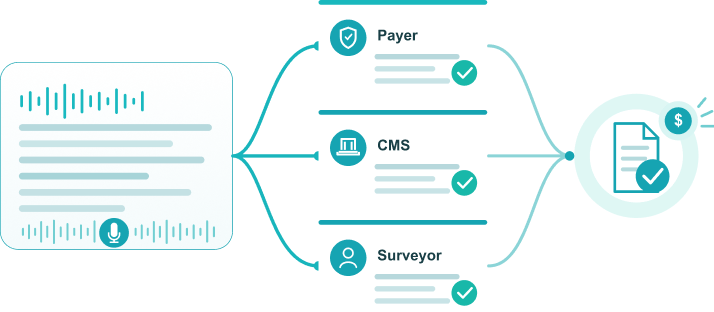
A general medical scribe writes what it hears. Built on OmniMD’s AI medical scribe, our AI scribe for ambulatory surgery centers writes what your payer, CMS and your accreditation surveyor each need, from the same case, without your surgeon saying it three different ways.
Trusted by 12,000+ Providers in 600+ Clinics

1 Note Per Case
Supports the facility claim, the chart-based ASCQR measures and your accreditation survey.
5 Surgical Specialties
Ophthalmology, GI, orthopedics, pain management, and general surgery, one system.

4 Stages
Pre-op, OR, PACU and chart close, documented as one case record.

HL7 FHIR Native
Connects to your ASC EHR through SMART on FHIR, HL7 and secure APIs, with no export step.
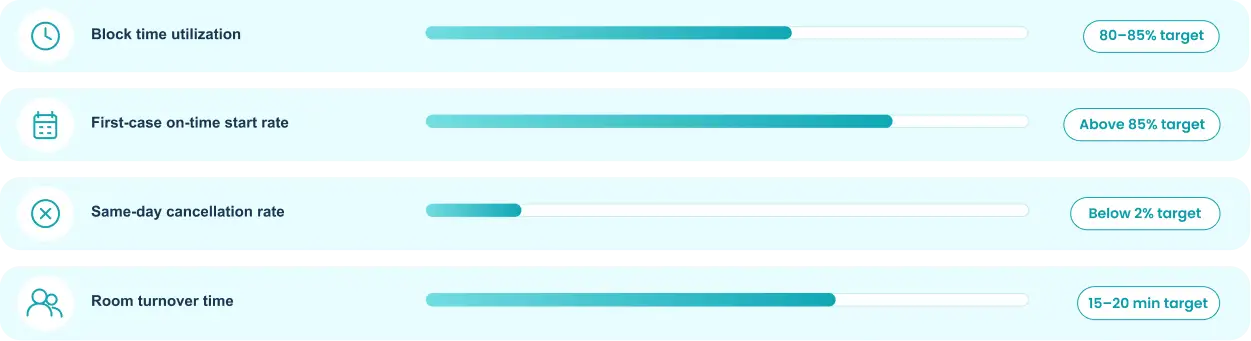
The operating targets ASCs commonly set for themselves
Illustrative targets for block utilization, first-case on-time starts, same-day cancellations and room turnover: common internal goals, not national benchmarks. Clean, complete case documentation is what makes them measurable.
Where your ASC stands against those targets
Watch the AI scribe build the operative note and case record in real time
A case moves through four stages before it’s billable. Step through it and see what the chart and the draft operative note look like at each one.
SAMPLE CASE
KNEE ARTHROSCOPY WITH PARTIAL MENISCECTOMY
Pre-Op, 7:02 AM

H&P confirmed within your ASC’s own pre-op window, such as 30 days
Consent captured for the exact procedure and site
Pre-anesthesia risk evaluation (required by 42 CFR 416.42) recorded, with ASA class

SAMPLE CASE
KNEE ARTHROSCOPY WITH PARTIAL MENISCECTOMY
In OR, 7:24 AM
Indication and procedure performed, narrated as the surgeon works
OR entry, anesthesia induction and procedure start logged as they happen, the timestamps that decide Modifier -73 versus -74 if a case is stopped
Implants, specimens, and estimated blood loss captured from narration, matched to the OR log automatically

SAMPLE CASE
KNEE ARTHROSCOPY WITH PARTIAL MENISCECTOMY
PACU, 8:10 AM
Anesthesia stop time logged at handoff
Modified Aldrete recorded for Phase I discharge, and your ASC’s home-readiness criteria (PADSS or Aldrete’s ambulatory score) for Phase II
Vitals and pain control noted, completing the anesthesia record for the chart

SAMPLE CASE
KNEE ARTHROSCOPY WITH PARTIAL MENISCECTOMY
Chart Closed, 8:42 AM
CPT, HCPCS and ICD-10-CM codes suggested as the note forms, for coder review
Pass-through device C-codes flagged for separate billing; packaged implants reconciled to the implant log, with no-cost or credited devices reported with FB/FC
Written discharge instructions generated per case, and OAS CAHPS eligibility ready for your vendor’s monthly patient file

What if your ASC never missed a documentation detail again?
OmniMD AI Medical Scribe for ASC listens during the case, writes the note, suggests the codes for your coder to confirm, flags OAS CAHPS eligibility and captures the data your ASCQR measures depend on.

Labs and imaging, connected
Pre-op results tied straight to the case chart. No separate portal to check.

Templates for every specialty
Ophthalmology, GI, orthopedics, pain management, and general surgery, in one system.

Coding as you go
CPT, HCPCS, ICD-10-CM and device codes are suggested on the chart while the note is written, ready for your coder to confirm.

Anesthesia and Aldrete, captured live
Start time, stop time, and recovery scoring, right at the point of care.

Implants tracked automatically
Device counts matched to the OR log and the claim, no manual reconciling.

OAS CAHPS, flagged for you
Likely-eligible cases tagged at scheduling and confirmed at discharge, ready for your vendor’s monthly patient file.

Orthopedic outcomes, linked
Post-op calls and any hospital visits your team hears about tie back to the original chart. CMS calculates ASC-17 itself from Medicare claims.

Survey-ready by default
H&P, consent, time-out and anesthesia evaluation in every chart, mapped to the Medicare Conditions for Coverage.

Enterprise interoperability
SMART on FHIR, HL7 and secure API connections to your ASC EHR.
Surgical documentation that holds up on the facility claim
The detail that decides which side of a bundling edit or a modifier a case lands on, captured as part of the same narration. For full code sets, see the ASC CPT and ICD-10 code reference, or hand the whole claim to our ASC billing services team.
| CPT Code | Procedure | What OmniMD captures for the claim |
|---|---|---|
| 66984 | Cataract extraction with IOL | Routine versus complex (66982) documented; premium (astigmatism- or presbyopia-correcting) IOLs flagged for V2787/V2788; unplanned vitrectomy flagged for ASC-14 |
| 29881 | Knee arthroscopy with meniscectomy | Medial or lateral meniscus (both is 29880), with chondroplasty in any compartment kept bundled |
| 45378 | Diagnostic colonoscopy | Extent reached, biopsy (45380) or snare removal (45385), and screening status for modifier PT |
| 62323 | Lumbar epidural injection, imaging-guided | Fluoroscopy or CT guidance documented; it is included in 62323, so there is no separate imaging line |
| 27447 | Total knee arthroplasty | Each implant matched to the invoice, with the pre-op window for the knee replacement outcome measure (ASC-21) tracked |
Your case mix is costing you revenue you haven’t seen yet. Estimate how much.
Enter your own numbers below and watch what clean, complete documentation is actually worth to your ASC.
Defaults are illustrative. Estimate = cases per day x days open x (52 weeks / 12) x the share you set x your average facility fee. The 6% starting value is an assumption, not a measured OmniMD result: set it to your own first-pass denial rate. Cleaner claims get paid sooner; this is not new revenue.
Bring one case from your schedule. We'll show you the note.
A cataract case, a scope, a joint injection, anything on your list. See exactly what OmniMD AI Medical Scribe for ASC writes for it, live.