
Best Medical Spa Software in 2026: Top 5 Picks for Physician-Led Med Spas in the US
I almost didn’t believe this when I first read it. A med spa owner wrote in a verified review that after two years with her software, she decided to leave. She asked for her own patient charts and treatment photos back.
The company’s answer? Just over a thousand dollars, to hand her the data she had already paid to store the whole time.
Right below her review, another owner described the app freezing mid-appointment, with routine tasks eating up way more clicks than they should.
I went looking for these reviews because I was tired of the usual ‘best medical spa software’ blog that read like a spec sheet. You know the ones. Ten logos, a features table copied off each homepage, a star rating, done.
Nobody tells you the things that matter most,which is:
Who owns your patient data, and what happens on the day you want to opt out?
So instead of starting with a ranked list, I want to start with you, because ‘best medical spa software’ doesn’t really have one answer. It has at least four, depending on which kind of med spa you’re running.
Four kinds of med spas, four very different problems
Maybe you’re the nurse practitioner running a one or two-room injectable practice, doing the treatments yourself and signing your own charts every evening. Your biggest fear isn’t a clunky calendar. It’s a chart that falls apart the moment a patient complains or a board asks a question. You’re careful with money, but you’ll pay more for software that keeps you out of trouble.
Or maybe you’re the operations director for a five-location franchise group. Your worries look completely different. You need every location running the same protocol, staff performance you can compare side by side, inventory that doesn’t require five separate logins, and a system that doesn’t buckle the day location number six opens.
Or maybe your clinic started as pure aesthetics and grew a second business inside it once GLP-1 demand exploded. The U.S. weight loss market more than doubled in value between 2022 and 2024 on the back of these drugs, and a lot of that growth landed inside med spas that were previously just doing Botox and fillers. Now you need real e-prescribing, lab result integration, and documentation that reads like a medical chart instead of a spa intake form, because the FDA does not care that the business card still says ‘spa.’
Or maybe your med spa is run day to day by a licensed aesthetician, with a medical director who signs off from somewhere else and rarely walks through the door. This is the riskiest setup of the four, and it’s more common than anyone likes to admit. Your software has to make delegation, standing orders, and physician sign-off visible and provable, because that’s exactly what a state inspection asks to see first, and “he swears he reviewed it” is not an answer that holds up.
Hold onto whichever one sounds like you, because which software fits you varies wildly, and the rest of this guide keeps circling back to these four.
What you’re all asking before you buy
Whichever one of those four sounds like you, you’re probably asking a handful of the same questions, whether on Reddit threads about switching EMRs, in Quora posts about med spa compliance, or buried in the pros-and-cons section of a Capterra review. None of these questions show up in a typical top-ten list, but they decide almost everything:
- Is this really an EMR, or a booking calendar wearing a medical label? Plenty of buyers get burned by software that’s great at appointments and payments but has thin, generic charting that would not survive a real audit.
- Can your medical director sign off remotely, and can you prove it later? Delegated practice is normal in states like Florida, Texas, and California, but what protects you is a timestamped, exportable record, not a name on file.
- What happens to your client photos and notes if you ever switch software? This is the same export-fee problem from the start of this piece, and it deserves a direct answer from a vendor before you sign anything, not a discovery two years in.
- Does the software handle billing for weight loss and hormone patients, or only cash-pay cosmetic visits? Plain point-of-sale billing stops being enough the moment GLP-1 or hormone programs enter the mix.
- How many clicks does it take to finish one patient’s chart? Front desk burnout and injector frustration with clunky software show up in nearly every negative review out there.
- Will support answer the phone on a busy Saturday? Med spas run on weekends and evenings, and slow support during peak hours is one of the most repeated complaints across every review site.
With those four situations and six questions in mind, here are the five platforms worth putting on your shortlist in 2026, and which of you each one was really built for.
#1. OmniMD: the pick if your clinic grew into a real medical practice
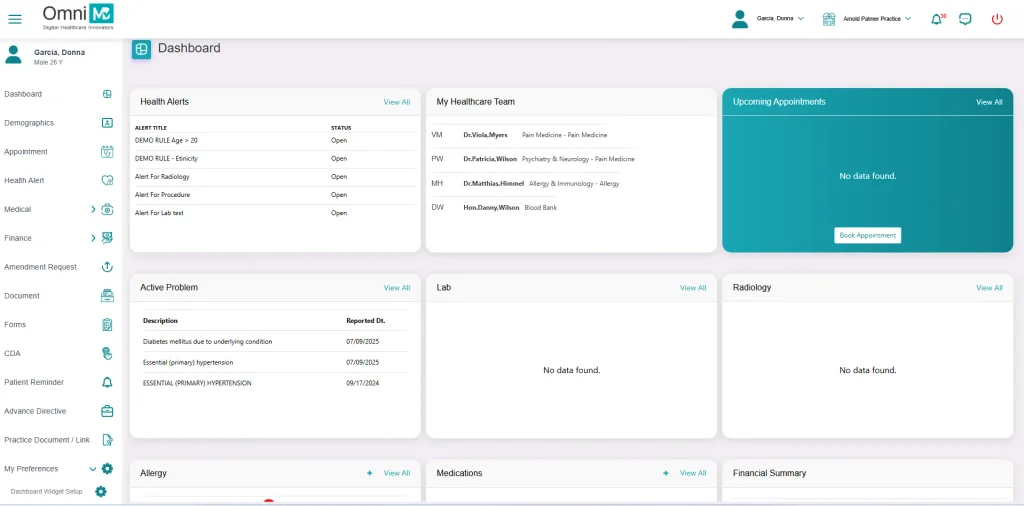
Say your Botox studio grew a weight loss and hormone therapy arm almost by accident. You’ll eventually hit a wall that pure med spa software can’t get you past, because you need an actual electronic health record behind the aesthetics, not just a nicer booking calendar.
OmniMD isn’t built only for med spas, and that’s exactly why it fits here. It’s a full electronic health record and revenue cycle management platform used by over 12,000 providers across more than 20 specialties, including dermatology and family medicine. If you’re a physician who owns a family medicine or dermatology practice and runs a med spa as one service line inside it, you’d land here too, along with any weight loss clinic that needs e-prescribing, lab interfaces, and coded billing, with aesthetics as an add-on rather than the whole business.
Here’s what makes it worth the switch:
- It’s ONC-certified and built on FHIR 4.0.1 interoperability standards, which matters the moment you need to pull lab results for hormone therapy or GLP-1 monitoring instead of just storing photos.
- It offers specialty-specific templates, so you’re not forced into one generic chart format built for neither general medicine nor aesthetics.
- It bundles the EHR with medical billing and revenue cycle management, so you’re not stuck bolting on a separate billing system for insurance-adjacent weight loss consults or hormone panels.
- Capterra reviewers describe it as reliable and adaptable to different practice types, with a responsive support team and workflows that get smoother once staff learn the system.
However, it may not be the right fit for every practice, especially if you are moving from a simple platform to a broader, more customizable system and need some time to adjust.
Here’s the takeaway: as GLP-1 and hormone programs pull more clinical weight into med spas, you need charting and billing built for real medical workflows, not a spa calendar with a HIPAA badge stapled to it. OmniMD closes that gap.
#2. Pabau: the pick if you want every location running off one system, not five
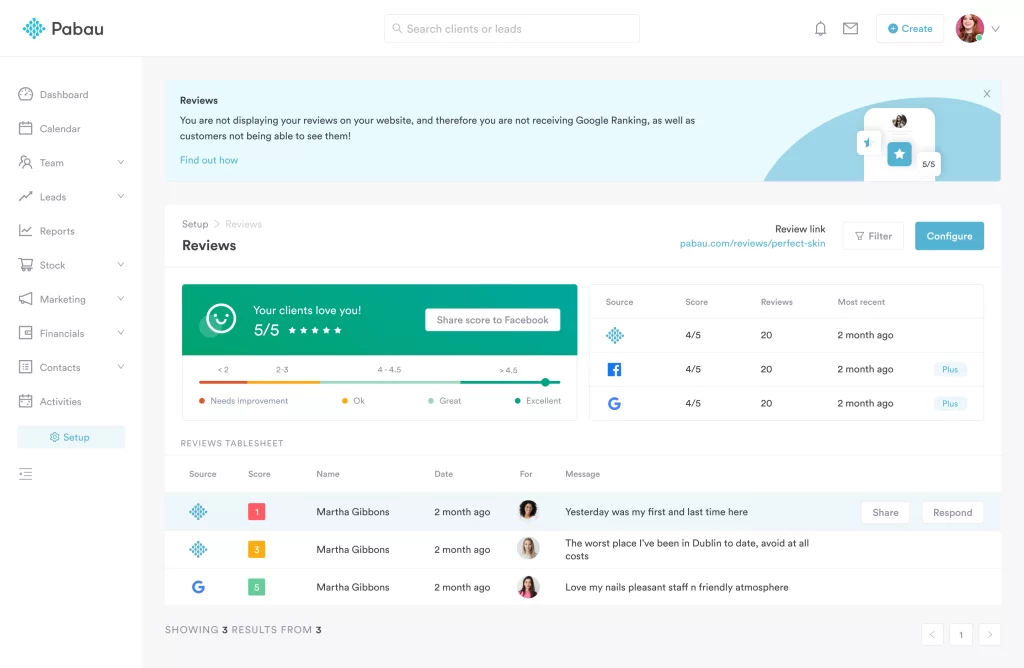
If you’re running a franchise group across multiple cities, your problem isn’t compliance depth, it’s keeping every location on the same protocol without paying for five separate logins, five separate add-ons, and five different vendor bills at the end of the month.
Pabau is built for aesthetic clinics, wellness centers, and multi-provider practices, and it’s the rare platform on this list that genuinely tries to be the one system underneath the whole business rather than one piece of it. Every plan includes the core platform, so scheduling, clinical records, payment processing, inventory, reporting, and marketing tools all come standard rather than being split across a dozen paid tiers (though Pabau does sell three optional add-ons for deeper marketing, care, and reporting workflows on top of that core).
One wrinkle worth knowing upfront: pricing applies per location on every plan except Enterprise, which is the one tier built to cover multiple sites under a single account. On G2, it currently sits at 4.7 out of 5 across roughly 270 to 280 verified reviews depending on when you check, with support singled out repeatedly as fast and hands-on.
Here’s what earns it a spot on your shortlist:
- It genuinely functions as one system, not a bundle of acquired tools bolted together, which matters most once you’re running the same protocols across multiple locations and don’t want five different logins for scheduling, inventory, and marketing.
- Its Pabau Scribe tool lets providers dictate notes straight into the patient chart, which shaves real time off documentation across a team that’s seeing back-to-back appointments all day.
- It connects to 30+ tools, including Stripe, Xero, Google Calendar and Outlook, e-prescribing platforms like CloudRx, and CRMs like HubSpot and Salesforce, so a growing group can plug it into whatever it’s already running instead of ripping everything out.
- Pricing starts around $62 a month for a single user in the US, scaling by team size rather than by feature, though a franchise group should confirm early on whether they need the Enterprise tier to consolidate multiple locations onto one account rather than paying per site.
However, it’s not without tradeoffs. Reviewers on Capterra and GetApp flag that reporting is on the rigid side for anyone wanting deeper, custom analysis, and the online booking portal is fairly basic on customization. Several reviewers also mention unexpected extra charges as they add staff, locations, SMS, or certain integrations, which is exactly the kind of thing an operations director scaling toward location six should ask about before signing. And at least one G2 reviewer noted that its charting wasn’t originally built with insurance-adjacent medical workflows like weight loss consults in mind, so a group layering in GLP-1 programs may still want something like OmniMD running alongside it.
Here’s the takeaway: If your real problem is coordinating multiple locations without duct-taping together five different tools and five different bills, Pabau is built to be the one system holding all of it together.
#3. AestheticsPro: the pick if your whole business rides on the injectable chart
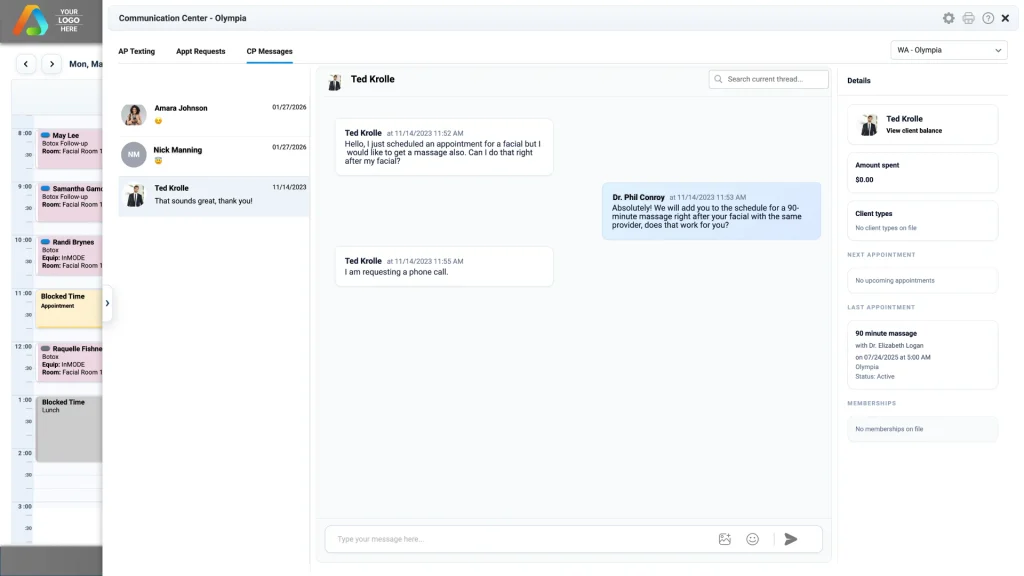
If you’re the solo nurse practitioner doing your own injections, your single biggest risk is a chart that can’t hold up if a patient disputes a result or a board comes asking questions, and that’s the exact problem AestheticsPro was built around.
The company has been building software specifically for medical spas since 2007, and it shows in how the charting works. Instead of a generic notes field, documentation is structured around the actual visit types a med spa runs, injectables, laser treatments, and body contouring.
A few things make it stand out for you:
- Its photo tool, AP Photo, includes alignment guides and ghost overlays, built specifically to track injectable and laser results across multiple visits rather than as a generic image upload.
- It bundles EMR, telemedicine, merchant services, and marketing into one system, so you’re not stitching together three separate vendors for clinical, financial, and client communication needs.
- It’s HIPAA compliant and cloud based, so documentation stays accessible across providers without you needing to run your own servers.
- Pricing starts around $160 a month for two users on the Pro-Plus plan, scaling up for unlimited users on higher tiers.
However, it’s not without tradeoffs. G2 users also compare AestheticsPro with Vagaro, Weave, Carepatron, and Zenoti, which shows that it faces strong competition. Some reviewers also note that some features can be difficult to learn, and they want more flexibility to customize forms and marketing tools.
Here’s the takeaway: If your entire livelihood depends on a chart that holds up under scrutiny, this is the tool built closest to that exact job.
#4. Mangomint: the pick if you’re bleeding time on staff training
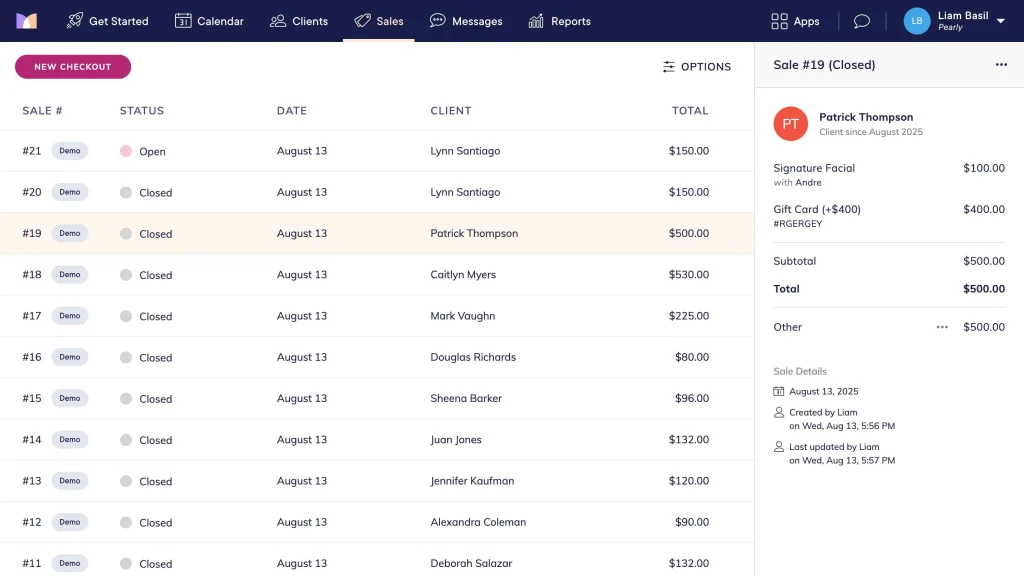
You’ve probably felt this pain at some point, but it hits hardest if you deal with real staff turnover. New hires need to learn the system fast, and every extra week of training costs you money and patience.
Software Advice’s analysis of medical spa products rates Mangomint highest for usability among the most in-demand tools in the category, based on 229 verified user reviews. That single fact answers one of the most repeated frustrations in med spa software reviews directly: clunky software slows down every new hire, and fast, intuitive software gets them productive in days instead of weeks.
What stands out here:
- Reviewers consistently point to fast onboarding and an intuitive daily workflow as the reason they picked Mangomint over more feature-heavy competitors.
- It covers the practical daily list, calendar management, online booking, payment processing, inventory, and reminders, without burying those functions under a complicated interface.
- Pricing starts around $165 a month per its Capterra listing, positioning it as a mid-tier option rather than the cheapest or the most expensive in the category.
The tradeoff shows up in clinical depth. Its documentation isn’t as deep or aesthetics-specific as AestheticsPro’s or OmniMD’s, so if you’re doing complex injectable work with heavy compliance needs, you may find the charting side lighter than you want. And because it’s optimized for ease of use, some of the advanced reporting and customization that bigger multi-location groups need is less developed here than in enterprise-focused platforms.
Here’s the takeaway: If your team’s biggest complaint about your current software is “why does this take so many clicks,” Mangomint is the direct answer to that exact problem.
#5. PatientNow: the pick if you’re adding GLP-1 programs without an enterprise budget
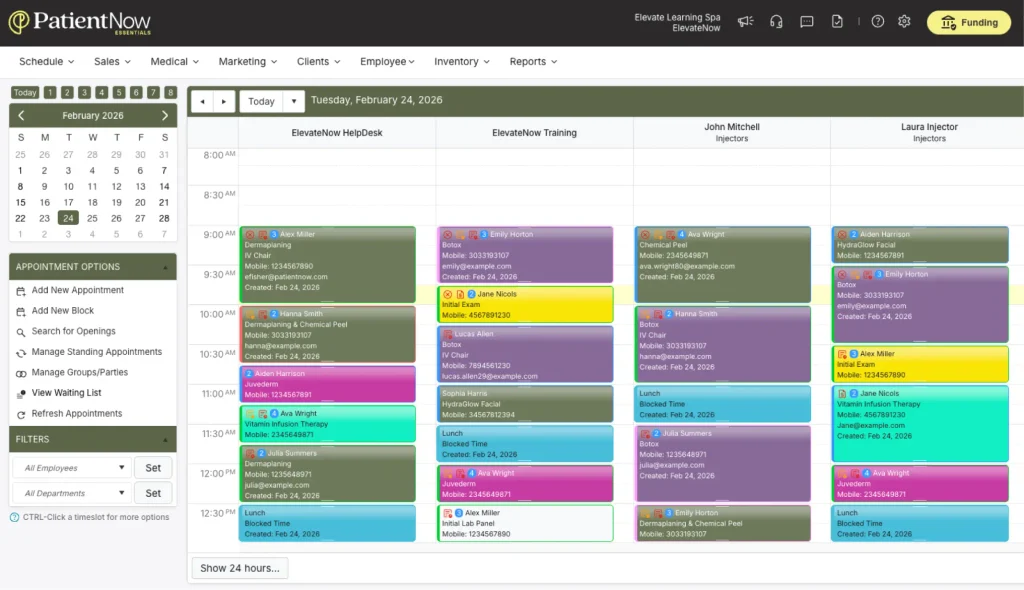
Maybe your weight loss and hormone therapy arm is growing fast, but you don’t have OmniMD’s budget or the patient volume to justify a full multi-specialty EHR yet. PatientNow sits right in that gap.
It’s built for practices expanding into GLP-1 weight loss or hormone replacement programs that need real EMR functionality and photo documentation, without needing the scale of a full enterprise system.
What makes it work for that transition:
- Its integrated photo tool, RxPhoto, ties before-and-after images directly to the patient chart, which matters for tracking multi-month GLP-1 and body contouring programs.
- It integrates with tools like Zapier and third-party POS systems, so smaller practices can connect the other software they already use instead of ripping everything out.
- Reviewers describe it as a unified platform for EMR, patient engagement, photo management, payments, and marketing, with pricing generally landing between $100 and $500 a month depending on the plan.
Some long-time users note that past updates lagged behind newer technology standards, like smoother tablet compatibility and easier online patient registration. A few also mention limits on viewing multiple chart windows at once, which can slow a provider juggling several patients back to back on a busy day.
Here’s the takeaway: If your GLP-1 and hormone revenue is becoming real but your budget still isn’t enterprise-sized, PatientNow is built for exactly that stage.
Bringing it back to you
- Solo, physician-owned practice: AestheticsPro for charting depth, or Mangomint if fast staff onboarding matters more than deep clinical customization.
- Multi-location franchise group: Pabau’s Enterprise plan, built around multi-location support, for running every location on one system without piling up separate logins and add-on fees, alongside a hard look at how each location documents medical director sign-off.
- Layering weight loss and hormone programs onto aesthetics: PatientNow on a tighter budget, or OmniMD once full EHR-level interoperability and multi-specialty billing become necessary.
- Run by an aesthetician under a remote medical director: prioritize whichever platform makes delegated practice, standing orders, and physician chart review visible and exportable, since that’s what a board inspection asks for first.
What all this costs in 2026
Pricing in this category moves fast and vendors change tiers often, so treat the following as directional ranges rather than fixed quotes to hold a vendor to.
- Budget-focused, high-volume scheduling tools in this space start well under $100 a month, often closer to $30, and add clinical or HIPAA-compliant modules as paid add-ons.
- Mid-tier, purpose-built med spa platforms typically start somewhere between $160 and $180 a month for a single location, before add-ons for extra providers, marketing tools, or advanced reporting.
- A few all-in-one platforms undercut that range at the entry level. Pabau, for example, starts around $62 a month for a single user, though multiple reviewers note that add-ons like SMS or extra integrations can push the real bill higher than the sticker price suggests.
- Full EHR platforms handling multi-specialty billing and insurance-adjacent revenue cycle management, like OmniMD, are usually quoted per practice based on provider count, patient volume, and which billing services are outsourced, rather than sold on a flat published rate.
The U.S. medical spa management software market itself is projected to grow at roughly a 13.6 percent compound annual rate from 2024 through 2030, reaching close to $283 million, and rising demand for non-surgical cosmetic treatments and medical weight loss programs is a big part of what’s pushing that growth. That growth is also why more vendors are adding clinical features that used to only exist in full EHR platforms, so expect the line between “spa software” and “medical software” to keep blurring through the rest of 2026.
Questions worth asking before signing anything
Every vendor demo looks polished. The gap between the demo and the daily reality shows up in questions like these, and you’d be smart to ask all of them before signing a contract:
- Ask to see a completed chart for an injectable visit, not a blank template, so it’s clear what documentation looks like once it’s filled in during a real appointment.
- Ask exactly how medical director review and sign-off gets logged, and whether that log can be exported as proof during a state board inspection.
- Ask what happens to client photos, notes, and history if the contract ends, including the file format that gets returned and how long there is to request it.
- Ask whether e-prescribing and lab integration are included or a paid add-on, especially for any practice running or planning to run GLP-1 or hormone programs.
- Ask how many clicks it takes to complete one full patient chart from check-in to checkout, and time it during the demo instead of taking the sales rep’s word for it.
- Ask what support looks like on a Saturday afternoon, since that’s when most med spas need the most help and when many vendors are running a skeleton crew.
Match the software to what you do, not to whichever name shows up first in search results. A cash-pay Botox studio, a multi-location franchise chasing rebookings, and a physician-led clinic running GLP-1 programs are three different businesses wearing the same ‘med spa’ label, and they need three different kinds of software behind them. Figure out which one sounds like you, shortlist two platforms that fit, and run both through the compliance and support questions above before you sign anything.
FAQs
Is medical spa software the same as an EHR?
No. An EHR is built for clinical documentation, prescribing, and sharing records across providers. Medical spa software often combines a lighter version of that clinical documentation with scheduling, point-of-sale, and marketing tools built for an appointment-based business. Some platforms, like OmniMD, are full EHRs that a med spa can use, while others, like Pabau or Mangomint, are med spa platforms with clinical features layered in.
Do I need HIPAA-compliant software if I only do cosmetic treatments?
If a practice stores any patient health information, including intake forms, treatment notes, or before-and-after photos tied to a named patient, HIPAA applies regardless of whether the treatment is medical or purely cosmetic. Several platforms in this space offer HIPAA compliance as a built-in feature or a paid add-on requiring a signed business associate agreement, so it’s worth confirming which model applies before signing up.
Can a practice switch software later without losing patient records?
Yes, but the difficulty depends entirely on the vendor’s export options and file formats, which is exactly the problem from the start of this guide. Ask this question before signing a contract, not after deciding to leave, since some platforms make bulk export of charts and photos far easier than others.
What’s the biggest mistake med spas make when choosing software?
Picking based on the interface and marketing features alone, without checking whether the clinical documentation and medical director sign-off features would hold up during a state board inspection. The nicest booking calendar in the world doesn’t help if the charting behind it can’t answer a compliance question two years from now.
Where this leaves you
Match the software to what you do, not to whichever name shows up first in search results. A cash-pay Botox studio, a multi-location franchise chasing rebookings, and a physician-led clinic running GLP-1 programs are three different businesses wearing the same ‘med spa’ label, and they need three different kinds of software behind them. Figure out which one sounds like you, shortlist two platforms that fit, and run both through the compliance and support questions above before you sign anything.
Disclaimer: This blog is intended for informational and educational purposes only and was prepared using information collected, reviewed, and cross-referenced from publicly available sources at the time of publication. Data referenced throughout this blog, including pricing, product features, ratings, review counts, and platform comparisons, was compiled from vendor websites, product documentation, and third-party software review platforms.
The medical spa software platforms compared in this article include OmniMD, AestheticsPro, Mangomint, Pabau, and PatientNow. Any references to these platforms are based on information available at the time of writing and may not reflect the most current pricing, features, certifications, or support policies.
Sources referenced in developing this article include, but are not limited to: Capterra, G2, GetApp, Software Advice, and other publicly available industry and market research resources.
Because pricing, features, contract terms, and market data may change without notice, this information should not be treated as exhaustive, final, or purchasing advice. Readers are encouraged to independently verify current pricing, features, and product suitability directly with the relevant vendors before making any purchasing decisions.

Dr. Krishna Nathwani is a Business Analyst and Healthcare Technology Specialist at OmniMD, where she works at the intersection of medicine and digital health. With a background in clinical practice, she brings firsthand insight into how EHR systems, AI-powered tools, and intelligent workflows can reduce physician burden and improve patient care.